


Traces of Cosmic Explosion from 100 Million Years Ago Found at Bottom of Pacific Ocean
An international group of scientists has succeeded in identifying traces of a massive cosmic event that occurred 100 million years ago in Earth's geological layers. Rare radioactive isotopes found in an iron-manganese crust at the bottom of the Pacific Ocean indicate that substances dispersed by a powerful astrophysical explosion in space reached our planet. This is reported by Ixbt.com news reports.
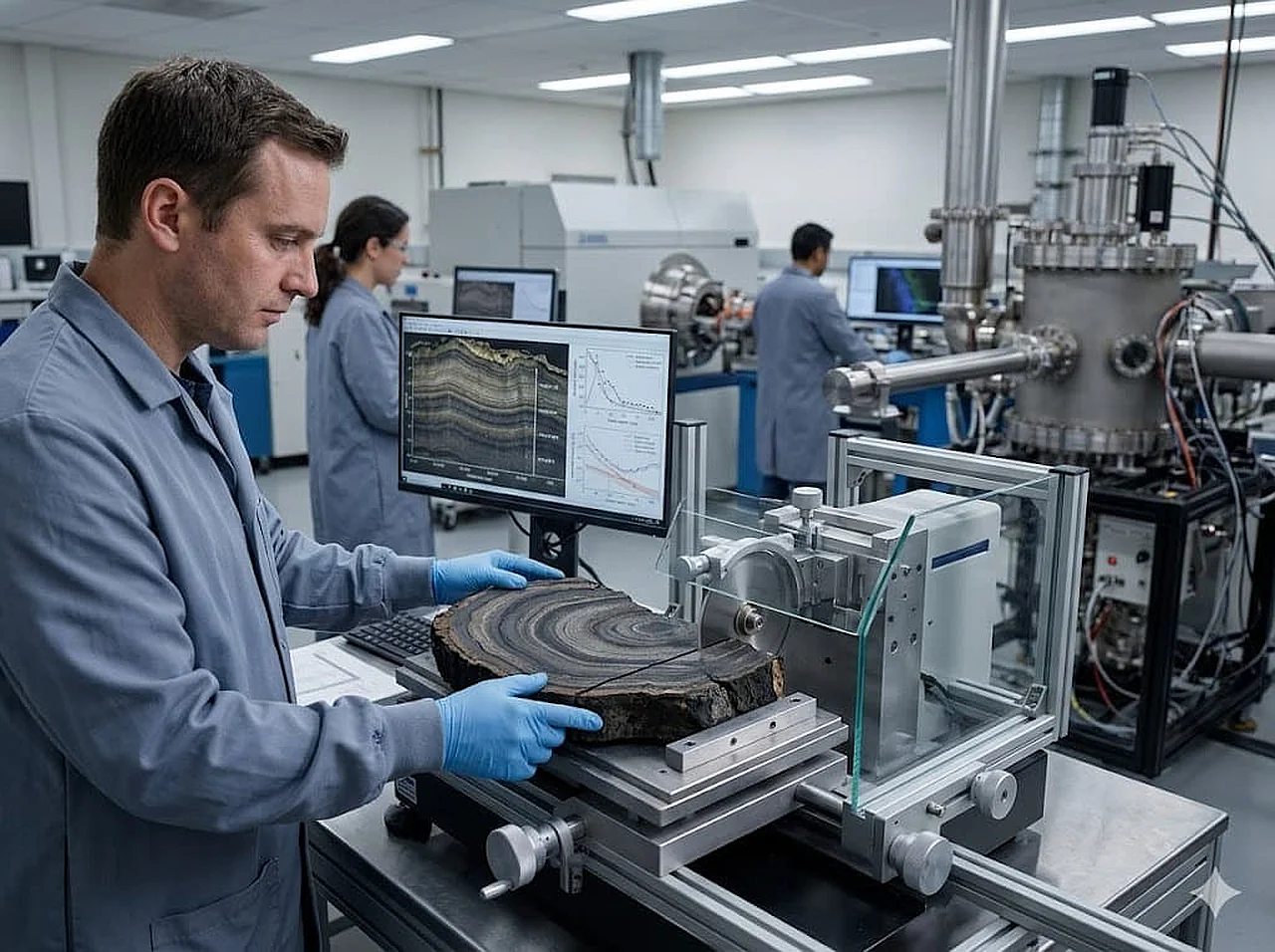
Specialists from the Helmholtz research center in Germany, the Australian Nuclear Science and Technology Organisation (ANSTO), and the Australian National University carried out this research collaboratively. An ocean crust weighing 1.9 kilograms, raised from a depth of 4,830 meters in 1976, was selected as the analysis object. Such crusts are characterized by extremely slow growth and seal chemical changes in the ocean and cosmic dust over millions of years.
Kilonova explosion and rare isotopes
During the study, the plutonium-244 (Pu-244) isotope was found in the crust layers. The half-life of this substance is approximately 81 million years. Using ultra-sensitive equipment, scientists managed to identify several hundred atoms dispersed across various layers of the crust. At the same time, scientists also searched for the curium-247 (Cm-247) isotope, which should have formed alongside plutonium, but no traces of it were found.According to Ixbt.com, comparing the data allowed for the determination of the event's timing. The source of the substance existed in space more than 100 million years ago, but it is not so ancient that plutonium traces would have completely disappeared. The most likely theory is a "kilonova" — an explosion resulting from the collision of two neutron stars.
In such processes, a large portion of heavy elements in the universe, including actinides and transuranic elements, are formed. The uniform distribution of plutonium-244 across the layers indicates that this event was not short-lived, like a supernova explosion. Instead, this substance persisted in the interstellar medium for a long time and later entered the Solar System.
Mysterious history in geological archives
The absence of the curium-247 isotope also supports the above hypothesis. Since this isotope has a shorter lifespan, it should have completely decayed over more than 100 million years. This discovery is important evidence proving that one of the rare episodes related to the synthesis of heavy elements in our galaxy left its mark in Earth's history.For now, how this cosmic explosion affected biological processes on Earth at that time remains an open question. Scientists now plan to search for similar traces in ancient mountain rocks and lunar regolith. On the lunar surface, cosmic materials can remain almost unchanged over geological periods, which opens new horizons in studying the history of the universe.


Comments 0
…