


Formation of new ocean crust observed live for the first time
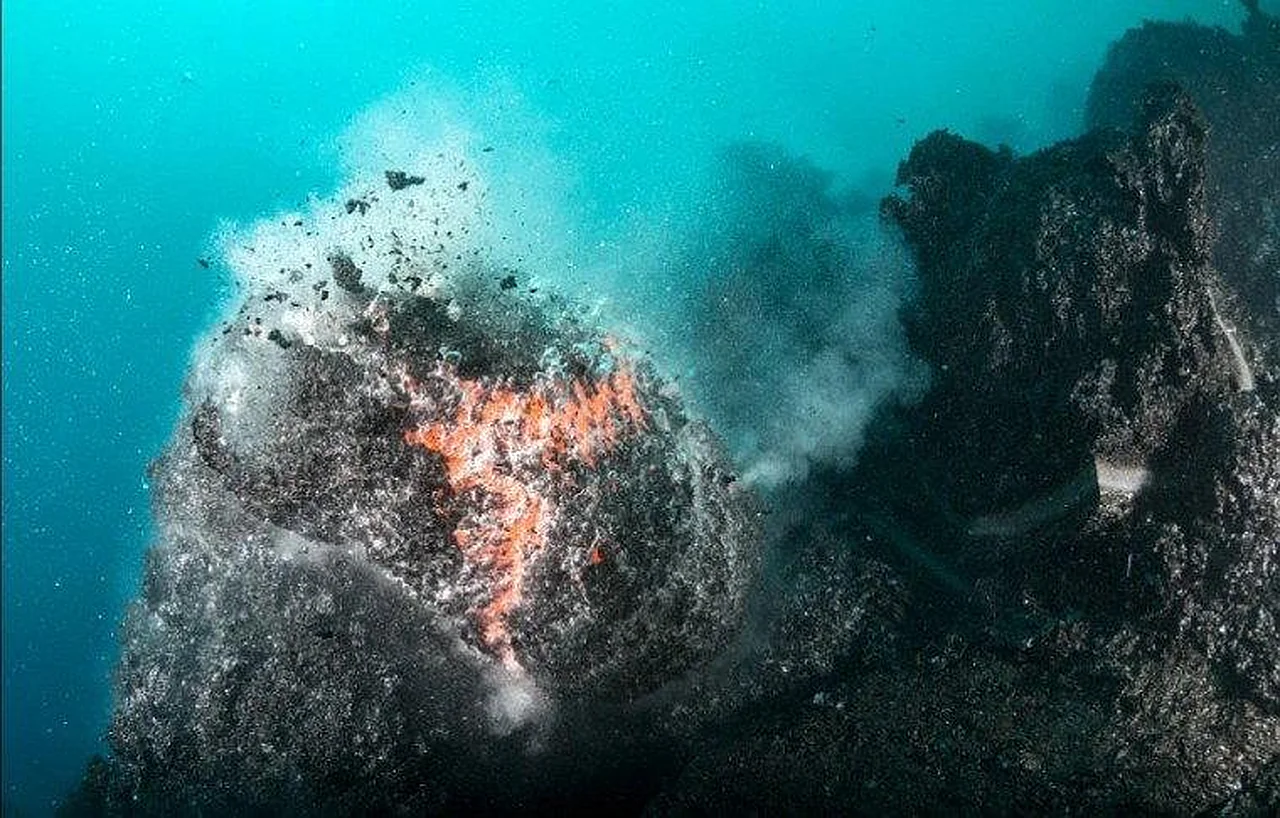
An international team of geophysicists has for the first time in scientific history managed to directly record the cracking of the ocean crust and the subsequent filling of this gap with new magma. This study, conducted at the Southeast Indian Ridge, revealed that the seafloor shifted by more than 2 meters. This event is considered a revolutionary step in understanding the geological formation processes of our planet. This is reported by Ixbt.com reports .
The discovery was made during an expedition in February 2024 to an underwater mountain range separating the Australian and Antarctic tectonic plates. In such regions, plates move away from each other, and magma rising from the mantle solidifies to form new ocean crust. Although this mechanism has been theoretically known for decades, it had never been possible to observe it in real-time until now.
Technological achievement and measurement results
Scientists deployed a network of specialized equipment along a 100-kilometer section of the ridge. According to data published in the journal Nature, the study utilized the following tools:- 5 hydrophones recording underwater sounds and seismic waves;
- 15 autonomous acoustic beacons exchanging signals every 4 hours;
- High-precision sensors measuring the depth of the seafloor.
According to the researchers' estimates, approximately 160 million cubic meters of lava rose into the rift between the plates within a few days. Experts believe the magma emerged from an underground reservoir that had been accumulating for many years. Once the reservoir emptied, parts of the seafloor began to subside, which further expanded the scale of the process.
A process much stronger than expected
Jean-Yves Royer, a marine geophysicist at the French National Centre for Scientific Research (CNRS), noted that the results were much more significant than expected. Initially, scientists estimated the vertical displacement to be a few centimeters, but in practice, the changes reached up to 4.2 meters. This means that the dynamics on the ocean floor are more active than we previously thought.During this event, the movement of the Australian tectonic plate released the intense stress energy that had accumulated over the last 30–60 years. Although such processes constantly form new ocean floor, they were very difficult to study because mid-ocean ridges are located in hard-to-reach areas.
This scientific breakthrough provides geologists with new data on the formation of the Earth's surface and the prediction of tectonic activity. Scientists can now prove with precise figures how much energy and speed are involved in the renewal of the ocean crust.


Comments 0
…