


World climate at risk: Probability of a “Super El-Nino” reaches 81 percent
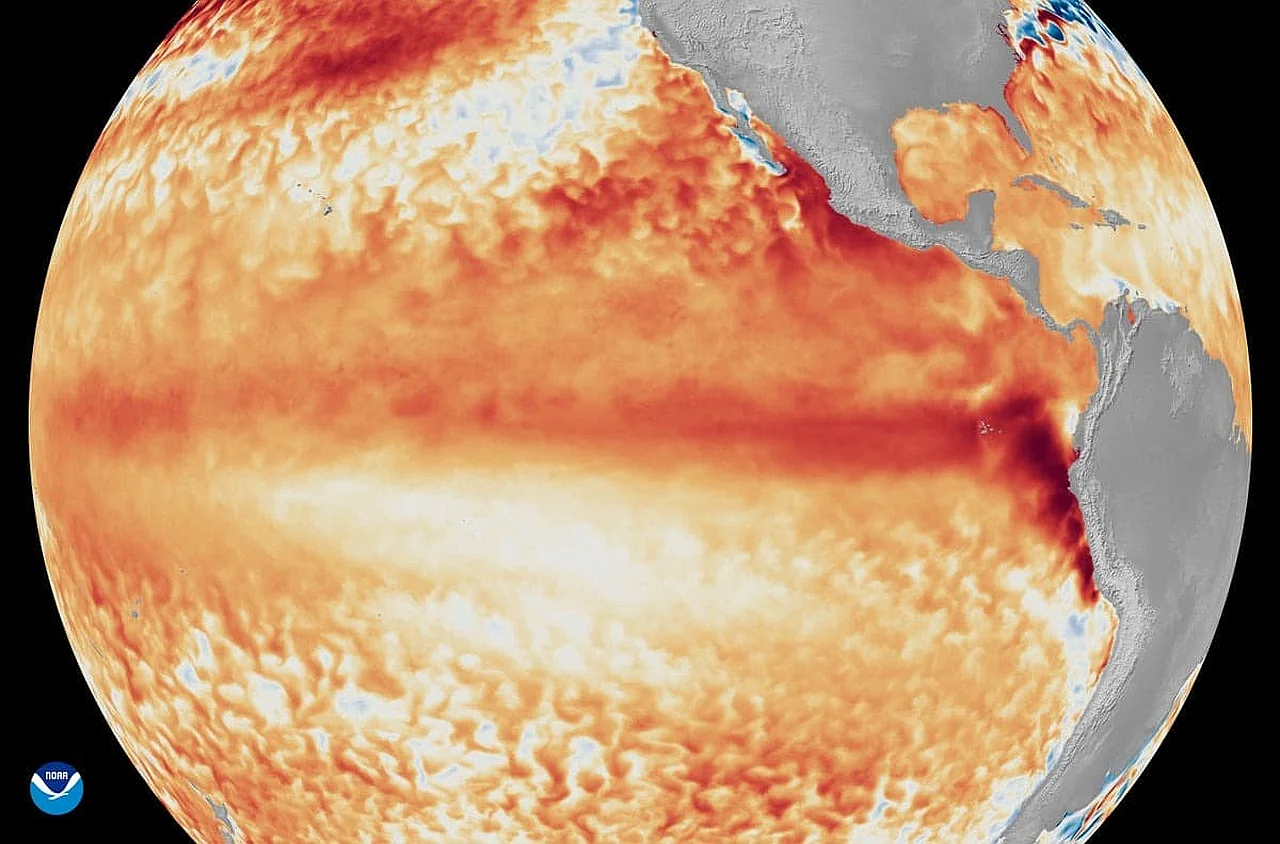
The global climate phenomenon occurring in the equatorial Pacific — El-Nino — may turn out to be much stronger than expected. According to the latest report published by the US National Weather Service (NWS), the probability of the current natural phenomenon escalating to a “Super El-Nino” level is 81 percent. This indicates that anomalous hot temperatures and extreme weather changes will continue on our planet in the coming years. This is reported by Ixbt.com reports .
According to expert forecasts, this climate system has a 97 percent probability of maintaining its influence until at least the spring of 2027. El-Nino is a process associated with the rise of sea surface temperatures in the eastern Pacific, which completely alters heat distribution in the atmosphere. As a result, global air current patterns shift, causing unexpected natural disasters in various regions.
Global temperature records may be broken
According to NWS data, water temperatures in the central and eastern zones of the Pacific Ocean have already exceeded the climatic norm by more than 1 degree, and in some areas, this figure is approaching 3 degrees. If temperatures continue to rise, the current episode will enter the list of the strongest “Super El-Nino” events observed since 1950. This, in turn, could lead to 2026 and 2027 becoming the hottest years in human history.During strong El-Nino periods, the balance of precipitation and temperature is severely disrupted in various parts of the world. For example, in Southeast Asian countries, the risk of drought, major forest fires, and crop failure increases. At the same time, floods and strong storms become common in other parts of the ocean. Interestingly, this phenomenon can also cause a decrease in hurricane activity in the Atlantic Ocean.
Scientists' concerns and measures
The US National Oceanic and Atmospheric Administration (NOAA) had already confirmed the formation of El-Nino back in June. However, new observations showed that the process is intensifying faster than expected. Scientists have discussed geoengineering methods, i.e., artificially influencing the climate system, to mitigate the consequences of this natural disaster. But for now, such large-scale technologies do not exist, and this idea is causing serious debate in scientific circles.For countries with a continental climate like Uzbekistan, such global changes will not go unnoticed. Although El-Nino is not directly in our region, changes in the global atmosphere can affect Central Asia, leading to unexpectedly warm winters or an increase in the duration of anomalous heat waves during summer months. This requires new approaches to agriculture and water resource management.
In conclusion, “Super El-Nino” can cause not only environmental but also economic problems. The world community must be prepared for these climatic fluctuations, which are forecast to continue until 2027. For now, the main focus is on strengthening weather monitoring and preventing potential natural disasters.


Comments 0
…