


NASA captures unusual phenomenon in the Black Sea from space
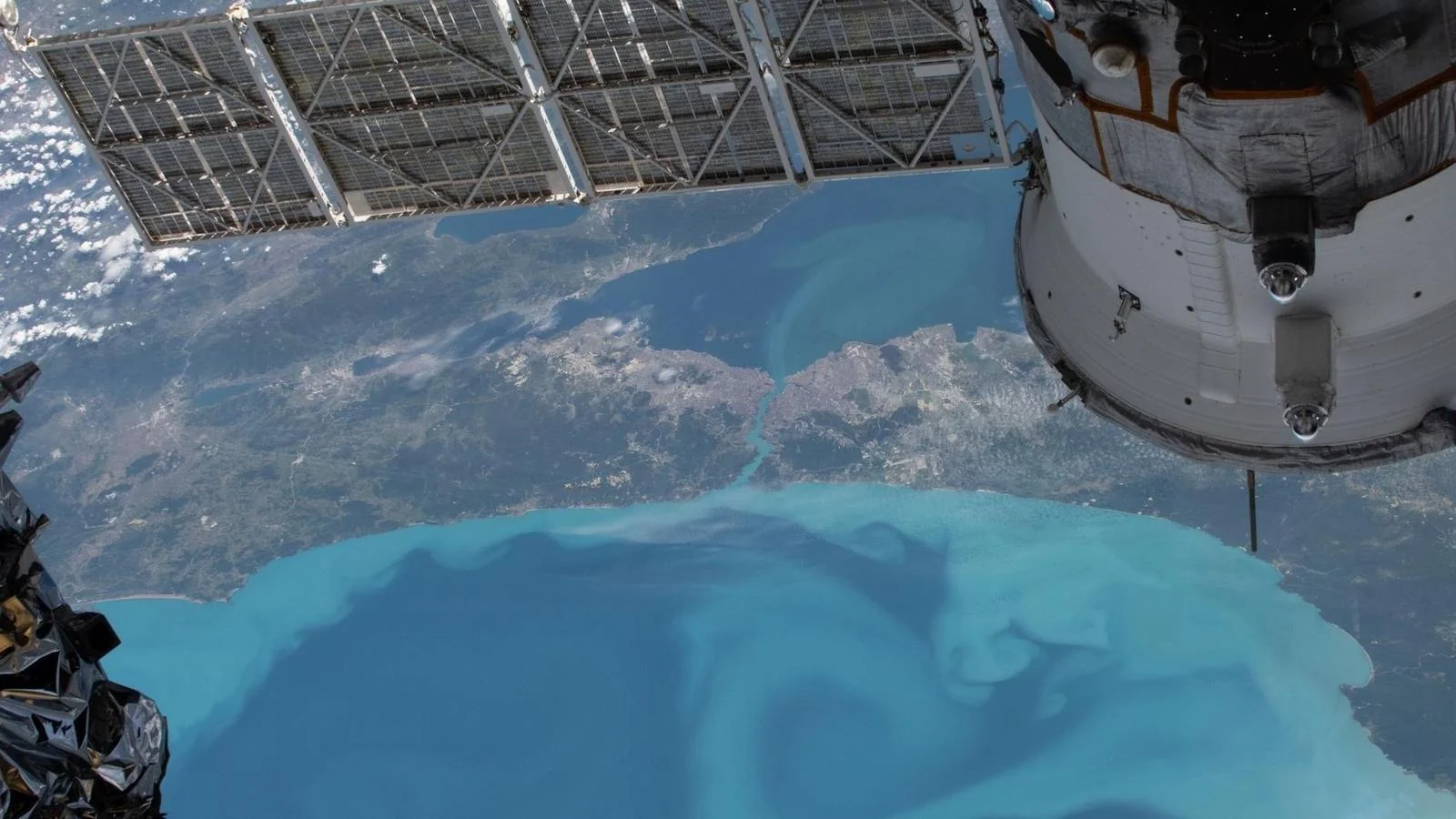
NASA experts have recorded a sharp change in the color of the Black Sea surface. Images taken from space show large parts of the sea turning a bright turquoise. This natural phenomenon is linked to the mass proliferation of microscopic organisms underwater, signaling significant changes in the ecosystem. This is reported by Ixbt.com reports .
This unique sight was captured by an astronaut aboard the International Space Station (ISS) and NASA's PACE (Plankton, Aerosol, Cloud, ocean Ecosystem) satellite, designed to study the ocean and atmosphere. According to ixbt.com, phytoplankton are responsible for this color change. By late spring, the number of these organisms increases sharply, and their light-reflecting calcareous shells color the water surface in a whitish-blue hue visible even from space.
Space observation and technological capabilities
On May 27, an astronaut from Expedition 74 used a Nikon Z9 camera to photograph turquoise swirls near the Bosphorus Strait, which connects the Black Sea to the Sea of Marmara. Nearly a month later, on June 22, the PACE satellite used its Ocean Color Instrument (OCI) to record the spread of phytoplankton across the entire sea in a wider format.The color of the Black Sea changes throughout the year depending on the composition of its microscopic organisms. For example, in other seasons, diatoms may dominate, giving the water a darker tone. Satellite observations are crucial for scientists, as taking direct samples from vast bodies of water is technically complex and expensive.
Global climate and the role of phytoplankton
Phytoplankton play a major role not only in visual beauty but also in the planet's ecological balance. They are an integral part of the global carbon cycle. During growth, phytoplankton absorb carbon from the atmosphere. When they die, they carry this carbon to the seabed, where it is stored for a long time.This process helps reduce the amount of greenhouse gases in Earth's atmosphere. New data provided by NASA allows scientists to analyze more deeply how marine ecosystems are adapting to climate change. For specialists and enthusiasts, these studies demonstrate the importance of modern technology in remote monitoring of biological processes in water bodies.


Comments 0
…