


Scientists discover atmosphere on an Earth-like planet for the first time
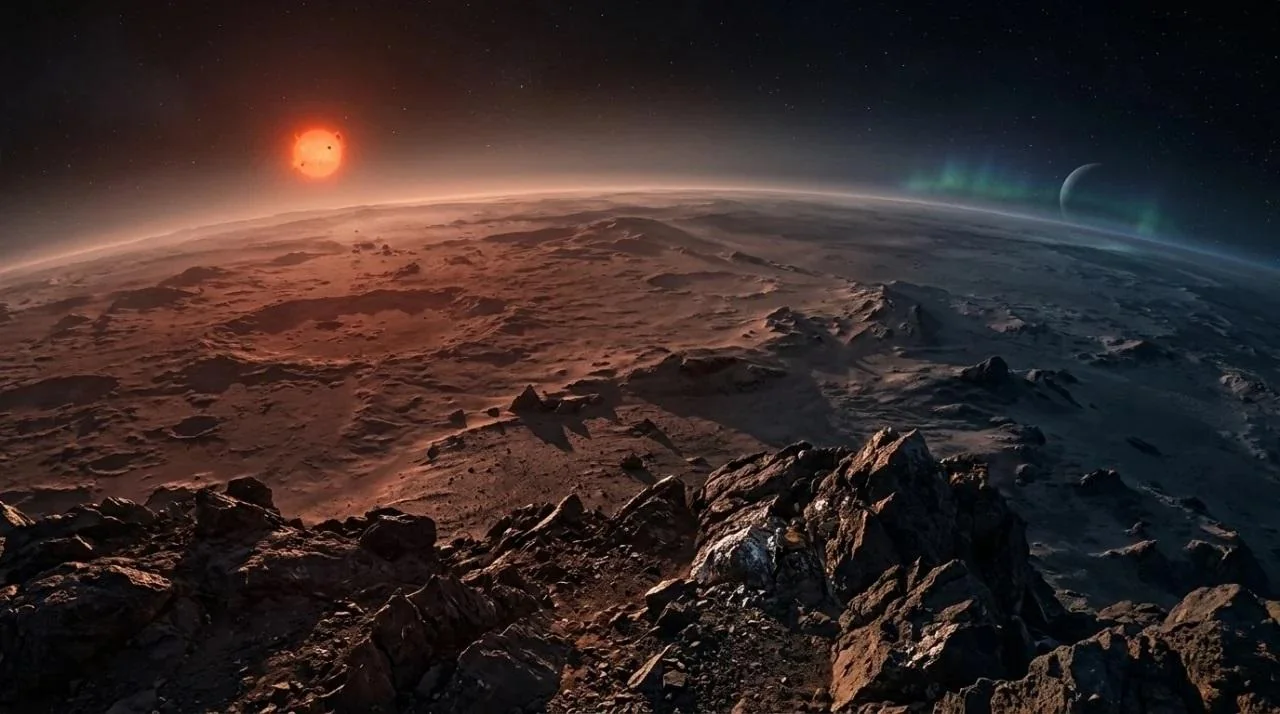
Humanity has witnessed one of the most historic discoveries in space exploration. According to the University of Florida press office, astronomers have confirmed the presence of an atmosphere on an Earth-like exoplanet for the first time. This discovery is expected to open a new era in the search for other worlds where life might exist. This is reported by Ixbt.com reports .
Named LHS 1140b, this planet orbits a red dwarf star in the constellation Cetus. It is located relatively close to the Solar System — approximately 48 light-years away. Scientists note that this object belongs to the "super-Earth" category and is 5.6 times more massive than our planet.
Conditions favorable for life
LHS 1140b completes a full orbit around its star in just 25 days. Most importantly, it is located in the star's "habitable zone." This means the planet is neither too close nor too far from its sun, resulting in temperatures that allow water to remain in a liquid state on its surface. The planet is tidally locked, meaning it always faces the star with the same side, so there is no day-night cycle.Experts believe that for a planet to be considered habitable, three main factors are required: it must have a solid (rocky) surface, temperatures that allow for liquid water, and most importantly, it must be surrounded by an atmosphere. LHS 1140b is currently the primary candidate outside the Solar System that meets all three requirements.
Unique atmospheric discovery
According to University of Florida associate professor Jason Dittmann, the discovery of an atmosphere on this type of planet was an unexpected breakthrough for the scientific community. Previously studied rocky planets around red dwarf stars either lacked an atmosphere entirely or had lost their gaseous envelopes due to intense radiation during their evolution.Initial calculations suggest that the atmosphere of LHS 1140b is primarily helium-rich, with small amounts of hydrogen. While there is no direct evidence of life here yet, theoretically, there are possibilities for life to emerge and develop under such conditions.
New research using the James Webb telescope
In the near future, astronomers plan to study this exoplanet in greater depth. To do this, they will use the most powerful orbital instrument available to humanity — the James Webb telescope. Researchers hope to use this telescope to determine whether there is water vapor in the planet's atmosphere.According to experts, the discovery of an atmosphere on LHS 1140b is a giant step toward studying planets that are truly similar to Earth. If future observations confirm traces of water and oxygen on the planet, it could help answer the question of whether we are alone in the universe.


Comments 0
…