
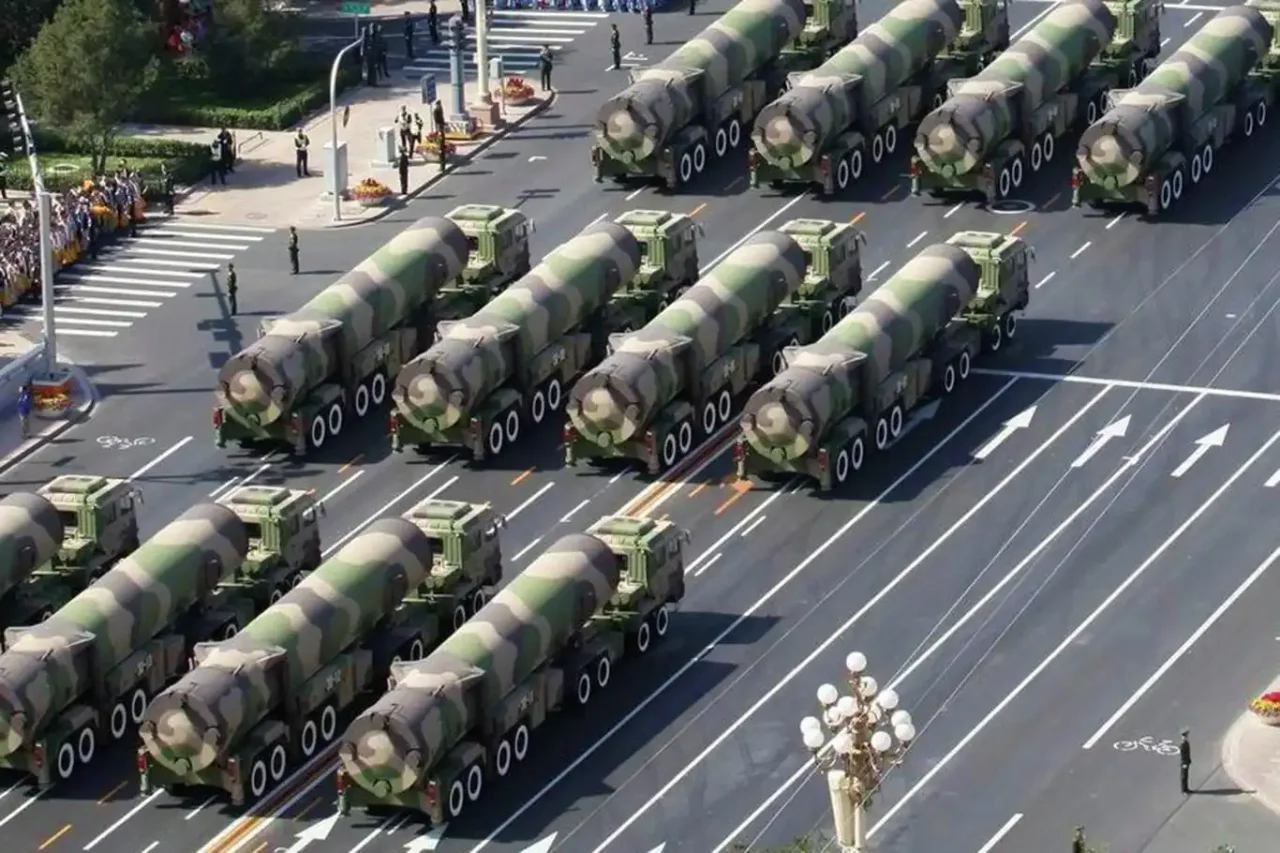
New information regarding China's military power is raising serious concerns on the international stage. According to Reuters, citing data from the Pentagon, Beijing has deployed over one hundred intercontinental ballistic missiles near the border regions of China and Mongolia.
Washington's analysis suggests that this process is not limited to its current state. Assessments from the United States indicate that by 2030, the number of nuclear warheads in China's possession could approach 1,000. This development has the potential to significantly impact global strategic balance.
American intelligence reports emphasize that Beijing plans to prepare its military for potential scenarios involving Taiwan by the end of 2027. However, experts believe that China’s primary strategic focus is not a direct land invasion, but rather expanding its capability to deliver long-range strikes.
Reports indicate that Beijing is considering scenarios for conducting precise strikes on targets located 1,500–2,000 nautical miles away. Such capabilities would not only provide China with strategic superiority in the region but also substantially diminish U.S. influence in the Asia-Pacific region.
Analysts at Reuters note that the development of such extensive military capabilities increases the risk of destabilizing regional stability. This situation is being evaluated as a new challenge not only to the Asia-Pacific area but to the global security system as a whole.
In summary, the rapid growth of China's nuclear and military capabilities is becoming a factor that requires reevaluating the balance of power in global politics.
Read “Zamin” on Telegram!


Users of Меҳмон are not allowed to comment this publication.