


Scientists Observe Formation of Tellurium Nanowires in Liquid for the First Time
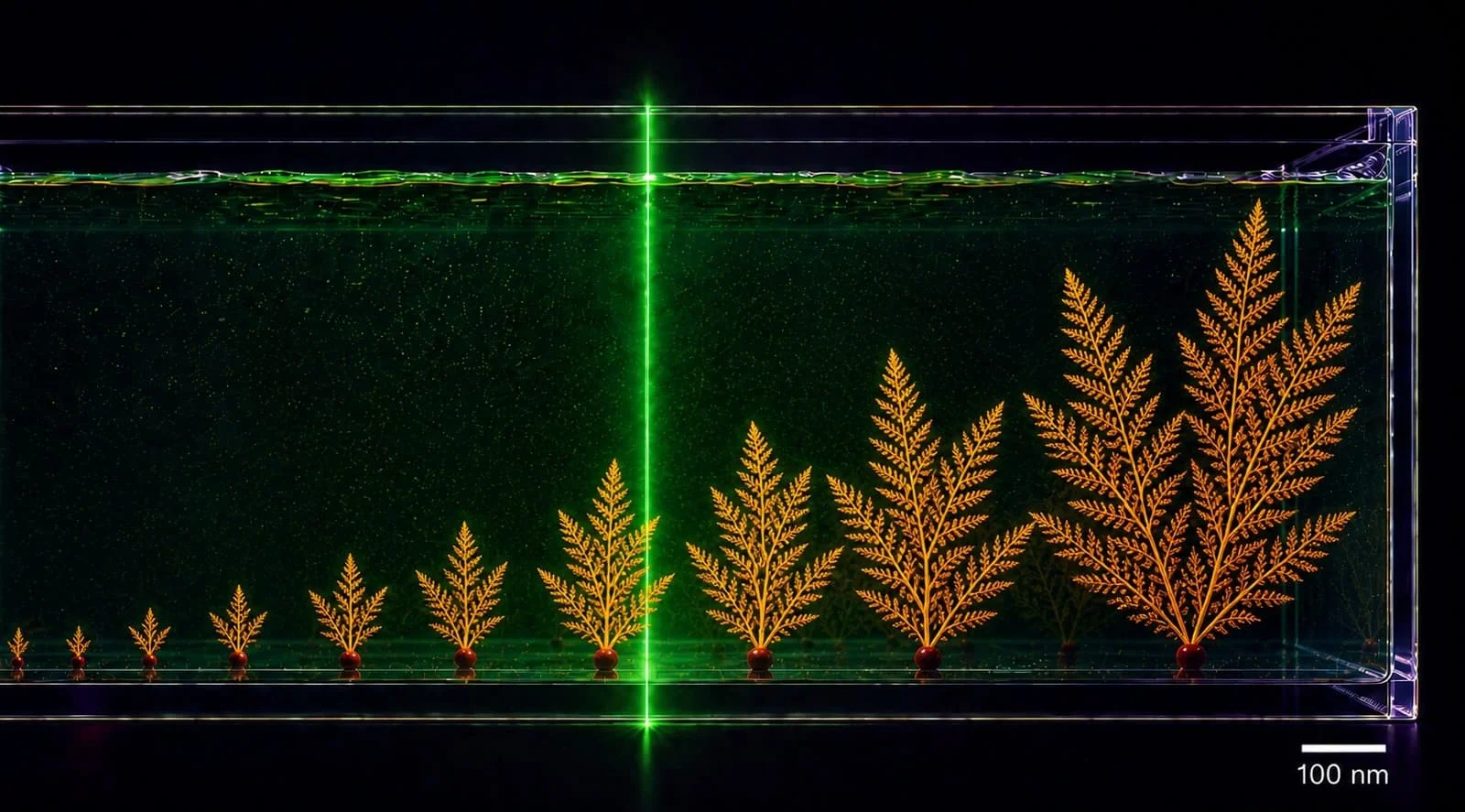
Researchers from the National Graphene Institute at the University of Manchester and Sun Yat-sen University in China have achieved a major breakthrough in science. They have succeeded in recording the formation and growth process of semiconducting tellurium nanostructures in a liquid environment in real time for the first time. This discovery allows for more precise control of materials that play a crucial role in modern electronics and energy. According to Ixbt.com, news reports.
Tellurium is a critical semiconductor widely used in electronics, thermoelectric devices, and optoelectronics. The properties of this material depend directly on its shape and size, which is why controlling its growth process has always been a priority for scientists. According to Ixbt.com, researchers used liquid-phase electron microscopy to observe the initial stages of tellurium formation.
Competition and Growth Dynamics Between Nanostructures
Observations showed that the process begins with the appearance of spherical "nucleus" particles. Subsequently, elongated nanowires grow from these nuclei. Interestingly, during growth, several structures compete with each other for available raw material resources. As a result of this competition, the growth rate and branching of some wires differ significantly.According to measurement results, the growth rate of tellurium nanowires varies from 1 to 15 nanometers per second. This indicator depends on irradiation conditions and the density of neighboring structures. For the first time, scientists have succeeded in quantitatively linking local growth dynamics with the real competition of nanostructures in liquid.
The Revolutionary Effect of Bismuth Addition
Another important part of the research involves studying the effect of bismuth nanoparticles. It was found that the addition of bismuth drastically changes the formation mechanism of tellurium. It increases the number of nucleation centers, resulting in the formation of complex branched structures resembling "ferns."Additional experiments confirmed that bismuth lowers the potential required for tellurium precipitation and increases the overall yield of the material under the same conditions. According to Professor Sarah Haigh, this is the first case allowing the direct observation of how tellurium nanowires emerge and develop in a liquid medium.
This innovation is expected to revolutionize the following areas in the future:
- Creation of high-efficiency thermoelectric generators;
- Increasing the sensitivity of semiconductor sensors;
- Further miniaturization of electronic devices;
- Increasing the efficiency of energy recovery systems.
The authors emphasize that the combination of liquid-phase electron microscopy and controlled additives allows not only for the description of nanomaterials but also for the targeted tuning of their growth mechanisms. This will accelerate the development of a new generation of devices with ultra-precise parameters.


Comments 0
…