


Tensions Escalate in the Middle East: Iran Strikes US Bases
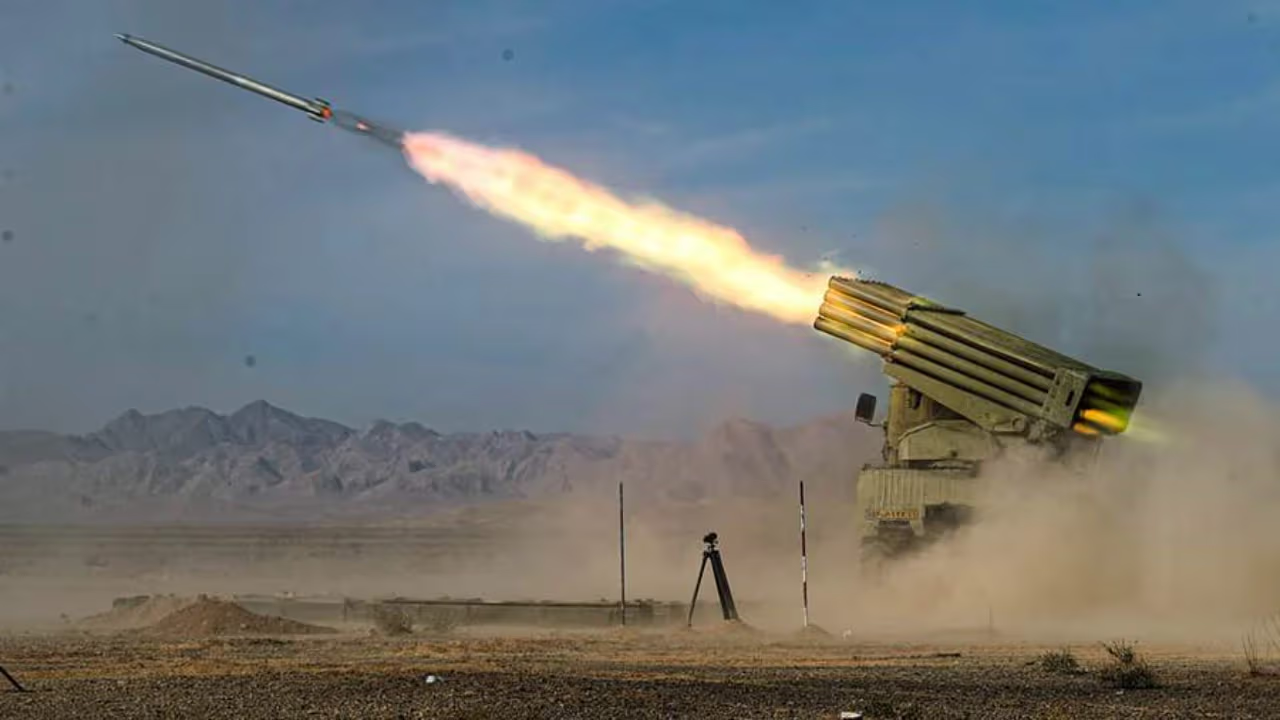
Geopolitical tensions in the Middle East, particularly around the strategically vital Persian Gulf, have reached a new peak. Official statements from the US Central Command (CENTCOM) and the Islamic Revolutionary Guard Corps (IRGC) indicate an increased risk of major military confrontation in the region. These events, which occurred overnight into Saturday, have become the focus of the global community and international media.
According to the US military leadership, Tehran launched several ballistic missiles towards Kuwait and Bahrain.
Aerial Confrontation: Missile Attack and CENTCOM Statement
According to preliminary rapid analyses by US Central Command representatives, the attack launched by Iran was successfully intercepted. The initial details of the military clash are as follows:
Number of missiles: A total of 7 ballistic missiles were launched from Iranian territory.
Response of air defense systems: As a result, 6 of these missiles were successfully intercepted and destroyed mid-air by US air defense systems.
Failed attempt: The remaining single missile crashed without reaching its intended target due to technical reasons or other factors.
To date, neither side has provided official information regarding human casualties, injuries, or significant damage to facilities resulting from these missile strikes.
Tanker Confrontation and IRGC's Defiant Response
Tehran officials, particularly the Islamic Revolutionary Guard Corps (IRGC), offer a completely different perspective on the unfolding events. Iranian military officials state that the conflict began due to violations of order at sea.
According to the IRGC statement, overnight into Saturday, four large oil tankers attempted to pass through the Strait of Hormuz without any official agreement with the Iranian government. As a result, Iranian forces managed to strike one of these vessels and stop it, while the other three water transports were forced to change course and turn back.
Parties to the Conflict | Military Actions Taken | Military Targets and Areas |
US Armed Forces | Following the actions of the Iranian Navy, they launched intense air strikes on radar facilities in the region. | Radar and locator stations in the region. |
Iranian IRGC Corps | In response to US air strikes, they launched a devastating attack using ballistic missiles. | US military base in Kuwait and the headquarters of the US 5th Fleet in Bahrain. |
Strait of Hormuz: Global Energy Security at Risk
According to international observers and political experts, this armed confrontation is not merely a local dispute. The Strait of Hormuz is the most critical maritime corridor through which a very large and strategic portion of the world's oil and liquefied gas trade passes. Instability here could have a significant impact on the global economy, especially on fuel prices.
Background: Although we live in the digital age, military confrontations between "centers of power" in the Middle East continue to threaten world peace. The conflicting and sharp statements from the parties indicate that it is too early to draw independent, verified conclusions about the true scale of the situation. However, the targeting of the US 5th Fleet in Bahrain and bases in Kuwait suggests the situation is no joke. We hope that this crisis will be resolved through diplomatic negotiations and that a new energy crisis will not emerge in the global market.
Stay with us on Zamin pages to always follow the latest military-political news in the Middle East, analysis of global conflicts, and the most exclusive commentaries on international relations!


















Comments 0
…