


Richat Structure: Secrets of the 'Eye of the Desert' and Traces of Ancient History
Quick readAI-generatedShow
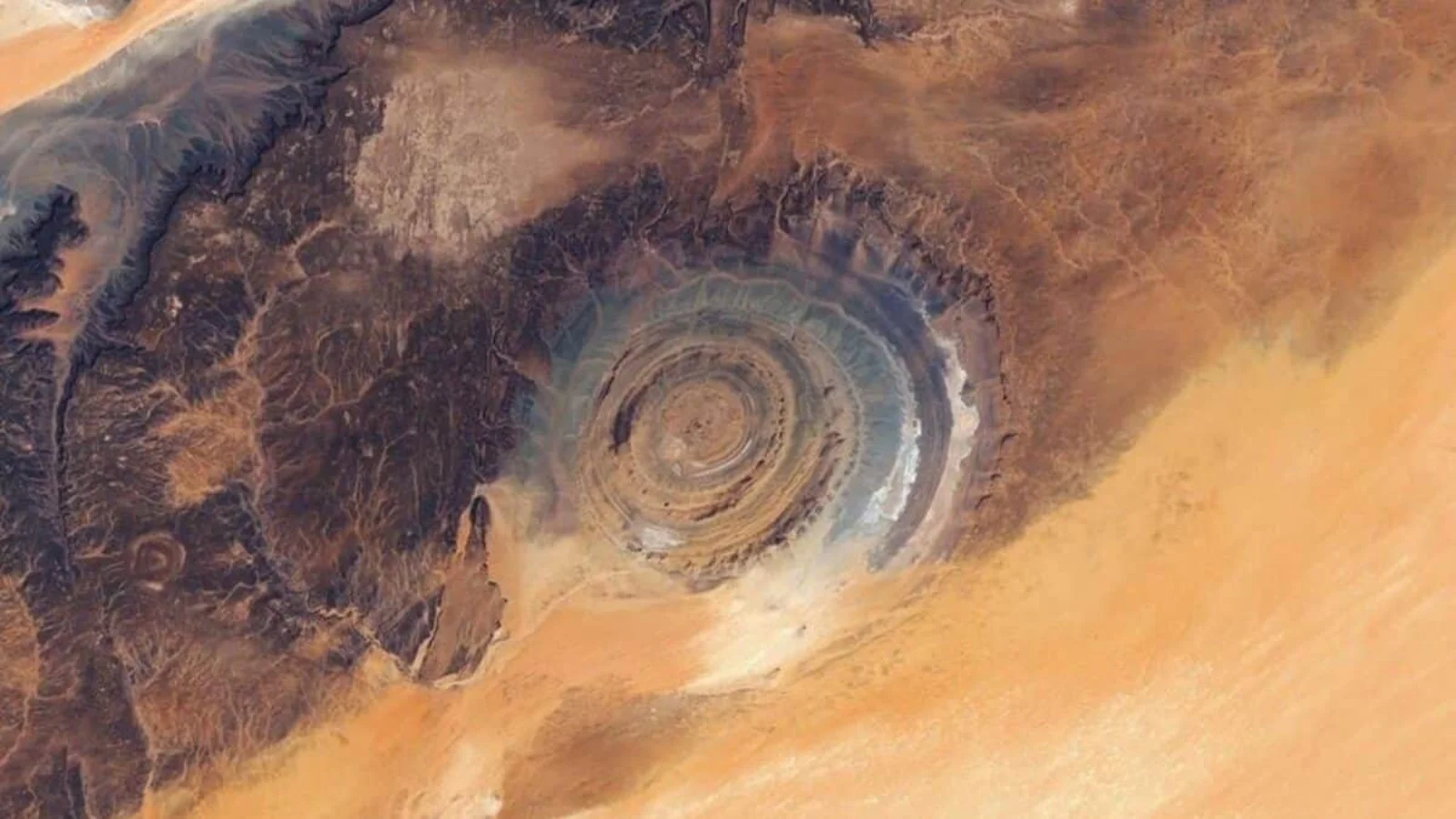
- A recent satellite image showcases the Richat Structure in Mauritania, widely known as the "Eye of the Sahara."
- This striking geological formation, approximately 40 kilometers in diameter, was once thought to be a meteorite impact crater.
- Modern geological research now suggests it is a heavily eroded dome formed by underground magmatic processes, with concentric rings created by differential erosion of rock layers.
- The area is also historically significant, bearing traces of ancient human civilizations from the Paleolithic to medieval periods.
© NASA Earth Observatory / Lauren Dauphin / The Richat geological structure in the lens of the Landsat 9 satellite in March 2026.
In the north of Mauritania, in the Adrar Plateau region, breathtaking landscapes where nature and history merge unfold. This remote corner of the desert is one of the unique places that preserves the oldest traces of human civilization.
Here, stone tools from the Paleolithic era, rock paintings from the Neolithic period, and remnants of medieval settlements that once served caravan routes have been found. They show that human life has been intricately linked to this region for thousands of years.
When viewed from space, the landscape first gives the impression of being shaped by nature. Vast sand "seas" formed by wind, dunes of various colors, and black desert pavements uniquely adorn the plateau's surface. Ancient water flows have created a network of deep valleys and dried riverbeds here.
However, the most striking geological feature is the immense ring-shaped structure located in the eastern part of the plateau, known as the Richat Structure. Its complex concentric shape was first studied in the 1930s by French geographers and named the "Richat Buttonhole."
Later, astronauts like Ed White and James McDivitt photographed it from space, drawing global attention to this natural phenomenon. Since then, it has become widely known among the public as the "Eye of the Desert."
This structure, approximately 40 kilometers in diameter, was initially believed to be a large crater formed by a meteorite impact, as large cosmic bodies can leave such circular traces on Earth's surface.
However, modern geological studies have refuted this view, determining that the Richat Structure is actually a highly eroded dome formed by underground magmatic processes. Over time, rock layers of different compositions eroded at varying rates, creating the ring-like structures.
The orange and gray colors of the structure clearly highlight the difference between underground and surface rocks. This reflects not only geological processes but also the changes in nature over millions of years.
In short, the Richat Structure is not just a geological phenomenon but an "open textbook" of Earth's history. It inspires humanity to look with renewed wonder at both the past and the immense power of nature.



Comments 0
…