


Bubista joins Berkane: Is a new era beginning in Cape Verde?
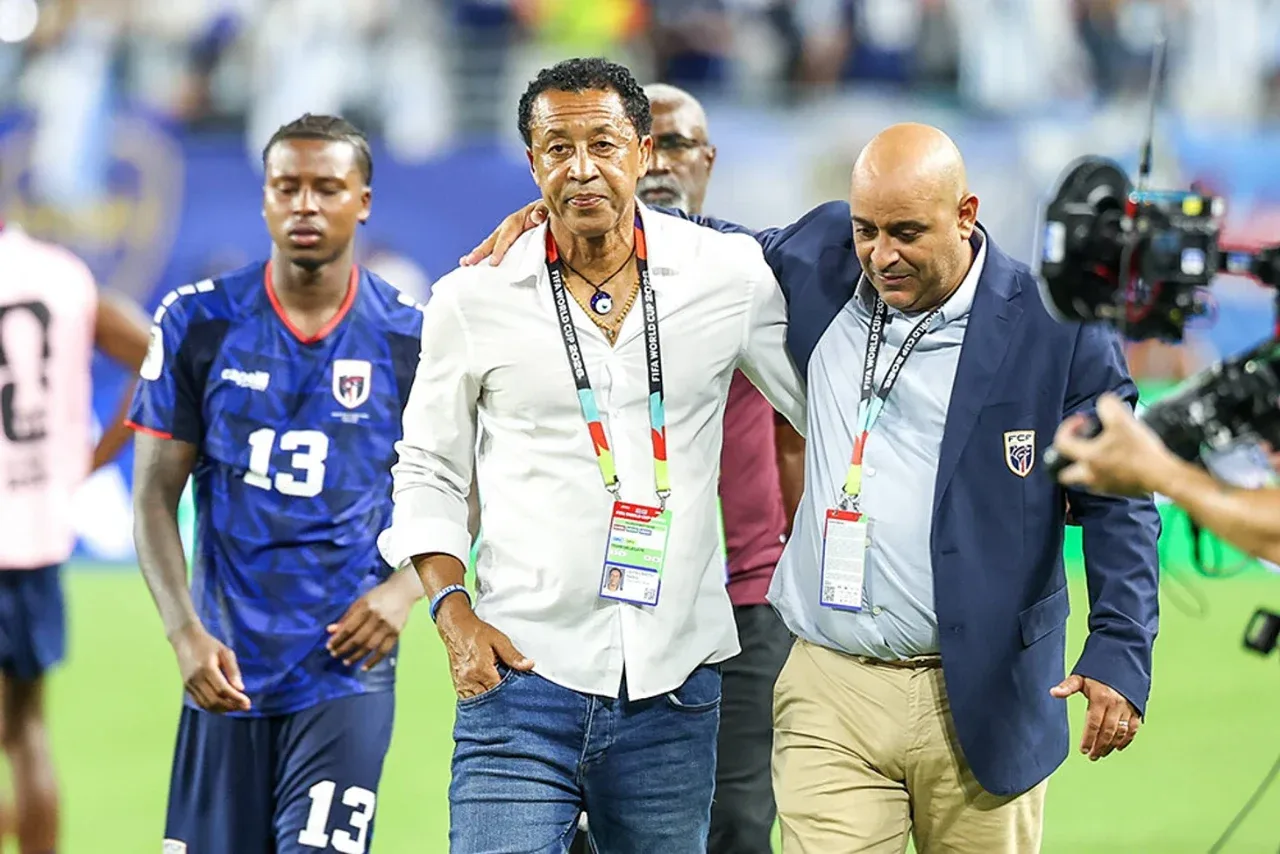
Bubista, who led Cape Verde to its first-ever World Cup, is opening a new chapter in his career. Morocco’s RS Berkane have appointed the 56-year-old coach as head coach.
However, there is an important detail: although the club appointment has been officially confirmed, the Cape Verde Football Federation has not yet separately announced Bubista’s departure from the national team. According to Reuters, he is expected to leave his position with the national team in the coming days.
The World Cup hero will now work in Morocco
The Moroccan club announced the appointment of Bubista, whose full name is Pedro Leitão Brito, at RS Berkane. The length and financial terms of the agreement have not yet been disclosed.
The possibility of the coach continuing to work for both the club and the national team at the same time was initially discussed. However, according to the latest reports, he may focus entirely on the new project at Berkane and leave the Cape Verde national team.
The decision has attracted significant interest in the football world. Bubista is returning to club football just one month after achieving the greatest success in the national team’s history.
The historic journey that began six years ago
Bubista began work as head coach of the Cape Verde national team in January 2020. The federation presented him as the new coach on January 28, while his official tenure began on January 29.
Before that, Bubista had been the national team captain and represented his country for 11 years. He later also worked as an assistant coach with the national team, gaining a deep understanding of Cape Verdean football’s domestic potential.
Over six years, the coach instilled the following core principles in the team:
tactical discipline;
not fearing the opponent’s reputation;
team unity;
bringing together local and diaspora-based players;
showing the country’s unique football identity.
This approach turned the island nation, with a population of around half a million, into one of the biggest sensations in world football.
The first World Cup and unexpected results
Under Bubista, Cape Verde qualified for the World Cup for the first time in its history. After this achievement, the coach was named Africa’s best coach of 2025.
At the 2026 World Cup, the team was drawn in a group with Spain, Uruguay and Saudi Arabia The debutants initially drew 0:0 with Spain, one of Europe’s strongest teams.
In the next match, Cape Verde drew 2:2 with two-time world champions Uruguay. The team showed resilience twice and kept its hopes of reaching the knockout stage alive.
Saudi ArabiaThe final match against Saudi Arabia also ended 0:0. After three draws, Bubista’s team finished second in the group and reached the round of 32 on its World Cup debut.
Stage | Opponent | Result |
|---|---|---|
Group stage | Spain | 0:0 |
Group stage | Uruguay | 2:2 |
Group stage | Saudi Arabia | 0:0 |
Round of 32 | Argentina | 2:3 |
The match against Argentina strengthened his legacy
In the knockout stage, Cape Verde faced reigning world champions Argentina. Many expected a one-sided match, but Bubista’s players delivered another surprise to the football world.
Although Cape Verde fell behind twice, they equalised on both occasions. Deroy Duarte scored in the second half, while Sidny Lopes Cabral produced a superb goal in extra time.
The match was decided in the 111th minute. Lionel Messi’s corner led to an own goal by Diney Borges, giving Argentina a 3:2 victory.
Despite the defeat, Cape Verde left the World Cup as heroes. The team battled the world champions for 120 minutes and missed out on a chance just minutes before a penalty shootout.
After the match, Bubista said he was prouder of the team’s ability to represent the country with dignity and show its football identity than of the result.
Why RS Berkane?
RS Berkane have become one of the most consistent clubs in Moroccan and African football in recent years. The team won the Moroccan league title in 2025 and finished second the following season.
Last season, the club reached the semi-finals of the CAF Champions League and will also compete in Africa’s premier club competition in the new season.
Bubista’s task will not be limited to winning the domestic league. He will be expected to:
prepare the team for the CAF Champions League;
make maximum use of the current squad;
build a team capable of handling international pressure;
return Berkane to the title race in Morocco
The tactical discipline shown against Spain, Uruguay and Argentina at the World Cup demonstrated that he is suited to such a challenge.
The tactical discipline shown against Spain, Uruguay and Argentina at the World Cup demonstrated that he is suited to such a challenge.
The federation wanted to keep him until 2030
Bubista’s departure could put the Cape Verde Football Federation in an unexpected situation. After the World Cup, federation president Mário Semedo said that the coach’s contract had been extended before the tournament and that he was also trusted to lead the country toward the 2030 World Cup.
However, the success sharply increased Bubista’s value on the international market. After his World Cup results, it was natural for clubs offering stronger financial and sporting opportunities to show interest.
The federation now faces two main issues:
officially resolving Bubista’s departure.
finding a suitable successor capable of preserving the system he built.
If the new coach introduces a completely different style, the team balance built over six years could be disrupted. For that reason, the federation will value a coach who can continue the existing football philosophy more than a famous name.
What kind of team did Bubista leave behind?
The coach did more than take Cape Verde to the World Cup. He gave the national team belief in its own ability.
Under Bubista, the players did not simply sit deep against stronger opponents. The team pressed high when necessary, launched quick counterattacks and refused to abandon its game plan even when trailing.
His main legacy can be seen in the following areas:
Area | Outcome |
|---|---|
Historic achievement | First World Cup appearance |
World Cup result | Round of 32 |
Team identity | Disciplined and fearless football |
Squad policy | Bringing together local and diaspora players |
International reputation | Competitive performances against Spain, Uruguay and Argentina |
The incoming coach will inherit a ready-made team. But his most difficult task will not be repeating the results; it will be preserving the belief and unity Bubista created.
Has his departure been confirmed?
At present, two events must be distinguished:
Bubista’s appointment as RS Berkane head coach — officially confirmed;
his departure from the Cape Verde national team — expected, but no separate official statement from the federation has yet been published.
Therefore, rather than firmly concluding that “Bubista has officially left the national team,” it is more accurate to say that “he has been appointed by the club and his spell with the national team is nearing its end.”
An era is ending in Cape Verde
When Bubista took charge in 2020, Cape Verde’s qualification for the World Cup seemed like a distant dream. Six years later, he not only took the country to the tournament but also built a team that pushed Argentina into extra time.
The coach must now prove himself in club football. At RS Berkane, immediate results and trophies will be expected of him.
For Cape Verde, a more important question remains: can the team maintain its World Cup level after the coach who made history, or will it have to build a new era from scratch?
Do you think Cape Verde can maintain its World Cup level after Bubista? Share your opinion in the comments and send the article to football fans.



Comments 0
…