


Cannavaro explains why he used three defenders at the World Cup
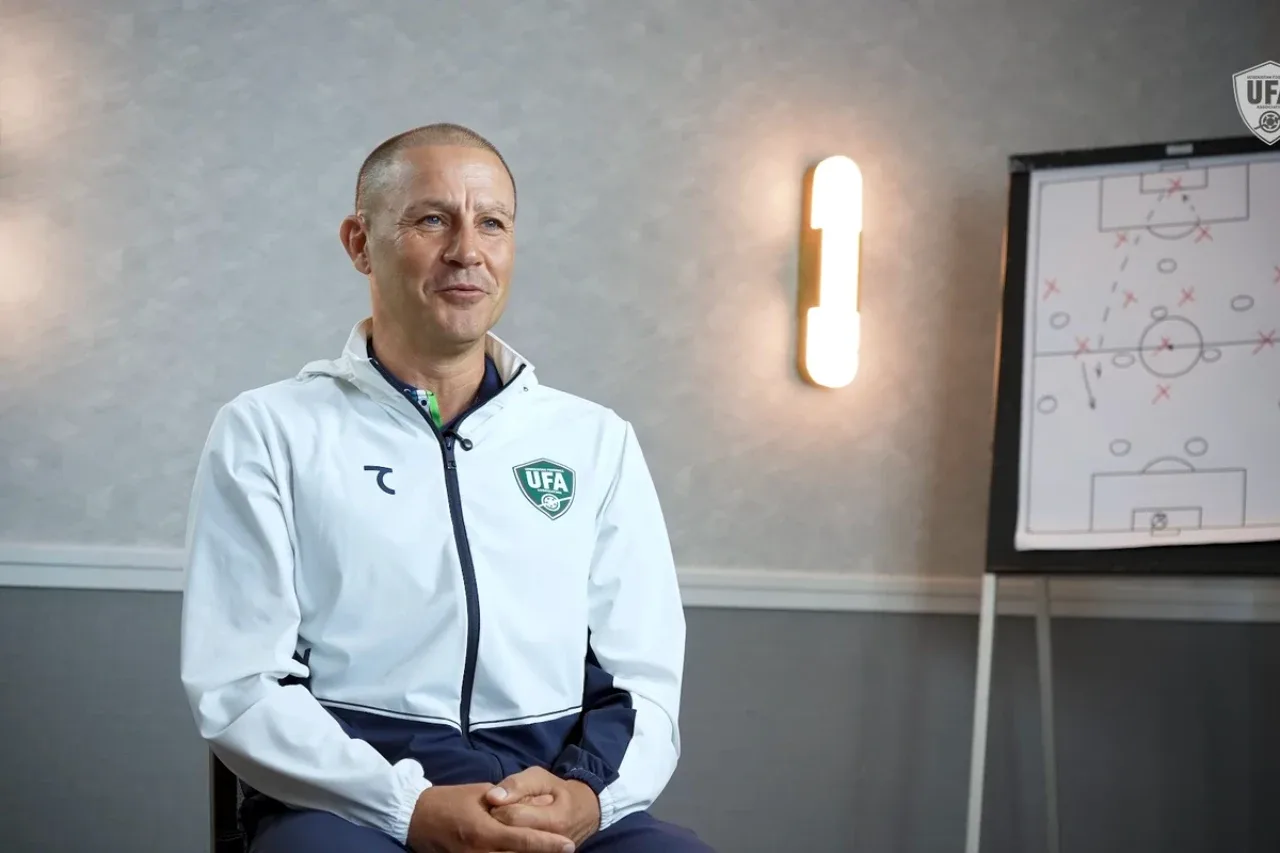
Uzbekistan head coach Fabio Cannavaro revealed that the tactical formation used at the World Cup was not part of the original plan. According to the Italian coach, Husniddin Aliqulov’s injury forced him to abandon the 4-3-3 system and play with three centre-backs.
Cannavaro now plans to move the national team to a more attacking model based on a back four. This change will not be limited to the senior team: in September, he plans to discuss a unified football philosophy with coaches from the various age groups.
Which plan was disrupted by Aliqulov’s injury?
At a press conference, Cannavaro revealed that his main tactical formation before the World Cup had been 4-3-3. However, the injury to centre-back Husniddin Aliqulov forced the coaching staff to reconsider the plan.
“To be honest, Aliqulov changed the plans I had made before the World Cup. Because of his injury, I decided not to make a tactical change.”
Here, Cannavaro meant that he did not want to radically change the three-centre-back system the national team had already become accustomed to shortly before a major tournament. He had also said before the World Cup that it would be risky to suddenly replace a formation that had worked under Srečko Katanec and Timur Kapadze.
Aliqulov’s absence prevented the team from forming the stable defensive unit needed to test a new system. As a result, Uzbekistan relied at the World Cup on a formation that looked more like 3-4-3 or, in the defensive phase, 5-2-3.
Three defenders were not Cannavaro’s first choice
The Italian coach stressed that playing with three centre-backs had never been a permanent main approach in his coaching philosophy.
“Until now, I have played with three centre-backs only at Udinese. At all the other teams I have worked with, we mainly used two centre-backs.”
Cannavaro kept the national team’s familiar structure during the early stages of his tenure in Uzbekistan. In one of his earlier statements, he emphasised that the players’ understanding of one another was more important than tactical numbers, and said that a three-centre-back system could also enable faster attacks.
However, after the World Cup experience, the coach’s position became clearer: the national team must develop its own attacking style rather than constantly adapting its play to the opponent.
Why 4-3-3?
Cannavaro stressed that playing with four defenders would give the team more opportunities in the final third.
“My main tactical formation was 4-3-3. Playing with four defenders also increases our attacking options.”
In a 4-3-3 system, the two full-backs can actively join attacks, while the three midfielders can create a numerical advantage in the centre of the pitch. The two wide forwards can move closer to the centre-forward, keeping the opposition defence under pressure through width and speed.
Although the formation looks simple, it demands considerable discipline from the players. When possession is lost, the wingers must track back, the midfielders must begin pressing together, and the centre-backs must be ready to face opposing attackers one-on-one in large spaces.
Cannavaro has repeatedly said that one of the Uzbekistan national team’s main problems is a lack of high-intensity performance. Therefore, switching to 4-3-3 requires changes not only to the players’ positioning on the pitch but also to their physical and tactical preparation.
The team must play differently in Asia
The coach said Uzbekistan would not have to rely on a deep defensive approach as constantly in the Asian Cup as it did at the World Cup.
“There are no teams in Asia at the level of Portugal or Colombia either. Therefore, we must continue in this direction while developing our philosophical principles.”
Cannavaro’s comment points less to underestimating opponents than to the need to take the initiative based on the balance of power. At the World Cup, Uzbekistan played cautiously against opponents with high tempo, intense pressing and individual quality.
In the Asian Cup, however, the national team will be expected to have more possession, move the game into the opponents’ half and commit more players to attack. A back-four system suits this objective, but its success will depend on how quickly the players learn their new responsibilities.
The change will not start and end with the senior team
Cannavaro also revealed that in September he plans to meet the coaches of all Uzbekistan’s national teams across the age groups.
“It is important to explain to our players from childhood what kind of football they should play.”
The aim of this initiative is to create a methodological link between the under-17, youth, Olympic and senior teams. For example, when a player moves from the under-17 national team to the Olympic side, they should not encounter completely different demands.
If a unified philosophy works:
all age groups play according to similar principles;
players learn high pressing and possession football at an early age;
the transition to the senior national team becomes easier;
the overall football direction remains in place even when the coach changes.
This cannot be resolved in one training camp or one meeting. A unified style must cover the entire system, from coach education, children’s academies and physical training to player selection criteria.
Cannavaro now wants to build his own football
The three-centre-back system at the World Cup resulted from the national team’s previous habits, Aliqulov’s injury and the need for caution against strong opponents.
The situation is now changing. Ahead of the Asian Cup, Cannavaro has openly expressed his intention to refresh the squad, involve young players and switch the team to a 4-3-3 system.
The true value of this decision will not be measured by the numbers of the formation but by what appears on the pitch. Playing with four defenders could increase Uzbekistan’s attacking potential, but how the team defends after losing possession and how long it can maintain a high tempo will remain decisive questions.
Cannavaro preserved the existing system at the World Cup. Before the Asian Cup, he will now try to build his own team and his own style of football. Share your opinion in the comments and send the article to sports fans on Telegram or other social networks!



Comments 0
…