


Secrets of the Universe: AMS-02 Detector Makes Discovery Defying Laws of Physics
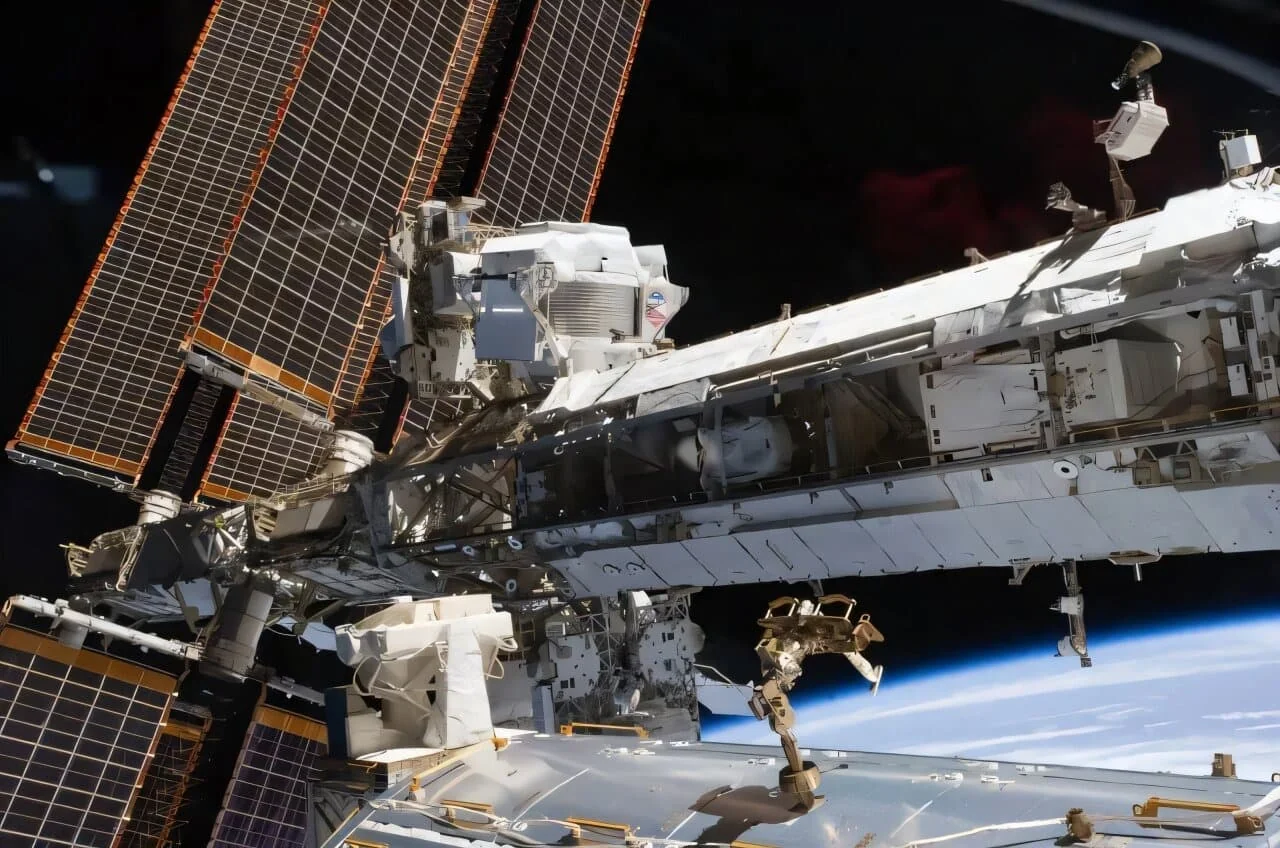
New data obtained using the Alpha Magnetic Spectrometer (AMS-02) detector installed on the International Space Station (ISS) is calling modern astrophysics models into question. Research has identified an anomalous structure in the composition of cosmic rays that cannot be explained by existing theories. This discovery could fundamentally change our understanding of the origin and movement of particles in the universe. This is reported by Ixbt.com news reports.
Cosmic rays are streams of particles with extremely high energy, primarily resulting from extreme events such as supernova explosions. During these processes, various elements up to iron are ejected into space, traveling across the galaxy at speeds close to the speed of light for millions of years before reaching Earth. A study published in the journal Physical Review Letters revealed unexpected characteristics of these particles.
The AMS-02 device has operated in open space for over 13 years, recording more than 230 trillion cosmic ray events. According to ixbt.com, this spectrometer can analyze substances with high precision, from hydrogen and helium to rare heavy elements such as nickel and zinc. The results showed that elements between helium and iron are divided into four stable groups, which does not align with current scientific models.
Mysterious Grouping of Cosmic Rays
Scientists found that primary cosmic rays are divided into two classes: the first includes helium, carbon, oxygen, and iron, while the second groups neon, magnesium, silicon, and sulfur. Secondary rays—particles formed by collisions with the interstellar medium—also formed separate groups such as lithium-beryllium-boron and fluorine-phosphorus-potassium. Such strict regularity was not anticipated in existing astrophysical models.One of the most important aspects of the research is that AMS-02 provided unprecedentedly accurate data on elements that were previously difficult to measure, such as phosphorus, chlorine, potassium, argon, and calcium. This data suggests the existence of additional unknown mechanisms or sources accelerating particles in interstellar space.
Currently, one of the greatest puzzles in physics is how particles maintain energy close to the speed of light. While a supernova explosion provides the initial push, the subsequent movement of particles may depend on unexplored physical processes in the interstellar medium. The AMS-02 detector continues its work, and future data will help clarify concepts regarding the origin of matter in the universe.


Comments 0
…