


Quantum Computer Race: Amazon and QuEra Promise Revolutionary System by 2028
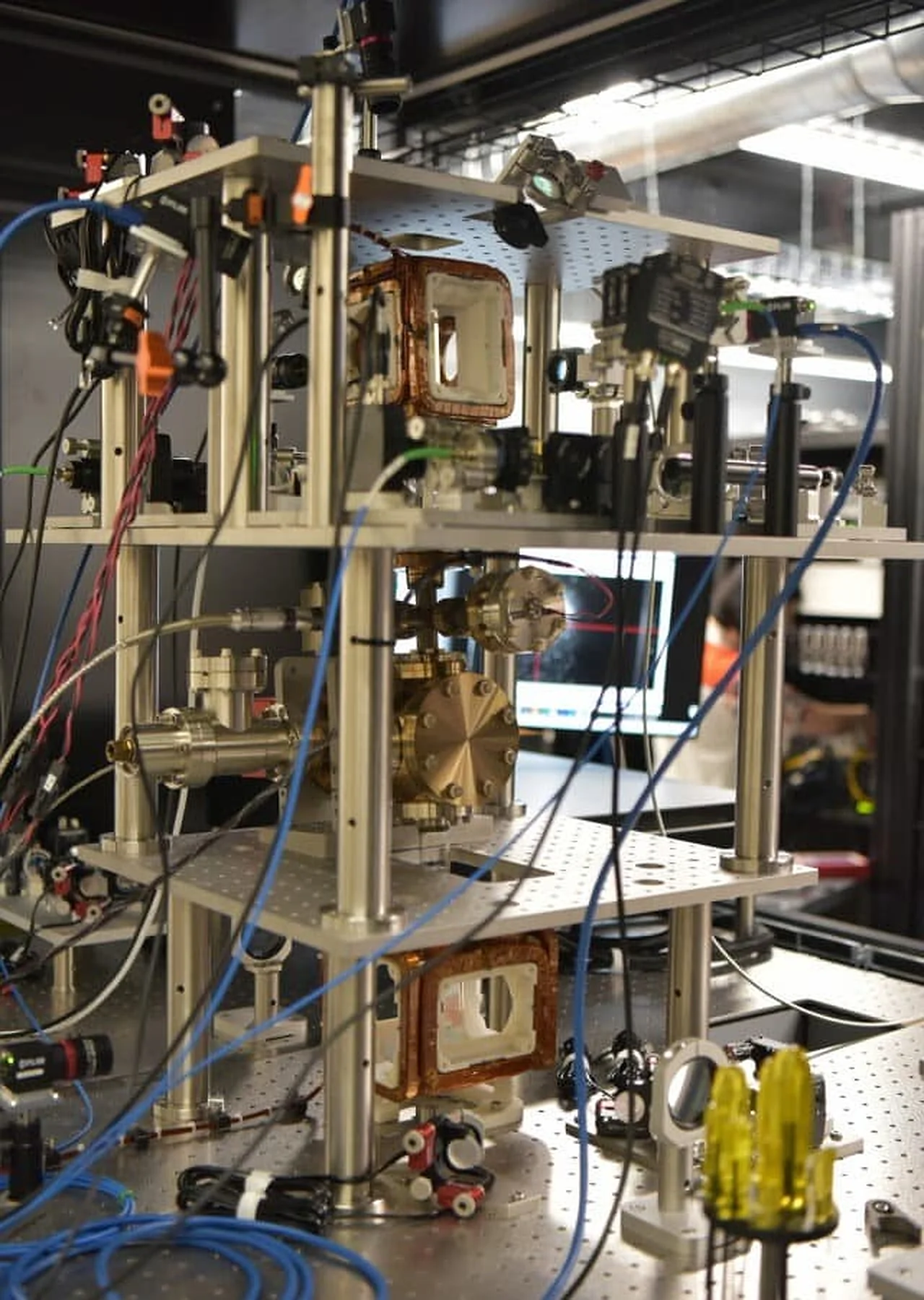
The field of quantum computing technology is experiencing a period rich in contradictions during its development phase. On one hand, tech giants are accelerating plans to launch practical systems; on the other, classical algorithms still put up significant resistance against quantum supremacy. Amazon, in partnership with QuEra Computing, has announced the creation of a "mega-quantum" system called Libra by 2028. This is reported by Ixbt.com news reports.
This new system is expected to be capable of performing nearly a million quantum operations and working with hundreds of logical qubits. Logical qubits are the foundation of fault-tolerant computing, necessary for solving problems in complex fields such as quantum chemistry, high-energy physics, and materials science. According to ixbt.com, such systems ensure stability through multiple data replication and continuous error checking.
Neutral Atoms and Ion Traps: Two Different Approaches
QuEra uses a neutral atom architecture in its Libra system. Here, individual atoms are held in a special lattice using lasers and controlled via light fields. Arrays of nearly 3,000 atoms have already been demonstrated in laboratory conditions. However, the technology faces fundamental issues such as atom heating and loss during manipulation, which complicates the error correction process.Parallelly, Quantinuum is developing the Helios system based on ion traps. Here, ions move along a ring-like structure and are processed in special "working zones." The main advantage of this architecture is the extremely low error rate. In the Helios system, the error rate for single-qubit operations is 0.00003, making it nearly impossible for classical computers to model these processes.
Helios is also implementing a "virtual qubits" software model. In this model, the user defines the task abstractly, and the system itself distributes the computations among physical qubits and corrects errors in real time. This approach brings quantum computing closer to the cloud computing model we are familiar with, making it easier to use.
Ruthless Competition with Classical Algorithms
Alongside technical achievements, the concept of "quantum supremacy" is being reconsidered. For example, the Q-CTRL scientific group claimed that modeling a physical system on an IBM quantum processor was 3,000 times faster than the classical method. However, Multiverse Computing researchers succeeded in reducing this gap to 36 times by optimizing the classical algorithm, and in some cases, the classical method outperformed the quantum result.Currently, the field is in a state of constant competition: quantum companies strive to transition to stable logical qubits, while classical algorithm developers narrow the scope of tasks where quantum acceleration is truly necessary. IBM has even launched a special tracker monitoring quantum supremacy, where results are regularly updated as new classical algorithms emerge.
In conclusion, the main question is not when quantum computers will appear, but which tasks will remain economically justified for them. By 2028, the systems promised by Amazon and its partners are expected to provide the final answer to this question.


Comments 0
…