


BYD to Show Humanoid Robot in August: The Goal Is Ambitious
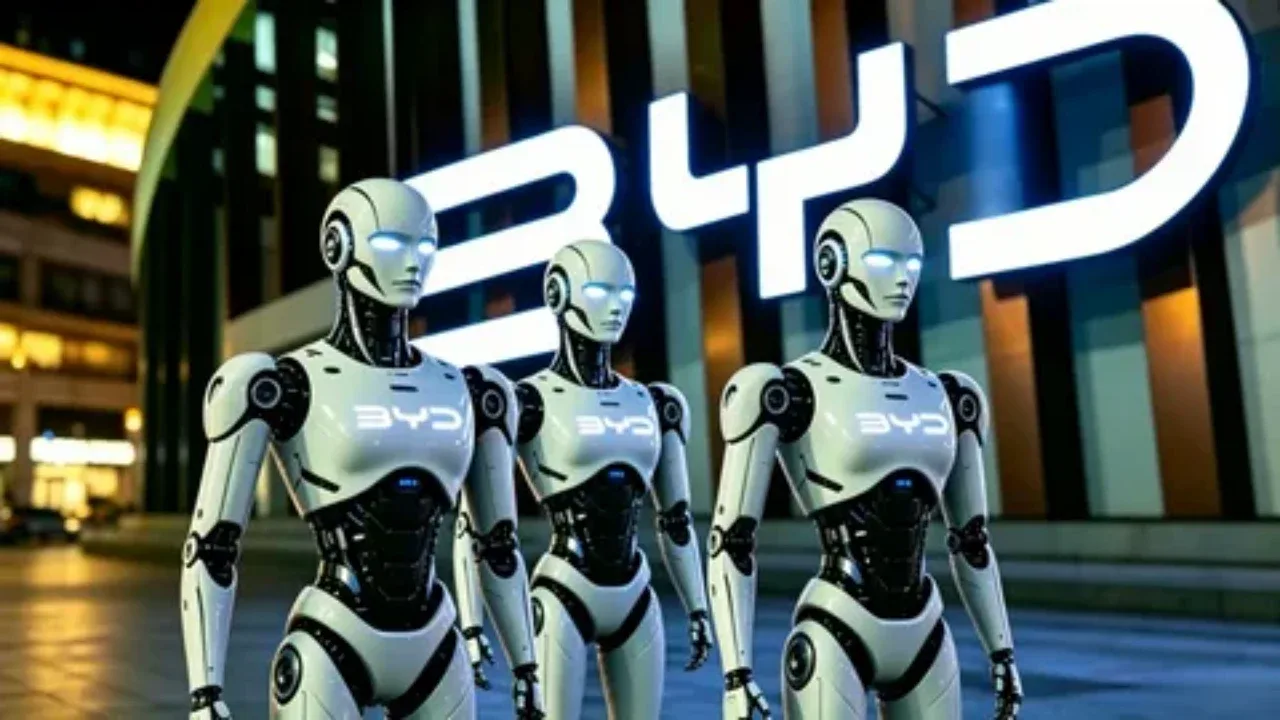
Electric Vehicles BYD, one of the largest manufacturers in the electric and hybrid vehicle market, is entering a new field. The Chinese company has confirmed that it will unveil its first humanoid robot to the public in August 2026.
The presentation will take place at BYD’s Di Space science, education and experience center. The company is keeping the robot’s name and technical specifications secret for now, but the first teaser suggests it will be a physical prototype with movement and communication features rather than a simple model.
A “New Friend” Will Appear in August
On July 25, BYD’s Di Space center in Zhengzhou published a mysterious announcement featuring a humanoid robot. It said that a “new friend” wishing to meet visitors would appear in early August.
According to the teaser, the robot may move when a person approaches and respond with light or movement when spoken to. On July 28, BYD representatives confirmed to the Chinese press that the presentation would take place at Di Space in August.
However, the robot’s ability to walk independently, grasp objects or perform manufacturing tasks has not yet been officially disclosed. Therefore, we will have to wait for the presentation before calling it a fully fledged industrial robot.
Why Is BYD Entering the Robot Market?
For BYD, automotive and robotics technologies are not completely unrelated fields. Electric vehicle production also relies on batteries, electric motors, sensors, artificial intelligence, cameras and control systems.
The company’s executive vice president, Stella Li, has stressed that software alone is not enough to succeed in the robotics market. In her view, a strong hardware base and the ability to manufacture products at scale are also crucial.
BYD has a significant advantage in precisely this area. The company produces vehicles, batteries, electronic components and many other parts within its own ecosystem. As a result, turning ready-made technology into a mass-produced product could be faster than for many robotics startups.
Where Could Robots Work First?
BYD has not yet announced the first tasks for its new humanoid robot. However, humanoid robots from other manufacturers are already being tested at the company’s factories.
For example, UBTECH’s Walker S1 robot has been trained for logistics tasks at a BYD factory. It has been tested alongside autonomous vehicles and warehouse systems to transport goods and move around the production area.
Based on current industrial experiments, humanoid robots could initially be assigned the following tasks:
— transporting parts and boxes;
— delivering materials to production lines;
— inspecting product quality using cameras;
— carrying out repetitive assembly tasks;
— working in areas that are difficult or dangerous for people.
These tasks also explain why robots are being designed in a human-like form. Since factories are built for people, a machine with two legs and two arms can use existing doors, stairs, tools and workstations.
It Cannot Fully Replace Humans Yet
Despite the excitement surrounding humanoid robots, the technology is still at the development stage. Modern models can perform specific tasks, but they struggle to make independent decisions in changing environments and carry out several complex processes continuously.
Some manufacturers admit that the efficiency of today’s industrial robots is approximately 30–50 percent that of human labor. They perform well at specific tasks such as placing boxes or inspecting quality, but they have not become universal workers.
For this reason, BYD’s initial priority may not be to replace people with robots, but to test them in real working conditions and collect large amounts of data. This is a possible conclusion based on the available information.
Robots Could Also Appear in Car Dealerships in the Future
Stella Li said that BYD would like to place two or three robots in every dealership in the future. Such robots could provide customers with information about vehicles, demonstrate features and assist employees. The company sees them not as a complete replacement for people, but as technology that complements the service process.
At the next stage, humanoid robots could potentially be used in warehouses, hotels, shopping centers, medical facilities and homes. However, there is a major technological difference between a repetitive factory task and working in an untidy home environment. Experts say that the widespread adoption of general-purpose home robots will take more time than the deployment of industrial models.
BYD’s Main Weapon Is Not the Robot
It is natural that the robot’s walking ability and interaction with people will attract the most attention during the presentation. However, BYD’s real advantage is not a single impressive demonstration.
The company’s strengths are reducing technology costs, controlling its supply chain and manufacturing products in large volumes. If BYD brings the robot to a level where it provides practical benefits in factories, humanoid machines could move from experimental prototypes to mass-market products more quickly.
That is why the August presentation is important: it could show that BYD is not merely interested in the robot market, but has entered the stage of creating a real product in this field. Share your opinion in the comments and send the article to your acquaintances and friends on Telegram or other social networks!



Comments 0
…