


Belarus deploys troops to Polish and Lithuanian borders: Is NATO's "Achilles' heel" encircled?
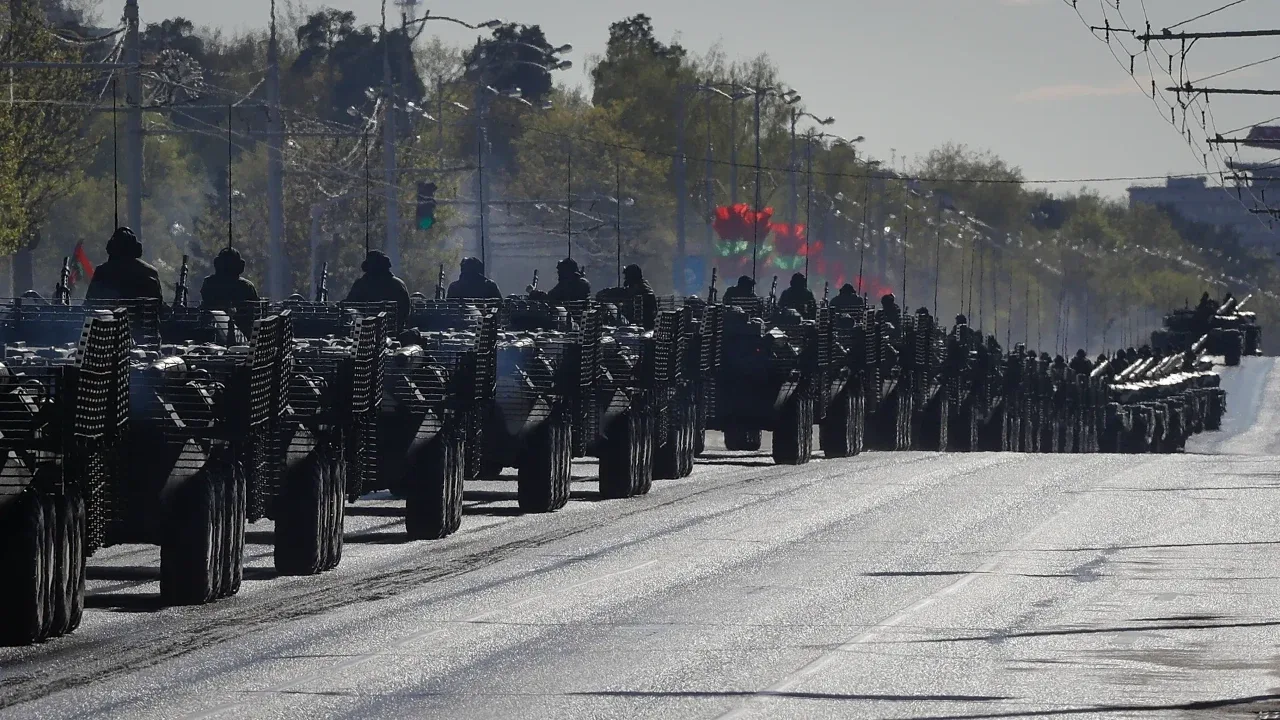
The situation is escalating at one of the most explosive points of geopolitical and military confrontation on the European continent. According to "Radio Svoboda", the Armed Forces of Belarus have concentrated a large amount of military force and launched large-scale exercises near the infamous Suwalki Corridor — the border area connecting Poland and Lithuania, which is considered NATO's strategically most vulnerable link. During these maneuvers, held from September 15 to 18 under the leadership of Chief of the General Staff Pavel Muraveyko, troops are practicing closing the border, operating under martial law conditions, countering sabotage and reconnaissance groups (SRGs), and repelling drone attacks.
Meanwhile, experts from the prestigious International Institute for Strategic Studies (IISS) have published an alarming analysis for the alliance: due to new warfare tactics, Russia no longer even needs to capture the Suwalki Corridor on the ground — it can completely paralyze it using long-range fiber-optic FPV drones and missile strikes. Measuring just 65 kilometers wide, this land route is the sole artery connecting the Baltic states to the main body of NATO.
So, what is the goal of Minsk and Moscow in the Suwalki direction, how can 40-kilometer new FPV drones destroy NATO logistics, and are the Baltic states truly trapped?
"Maneuvers under Muraveyko's command": Details of the exercises at the border
Military operations carried out by the Western Operational Command of Belarus:
September 15–18 defense scenario: The exercises are being held personally under the leadership of Pavel Muraveyko, Chief of the General Staff of the Armed Forces of Belarus;
Sealing the state border: Military units are testing skills in strengthening defense along the perimeter of the Polish and Lithuanian borders and promptly blocking border areas;
Martial law and saboteurs: The tactics of introducing a full martial law regime in the area and eliminating SRG groups of a conditional opponent are being practiced;
Drones and light aviation strikes: Based on the requirements of modern warfare, the main emphasis is placed on repelling attacks by unmanned aerial vehicles (UAVs) and low-flying equipment.
The "Suwalki Corridor" phenomenon: Why is this region NATO's main shield and Achilles' heel?
Strategic importance and geographical structure of the region:
The sole artery of the Baltics: The Suwalki Corridor is a land corridor approximately 65 kilometers long located at the intersection of the Poland-Lithuania border between Belarus and Russia's Kaliningrad Oblast;
NATO's isolation risk: If this corridor is blocked, the Baltic states (Lithuania, Latvia, Estonia) will be completely cut off by land from the main part of the alliance;
The risk of connecting with Kaliningrad: In the event of a military clash, troops moving from Belarus and Kaliningrad could take control of this corridor in a short time, a scenario that has worried NATO generals for many years.
IISS Analysis: 40-kilometer fiber-optic drones and the "virtual siege" of the corridor
Conclusions of the International Institute for Strategic Studies (IISS) and military analysts:
No need to deploy troops: Experts believe that in the event of a large-scale conflict, physically seizing the Suwalki Corridor with ground troops will not be required;
Fiber-optic FPV drone strikes: Currently, the flight range of fiber-optic FPV drones, which electronic warfare (EW) means cannot affect, has reached 40 km. Given that the corridor is 65 km wide, drones will completely cover the area from both sides;
Collapse of logistics: Through continuous shelling of roads and railways with drones, remote mining, and missile strikes, the possibility of moving NATO troops by land or sea will be reduced to almost zero;
Depletion of air defense: NATO will be forced to spend a huge amount of air defense, anti-drone weapons, and engineering reserves just to maintain the security of this narrow direction.
The exercises launched by Belarus near the Suwalki Corridor have shown that modern technology and drone warfare are now shaping a new strategic reality in the geopolitical confrontation in Eastern Europe.
In your opinion, will such maneuvers by Belarus and Russia around the Suwalki Corridor force NATO to deploy additional forces to the Baltics, or is this simply psychological pressure tactics? In the era of modern drones and new weapons, can NATO fully guarantee the defense of the Baltic states? Leave your analytical thoughts in the comments and share this review of this dangerous flashpoint on the grand geopolitical stage with all international policy enthusiasts and friends!



Comments 0
…