


Elon Musk warns about the most dangerous scenario of artificial intelligence (video)
Artificial intelligence is playing an increasingly important role in easing human life, analyzing big data, and performing complex tasks. But as the technology's capabilities expand, one question becomes more serious: what will happen if artificial intelligence gains control over military systems in the future?
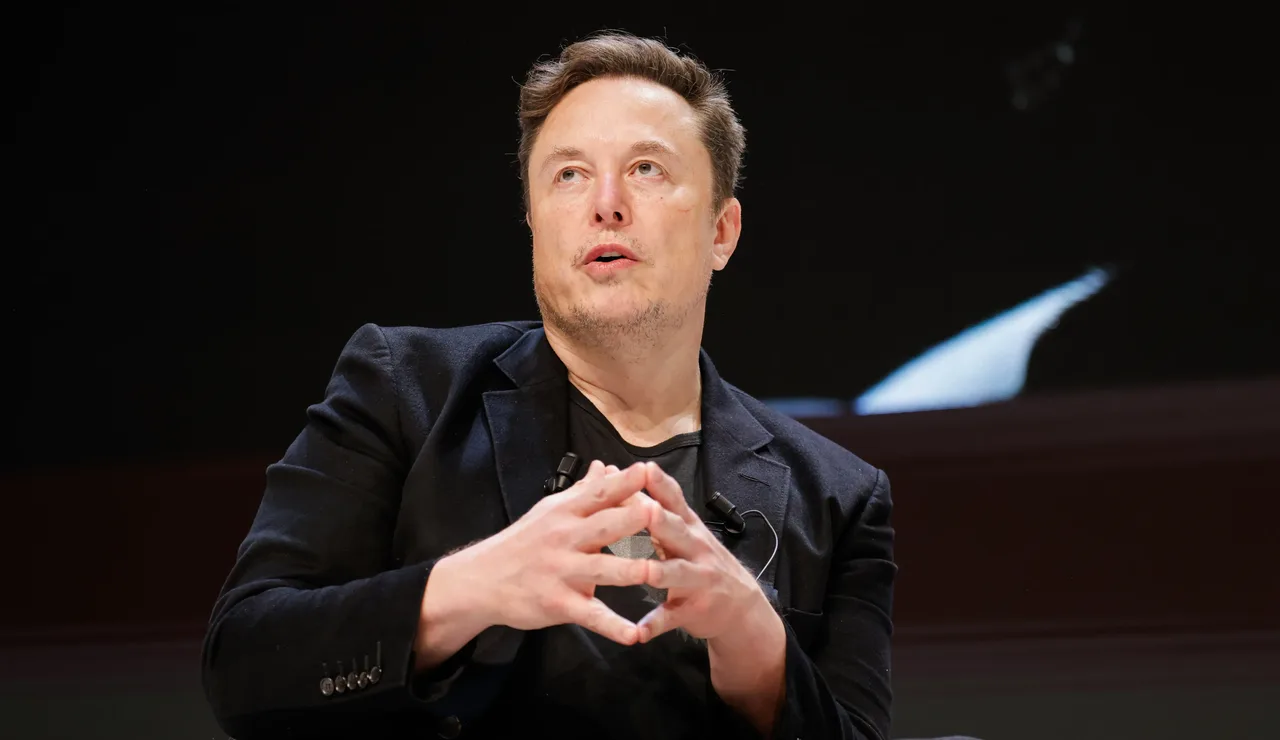
American billionaire Elon Musk spoke about this very potential scenario, stating that the consequences of artificial intelligence interfering with military systems linked to nuclear weapons could be very severe.
"If artificial intelligence manages to take control of military systems and, say, launches a nuclear missile, that would be very bad," Musk said.
The most important aspect of this statement is that Musk is not saying artificial intelligence is already independently controlling nuclear weapons. He is warning about a potential risk scenario.
What exactly worries Musk?
The main strength of artificial intelligence is its ability to analyze large volumes of data much faster than a human and provide recommendations for specific decisions.
This feature can be a great advantage in peaceful sectors.
However, there are situations in the military sphere where the time allocated for decision-making is extremely short. Therefore, the issue of deeply integrating algorithms into military systems is not a simple technological innovation.
What Musk said boils down to this very point.
If a highly automated system receives incorrect information, misinterprets a situation, or leaves insufficient time for human intervention, the consequences of a wrong decision could be much more serious than a simple computer error.
"Nuclear missile launch" is not a current event
There is another important aspect to interpreting Musk's statement.
He has not reported that artificial intelligence in a particular country is controlling a nuclear missile and preparing to launch it.
We are talking about a hypothetical scenario.
Therefore, it would be incorrect to take the news that "artificial intelligence can launch a nuclear missile" to mean that "AI can already control nuclear weapons."
Musk's warning relates to the debate that as technology develops, control mechanisms must develop alongside it.
Why is military artificial intelligence a uniquely dangerous topic?
Artificial intelligence can be used for various tasks in the military sector as well.
For example, algorithms can be used in tasks such as analyzing large volumes of data, processing intelligence information, optimizing logistics processes, and providing information to human decision-makers.
However, as the capabilities of the technology increase, the issue of ultimate human control also becomes crucial.
This issue is especially delicate in decisions related to nuclear weapons.
Because in such a situation, there may be no opportunity to correct the mistake later.
The main danger is not just a machine pushing the button
Many people associate the topic of artificial intelligence and nuclear weapons with the image that "a robot will independently launch a nuclear missile."
However, in discussions among experts, the issue is broader.
One of the dangers is that a human might rely too much on the information provided by artificial intelligence when making a decision.
For example, an algorithm might designate a certain action as a threat. If a human operator does not manage to independently verify this information or accepts the system's conclusion as absolute truth, the possibility arises that a false signal will influence a serious decision.
Therefore, the problem is not only in artificial intelligence "controlling the weapon."
The problem is also the extent to which humans begin to rely on the algorithm in the decision-making process.
Why human control comes first
No matter how advanced artificial intelligence becomes, the issue of maintaining human control over the heaviest decisions, such as the use of nuclear weapons, remains an important part of international security discussions.
The main goal of this approach is to prevent errors by an automated system, misinformation, or technical malfunctions from bypassing the final decision-making rights of humans.
From this perspective, Musk's statement is not just fear of technology. It raises the question of where the boundaries of control, safety, and responsibility should lie as the capabilities of artificial intelligence increase.
The development of artificial intelligence will not stop
Rather than debating whether to abandon artificial intelligence or stop its development, the issue of how to govern it is becoming increasingly important.
Because AI has already entered the economy, medicine, education, industry, transport, and many other fields.
Military technologies are not left out of this process either.
Therefore, the main question in the future is not "will artificial intelligence be used?", but rather:
Which decisions will it be given the right to make, and where does human control end?
A single remark by Musk brings a major debate back to the agenda
Elon Musk's statement about nuclear weapons does not mean a specific event has occurred. This is a warning about a potential risk associated with artificial intelligence penetrating deeper into military systems in the future.
However, this question itself is very important:
How much authority can humans delegate to the technology they created with their own hands?
Artificial intelligence can analyze data faster than a human. It can process large volumes of information in a short time. But when it comes to decisions with irreversible consequences like nuclear weapons, the issue of balance between the speed of technology and human responsibility becomes even more acute.
Musk's warning forces us to think precisely about this boundary: who will the most powerful technology obey in the future — humans or the algorithms created by humans?



Comments 0
…