


Will Europe have its own NATO? Ursula von der Leyen comes forward with a revolutionary initiative
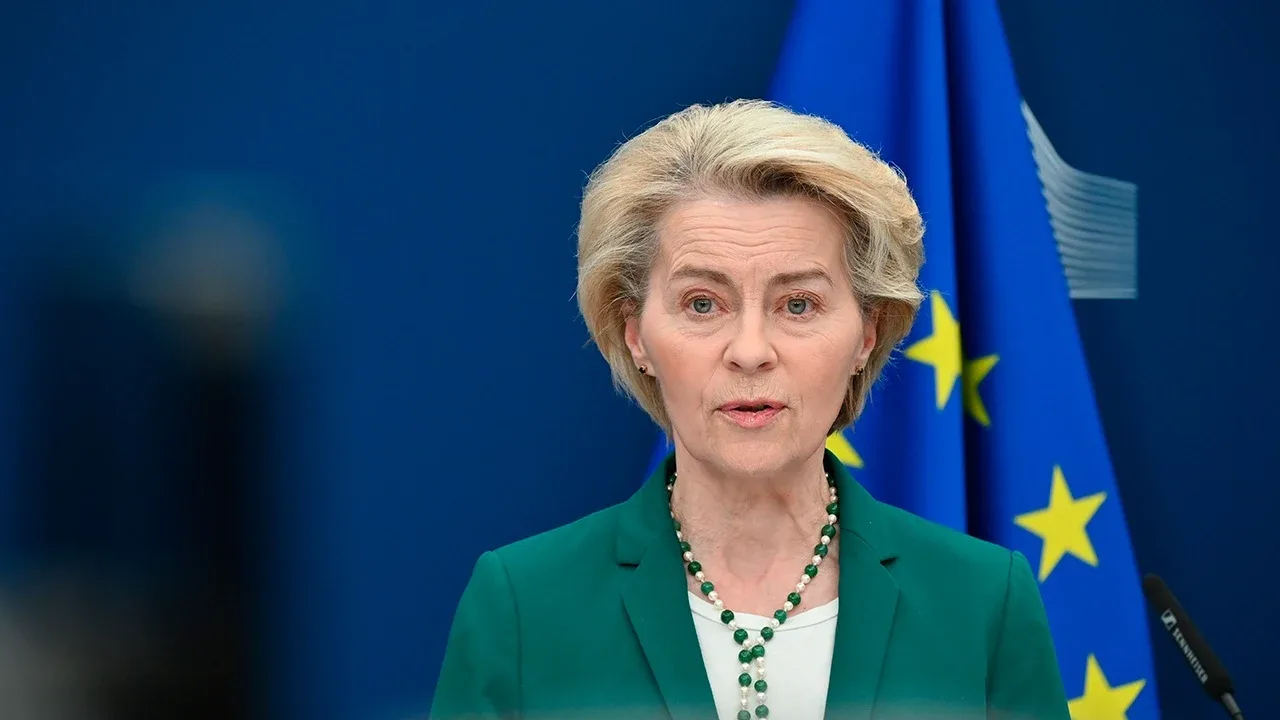
One of the greatest geopolitical turns of recent decades is taking place in the European continent's defense and security architecture. European Commission President Ursula von der Leyen, in her traditional annual speech from the rostrum of the European Parliament in Strasbourg, will officially put forward an initiative to establish the European Security Council — a new military-political structure that could change the continent's history. Citing the text of the speech, the influential publication "Euractiv" reports that Brussels now intends to ensure its defense completely independently and create a new "European Security Protocol" similar to NATO's famous Article 4.
This system will allow for the immediate convening of emergency military-political consultations of allies if a threat arises to the territorial integrity or sovereignty of any member of the European Union. Most surprisingly, against the backdrop of potential geopolitical gaps with Washington, the head of the European Commission has declared transatlantic Canada as the continent's main strategic partner, proposing to bring relations with Ottawa to the maximum level in history. So, exactly what powers will the European Security Council have, is Europe taking the next step toward its own army, and why was Canada chosen instead of the US?
"The Era of European Independence": What will the new Security Council provide?
Main details of Ursula von der Leyen's programmatic speech in Strasbourg:
"Making the Security Council a reality": In her planned speech, the head of the European Commission will disclose the project to centralize continental defense, stating: "We will present our ideas for making the European Security Council a reality";
The condition of ensuring one's own security: Calling the situation that arose a year ago "Europe's moment of independence," von der Leyen emphasizes that the Union is now obliged to independently protect its borders and defense without outside assistance;
Center for rapid decisions: The new council is expected to become the supreme body where European leaders and military command will develop emergency response measures within hours when a threat to continental security arises.
The NATO Article 4 model: Europe's new security protocol
The mechanism of copying the experience of military alliances:
Right of urgent invocation: The protocol proposed by von der Leyen is built on the model of Article 4 of the NATO treaty: accordingly, if any member state considers its security to be under threat, it can immediately convene a meeting of allies;
Guarantee of territorial integrity: This mechanism is intended to provide each state with a solid shield of solidarity amid pressure from Russia and other external geopolitical forces on the borders of Eastern and Northern Europe;
Complementary, not an alternative to NATO: Brussels views this system not as competition with the North Atlantic Alliance, but as a tool to accelerate Europe's own internal military mobilization.
Canada — the new super-partner: An unexpected step across the ocean
The new geographical vector in European foreign policy:
"Maximum level of ties": In her speech, von der Leyen will present Canada as Europe's most important key partner, announcing her intention to elevate relations with it to the highest possible peak;
Resources and defense integration: Canada is planned to form a single front with Europe not only in strategic raw materials and energy, but also in Arctic security and armed forces coordination;
Cautious response to US policy: At a time when political fluctuations in Washington and demands regarding defense spending are intensifying, Brussels wants to strengthen its transatlantic balance through Canada.
This historic speech by Ursula von der Leyen shows that the European Union is determined to transform into a new global military pole possessing not just an economic structure, but its own army, its own Security Council, and an independent geopolitical force.
In your opinion, will the creation of the European Union's own Security Council without dependence on the US be able to fully protect the continent from external threats, or will European defense remain helpless without NATO? Can rapprochement with Canada breathe new life into Europe? Leave your analytical thoughts in the comments and share this analysis of this important turn in the global security architecture with all your colleagues and fans of international politics!


Comments 0
…