


Former head of Georgia's State Security Service Grigol Liluashvili sentenced to 13 years in prison
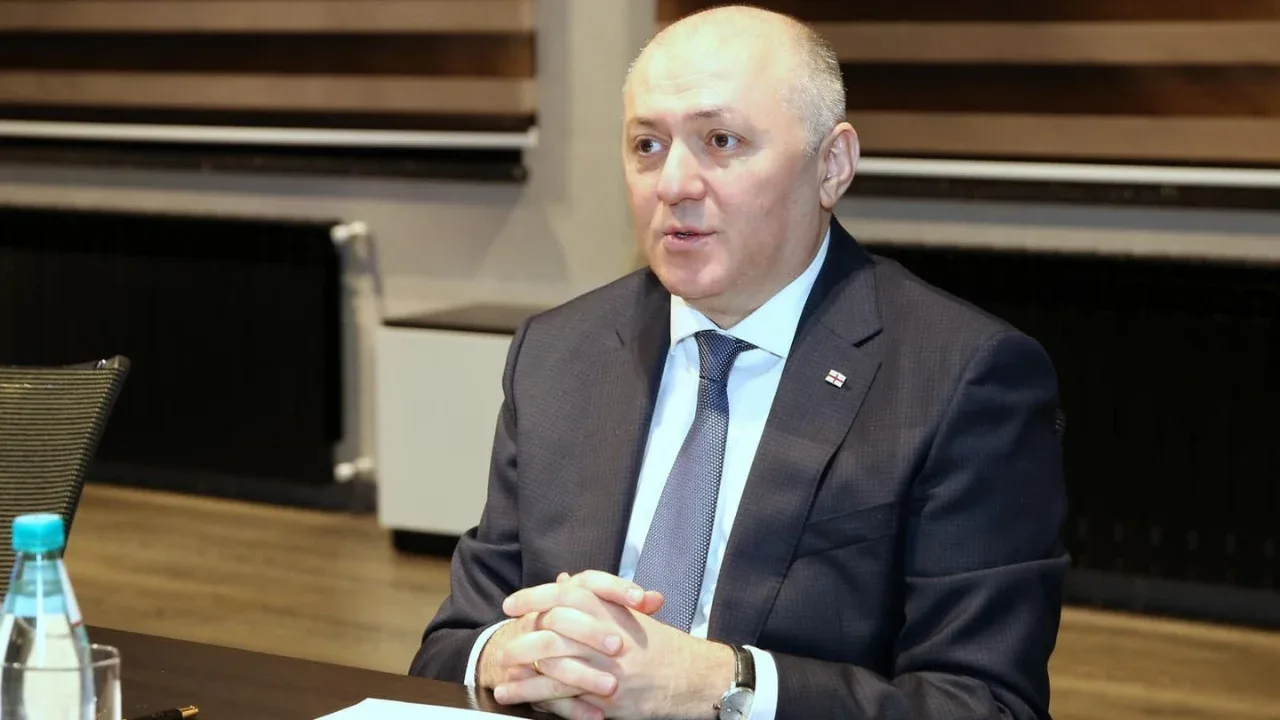
The most high-profile and massive political-corruption detective story in the intelligence and state security system of the post-Soviet space has come to an end. Grigol Liluashvili, who headed the Georgian State Security Service (SSS / SGB) for over 5 years, was sentenced to 13 years in prison by a court ruling. The Tbilisi City Court found him fully guilty on four counts of severe criminal charges related to taking bribes in particularly large amounts. The legislation provides for a sentence of 11 to 15 years in prison under this article, and the court handed down a sentence close to the maximum term.
Liluashvili himself completely pleaded not guilty during the investigation and trial, while his lawyers demanded a full acquittal. Having headed the country's most closed and powerful agency from October 2019 to April 2025, the former official was sensationally arrested in December 2025 — just a few months after his resignation. The details revealed by the investigation shocked the public: corrupt schemes ranging from the construction of wind power plants, gasification tenders, and patronage of international fraud-specialized "call centers," to taking cuts from kindergarten procurement were exposed.
So, how did the former general-in-chief of state security become the "roof" (protector) of criminal networks, how did the investigation prove his multi-million dollar corruption schemes, and what does this prison sentence mean for the Georgian political elite?
"4 severe episodes worth millions of dollars and laris": What did the court prove?
The main corruption evidence in the criminal case opened against Grigol Liluashvili:
$1 million from a Turkish investor (October 2022): $1,000,000 in bribes was received from Turkish investor Cagatay Ulker through the mediation of Romeo Mikautadze, then First Deputy Minister of Economy and Sustainable Development, in exchange for lobbying a wind power plant construction project;
1.5 million laris for gasification tenders (February 2022): 1.5 million laris in bribes was extorted from Giorgi Khajalia, founder of "Express-Service 2008" company, to ensure his victory in state gasification tenders (again via Romeo Mikautadze);
$1,365,000 cut from international fraudulent "call centers" (2021–2023): For officially patronizing ("protecting") illegal call centers engaged in scamming people, the former SSS chief pocketed exactly 1 million 365 thousand dollars with the assistance of his relative Sandro Liluashvili;
"Kickbacks" from the kindergarten budget: He protected Kakha Gvanseladze, former director of the Tbilisi City Hall's Kindergarten Management Agency. The Prosecutor's Office clarified that this criminal group involved in kindergarten procurement embezzled a total of 5,325,943 laris as bribes between 2018 and 2023.
From the peak of power to behind bars: Liluashvili's 5-year tenure
The career path and arrest of the special services chief:
5 years of unlimited power: Heading the country's State Security Service from October 17, 2019, to April 2, 2025, Liluashvili was a person who possessed the state's most classified information and levers of influence;
Resignation and sudden arrest: Just a few months after the end of his powers, in late December 2025, a criminal case was initiated against him and he was arrested;
Pleading not guilty and demand for acquittal: During the trial, the former official denied all charges and tried to frame them as political revenge, but bank transfers, testimonies, and evidence presented by the prosecution were sufficient for the court.
Legal and political lessons: An anti-corruption blow to the state system
Experts' analytical conclusions regarding this 13-year sentence:
Putting an end to the concept of "roof" (protection): The establishment of illegal control by special services over fraudulent call centers and businesses is condemned worldwide, and this court ruling served as a decisive response to such schemes;
Lack of control in public procurement exposed: The embezzlement of budget funds allocated even for preschool education and children's welfare in the amount of millions of laris showed the need to sharply strengthen public oversight;
No one is above the law: The 13-year imprisonment of the head of the country's most powerful agency became an important precedent demonstrating the inevitability of punishment for public officials.
This 13-year prison sentence handed down to Grigol Liluashvili clearly proved that subordinating state powers to personal enrichment and fraudulent interests will sooner or later force any high-ranking official to answer before the law.
In your opinion, is the 13-year prison sentence given to the former 5-year head of the security service in Georgia a result of a genuine anti-corruption fight or a political calculation behind a change of power? What mechanisms should states use to prevent such horrific corruption schemes that combine special services and kindergarten procurements? Leave your analytical thoughts in the comments and share this analysis of the high-profile court ruling in the post-Soviet space with all your colleagues and politics enthusiasts!



Comments 0
…