


A new certification procedure is being introduced for primary school teachers
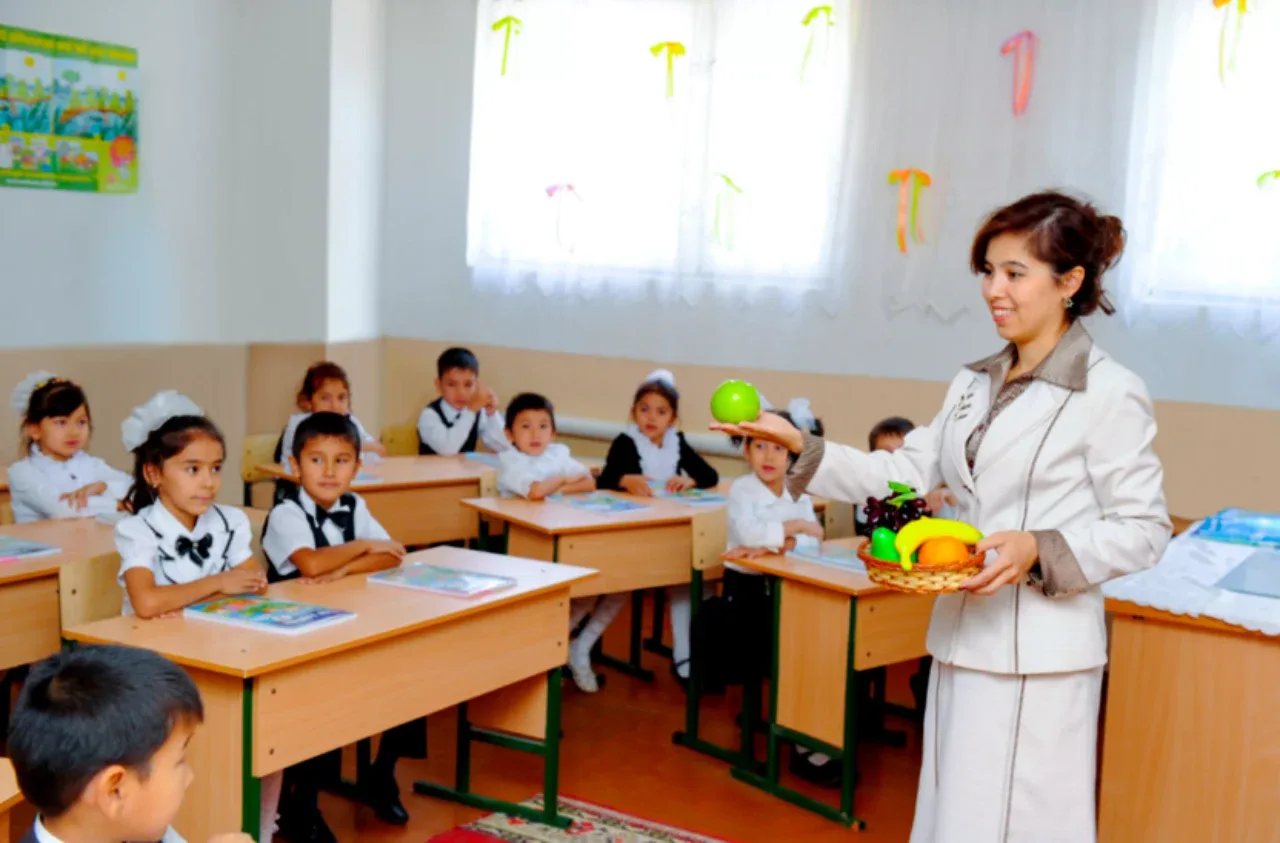
In Uzbekistan, a new national certification procedure aimed at assessing the knowledge and professional skills of primary school teachers is reportedly being introduced. Under the new approach, the assessment will examine not only a teacher’s subject knowledge, but also how they teach it to children and their ability to organize the learning process.
Applications are expected to be accepted electronically, results calculated using the international Rasch model, and successful applicants issued a QR-code certificate. The highest result will be A+, while the minimum certificate level will be C.
What will be assessed under the new system?
According to the procedure you provided, the examination for primary school teachers will cover three main areas:
theoretical knowledge of primary education subjects;
subject teaching methodology;
pedagogical skills and decision-making in professional situations.
The main difference is that knowing the textbook content by heart will no longer be sufficient. Teachers will also need to demonstrate the ability to choose age-appropriate methods, explain complex topics simply, work with children of varying abilities in the classroom, and assess lesson effectiveness.
Thus, the certificate may evolve from a document confirming subject knowledge into a benchmark reflecting a teacher’s overall professional potential.
Applications will be submitted through my.gov.uz
The new system is planned to be fully digitized. Teachers will submit applications through their personal accounts on the Single Interactive State Services Portal and will subsequently track their results electronically.
Under the current national certification service for general education subjects, applications are also submitted through my.gov.uz, no separate documents are required, and the process takes approximately three minutes.
This could reduce the need for teachers to visit regional offices, collect paper documents, and wait a long time for their results.
There is an important difference in the fee amount
According to the information provided, a fee equivalent to 1.5 times the basic estimated amount applicable on the date of application will be charged to participate in the examination.
The basic fee for the current general education subject certificate is also set at 1.5 BHM. However, when the service is obtained through my.gov.uz, a 10 percent discount is applied, and the portal currently displays the fee as 1.35 BHM.
Therefore, when the separate service for primary school teachers is launched, the actual amount payable should be checked once again on the portal page. The payment is not a fixed amount in Uzbek soums—it changes depending on the BHM applicable on the date of application.
How does the Rasch model calculate results?
Examination results are planned to be calculated using the international Rasch model rather than simply by the “number of correct answers.”
This method makes it possible to compare the results of participants who take examinations on different days and using different versions. If one version turns out to be easier and another more difficult, this difference should not unfairly affect the final result.
According to an explanation by the Knowledge and Skills Assessment Agency, this involves using “anchor questions” that remain unchanged across several versions. They help determine the difficulty level of each version and bring the results onto a single scale.
Thus, not every participant must answer exactly the same number of questions correctly to score 60 points. The result is formed based on the difficulty of the questions and the overall statistical indicators of the test.
How are certificate levels distributed?
The current national certificate assessment scale consists of six levels. These thresholds are also used in official results.
Score obtained | Certificate level |
|---|---|
70 points or higher | A+ |
65–69.9 points | A |
60–64.9 points | B+ |
55–59.9 points | B |
50–54.9 points | C+ |
46–49.9 points | C |
Below 46 points | No certificate issued |
The initial text showed the letter “J” for 65–69.9 points, but under the official scale this is considered the A level.
The existence of this scale allows teachers to see their level of preparedness more precisely, rather than receiving only a “passed” or “failed” result.
The certificate may be issued within one business day
According to the procedure you provided, an electronic QR-code certificate will be issued to a successful participant within one business day after the assessment is completed.
The document’s authenticity can be verified via the QR code, and it can be submitted electronically to an employer or relevant organization. It is expected that applicants will not need to visit a separate office to obtain a paper copy.
Results for the current national certificate are also published in the “My Applications” section of the my.gov.uz portal, where the certificate can be downloaded electronically.
What should a teacher do if they disagree with the result?
The new procedure is also said to provide for an online appeals process. A teacher dissatisfied with the result may submit an electronic appeal within three days of its publication.
As this period is very short, after the result is announced, teachers should:
check their personal account;
review the scores awarded;
if they have an objection, submit an appeal without waiting until the final day.
An appeal does not mean retaking the examination. It is an official request submitted to determine whether an error occurred during the assessment process.
Will the certificate provide a salary bonus?
One of the most important questions is what practical benefits the new certificate will provide teachers.
The information provided does not clearly specify the certificate’s:
validity period;
level from which a bonus will be granted;
consideration in attestation;
effect on qualification category;
retake period
.
The current national certificate for general education subjects is issued for three years. However, whether the special professional certificate for primary school teachers will also be valid for the same period must be determined by a separate regulatory document.
Therefore, it is too early to conclude that the certificate will automatically provide a salary bonus or a higher qualification category.
Where should teachers begin their preparation?
If the new system also assesses methodology and pedagogical skills, memorizing test collections alone will not be enough.
The main areas of preparation may include the following:
Subject knowledge: the main topics in the native language, reading literacy, mathematics, and natural sciences taught in primary grades.
Methodology: explaining topics in accordance with pupils’ age characteristics, setting lesson objectives, differentiating assignments, and working with pupils’ mistakes.
Pedagogical situations: classroom conflicts, pupils falling behind in their studies, communication with parents, and situations related to inclusive education.
Assessment literacy: objectively assessing pupils’ results, providing feedback, and planning the next lesson based on the results.
Once the official test specifications and sample tasks are published, preparation should be aligned with these documents.
A certificate will also be introduced for law
From the 2026/2027 academic year, it has been established that testing to assess knowledge of law and the issuance of a state-standard certificate will be introduced. This task is provided for in Presidential Decree No. PF–232 dated November 26, 2025.
However, the test structure, assessment criteria, and benefits to be provided to teachers under the law certificate must be approved separately.
Why is the new system important?
Primary education is considered the most important foundation for a child’s subsequent education. Initial skills in reading, writing, counting, and independent thinking are formed precisely at this stage.
Therefore, it is not enough to assess a primary school teacher only through subject questions. Along with knowing the subject, a teacher must also be able to convey it in a way suited to the child’s age and abilities.
If properly organized, the new certification system could make it possible to:
identify strong teachers;
establish clear development pathways for teachers;
reduce the human factor in assessment;
encourage professional skills;
improve the quality of primary education
.
However, the system’s effectiveness will depend on the quality of the test questions, the practical relevance of the methodological tasks, the transparency of the appeals process, and how the certificate affects teachers’ professional activities.
Some details still need to be officially disclosed
Open official sources have confirmed the Rasch model, electronic applications, fees, and level scale for the national certificate in general education subjects. However, it was not possible to independently locate the full text of the separate new regulation intended for primary school teachers.
Therefore, final information on the first examination date, the number of questions, the certificate’s validity period, and the conditions for receiving a bonus will become clear after an official announcement from the relevant ministry or the Knowledge and Skills Assessment Agency.
In your opinion, is subject knowledge or teaching skill more important when assessing primary school teachers? Leave your thoughts in the comments and share the article with your acquaintances on Telegram or other social networks!



Comments 0
…