


Quantum Revolution: Quantinuum and Sandia Successfully Test 98-Qubit Helios System
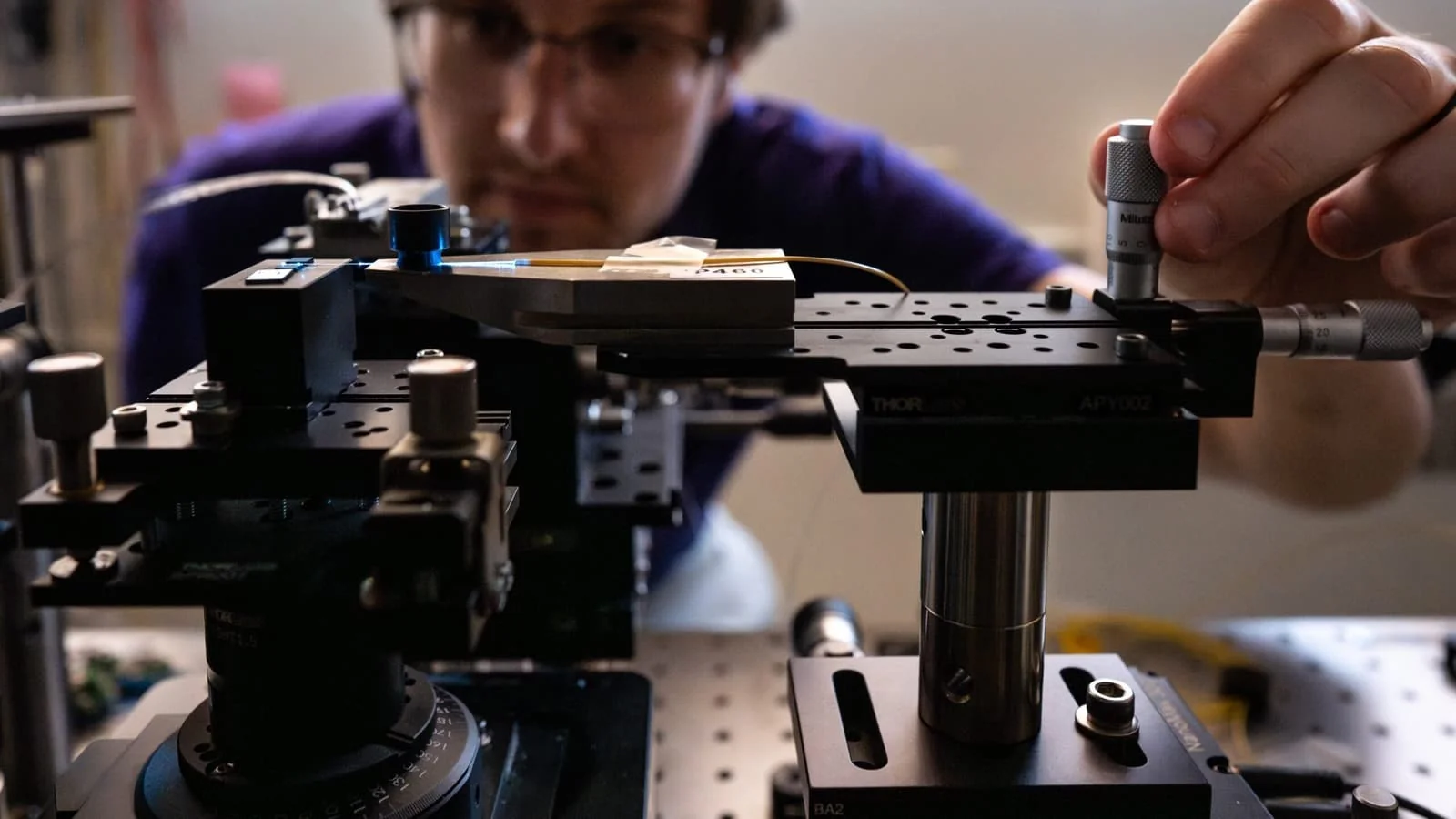
The US Sandia National Laboratories and Quantinuum have announced the test results of the 98-qubit Helios quantum processor developed in collaboration. A research report published in Nature indicates that this system has set world records in minimizing practical errors. This is considered a significant step in moving quantum computers from laboratory experiments to real engineering solutions. According to Ixbt.com, news reports.
The Helios system is based on a trapped-ion architecture, where ions are held by electromagnetic fields and moved to specialized processing zones. During tests, the accuracy of single-qubit operations reached 99.9975 percent, and two-qubit operations reached 99.921 percent. According to ixbt.com, this high level of stability makes the Helios platform one of the most reliable quantum systems in its class.
Error Control and Stability
The main problem in modern quantum computing is not the number of qubits, but their extreme sensitivity to external influences. Small vibrations in lasers or microscopic movements of atoms can disrupt the entire computation process. Specialists at Sandia Laboratories focused on solving exactly this problem. The research utilized a method called "mid-circuit measurements," which allows for error correction during computation without damaging the overall state of the system.Sandia National Laboratories has been working on quantum technologies for over 20 years. This institution, under the US Department of Energy (DOE), studies the impact of quantum computing on cryptography, pharmaceuticals, and energy. The achievements within the Helios project will serve as a foundation for creating complex molecular models and ultra-secure communication systems in the future.
Future Prospects and Photonics
Researchers emphasize that at the current stage, the reliability of quantum computers is more important than their speed. Helios is already demonstrating a level of complexity and precision that classical supercomputers cannot model. However, this does not yet mean full quantum supremacy has been achieved, but rather indicates that systems are transitioning into a controllable engineering mode.At the same time, Sandia Laboratories is also involved in developing integrated photonics technology. This method involves transmitting quantum data using light signals. In the future, it is planned to further expand quantum systems using photonics, reduce energy consumption, and increase stability. This will further expand the commercial and scientific potential of processors like Helios.


Comments 0
…