


Weightlessness Found to Alter Human Consciousness: Similarities to Psychedelic Effects
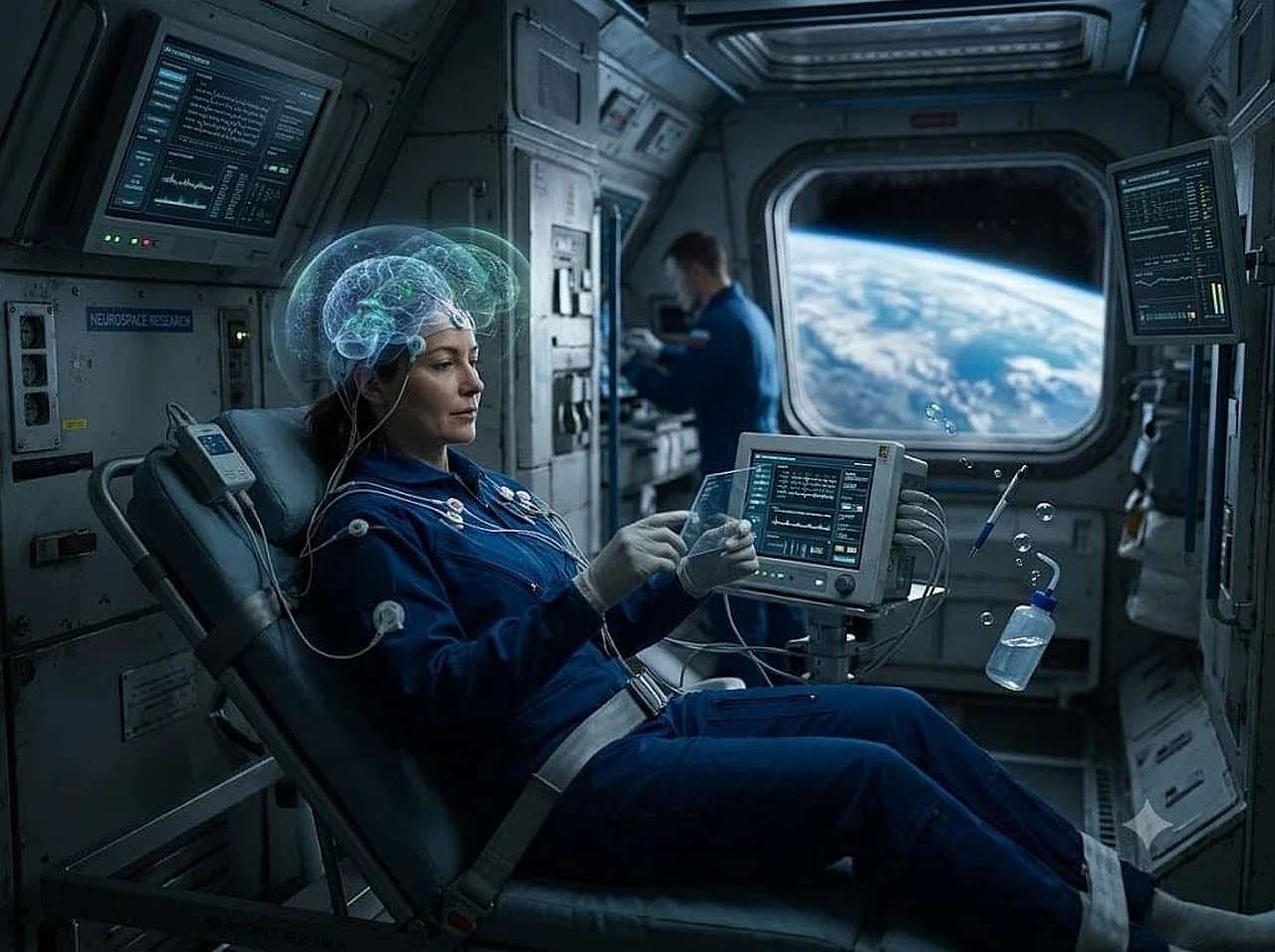
It has been revealed that spaceflight affects not only physical health but also the fundamental mechanisms of human psychology and consciousness. A new study conducted by scientists at Birkbeck College, University of London, shows that weightlessness can alter perception processes in the brain, inducing states similar to the effects of psychedelic substances. This is reported by Ixbt.com news reports.
Researchers Annahita Nezami and Elisa Raffaella Ferre, analyzing data from space medicine, psychology, and neurology, emphasize that Earth's gravity is a primary anchor in the formation of human consciousness. From birth, the balance organs, vision, and proprioception system shape our worldview based on the direction of gravitational pull. The loss of this fundamental anchor in space causes a sudden "systemic crisis" for the brain.
Cognitive Changes in the Brain and the "Overview Effect"
In weightlessness, signals from the inner ear no longer match expectations formed during evolution. As a result, a conflict arises between vision and balance organs, forcing the brain to completely restructure its functioning. According to ixbt.com, astronauts often experience loss of spatial orientation, sleep disturbances, mood swings, and even depersonalization — a feeling of detachment from oneself.At the same time, many space travelers also report positive psychological changes. Observing our planet from Earth's orbit causes a phenomenon called the "Overview Effect." In this state, a person feels a deep unity with all of humanity, their life values change, and they experience intense emotional excitement. Scientists believe this state is a result of the relaxation of the brain's perception system due to the absence of gravity.
Magnetic Resonance Imaging (MRI) and electroencephalography data confirm this hypothesis. After long-term missions, changes in gray matter distribution and connections between various brain regions were found in astronauts. In particular, serious restructuring occurs in the neural networks responsible for self-awareness and internal communication.
Connection with Psychedelics
The authors of the study found an interesting similarity between these changes in space and the effects of substances such as psilocybin or LSD. Although the mechanisms of action differ — psychedelics act on serotonin receptors, while weightlessness is an environmental factor — in both cases, the brain's most stable perception models weaken, and connectivity between different regions increases.According to the scientists' conclusion, spaceflights can serve as a unique "natural laboratory" for studying the nature of human consciousness. These studies are crucial not only for astronauts planning future colonization of the Moon and Mars but also for understanding how humans perceive themselves and their environment.


Comments 0
…