


The world is dividing into new military blocs: Israel and Turkey confrontation reaches its peak
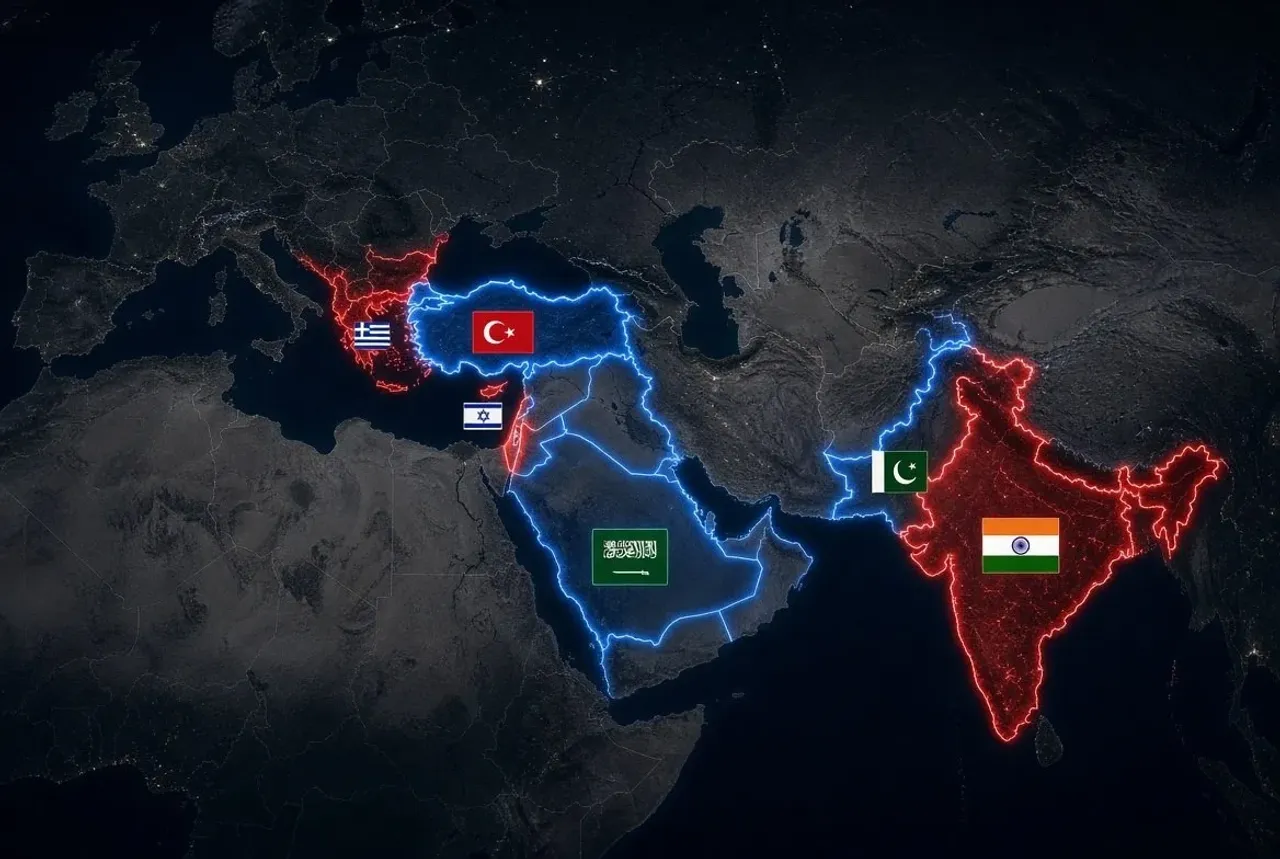
The Middle East region and the entire international security system are on the verge of unprecedentedly dangerous, tectonic shifts. New military-political coalitions have already formed around the globe, and the Middle East is emerging as the hottest point of this division. After official circles in Israel openly declared that a direct military clash with Turkey is inevitable in the future, Tel Aviv formed a new alliance uniting Greece, the Greek part of Cyprus, and powerful India, all of which have long-standing hostility towards Ankara.
Turkey did not stand idly by in the face of such a military-political encirclement either: Ankara, led by Recep Tayyip Erdogan, signed the "Mecca Defense Pact" with Saudi Arabia and Pakistan, the Muslim world's only nuclear-armed state. Most alarmingly, each country entering these two new coalitions is bound by deep historical and geosolitical animosity toward one another, and the first major clash between these two powerful blocs could take place on the Syrian arena.
So, for what purpose are the new military poles in the Middle East being formed, how did the confrontation between Pakistan and India spill over into the Arab world, and will Syria truly turn into a polygon for global conflict?
The Israeli Coalition: The Alliance of Athens, Nicosia, and Delhi Against Ankara
Tel Aviv has formed a wide-scale alliance to halt Turkey's growing geopolitical influence in the region:
The inevitability of a future war: The Israeli leadership openly admitted that a military clash with Turkey will happen sooner or later, and began seeking allies against it;
The union of enemies in the Mediterranean: Greece and Southern Cyprus (the Greek part), which have longstanding territorial and maritime border disputes with Turkey, became natural members of this bloc;
India's entry into the Middle East: In opposition to the friendly relations between Pakistan and Turkey, India strengthened its strategic partnership with Israel, appearing in this alliance as a significant military and economic force.
The "Mecca Defense Pact": Turkey, Saudi Arabia, and Nuclear Pakistan
In response to the actions of Israel and its partners, the main power centers of the Muslim world united into a single defense line:
The nuclear shield of the Islamic world: Turkey and Saudi Arabia involved Pakistan, which possesses official nuclear status, into the defense system in order to guarantee regional security;
In the name of protecting holy sites: This alliance was named the "Mecca Defense Pact" and transformed into a structural organization aimed not only at territorial security, but also at the collective defense of regional interests;
Restoration of the military balance: This trio created the most powerful geopolitical bloc combining financial might (Riyadh), a technological-military army (Ankara), and nuclear potential (Islamabad).
Bonds of Mutual Hatred and the Potential Conflict Polygon in Syria
The newly formed blocs were not organized by accident, but on the basis of age-old enmity:
"The enemy of my enemy is my friend": Several decades-long conflicts, such as Greece-Turkey, Pakistan-India, and Israel-Arab world, became entangled at one point within the blocs;
Syria — the decisive battlefield: The uncontrolled and dismembered main territory where the interests of both clans collide is Syria. According to experts, the direct or proxy clash of the two blocs is very likely to begin right at the borders of Syria;
The threat of a new world order: Local conflicts now pose the threat of a major war involving global nuclear states (Pakistan and India) and powerful armies.
This new military division in the Middle East indicates that the era of peace in the region has ended, and an era of open and uncompromising tests of strength between major powers has begun.
In your opinion, will the coalition of Turkey, Saudi Arabia, and Pakistan (the "Mecca Pact") formed against the alliance of Israel, Greece, and India be able to maintain the balance of power in the region, or will this confrontation ignite the spark of a third world war in Syria? What will the entry of nuclear Pakistan into this arena change? Leave your thoughts in the comments and share this analysis of the most dangerous geopolitical conflict in the Middle East with all your loved ones and fans of international politics!



Comments 0
…