


"The UN is losing its power": Tokayev calls for a radical reform of the Security Council
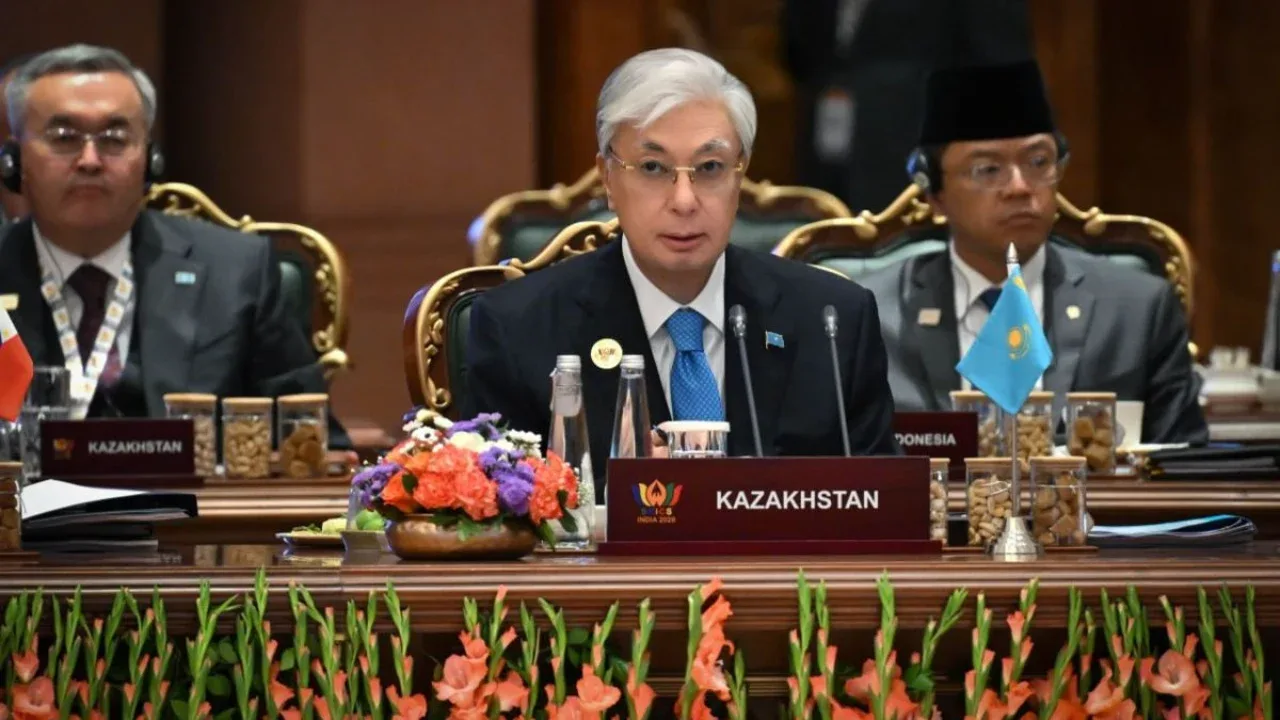
At a time when geopolitical conflicts, wars, and nuclear hazards in the world are escalating to an unprecedented level, serious and sharp calls are being voiced from international platforms regarding the activities of the United Nations (UN), which is the main foundation of the global security system. Speaking at the "outreach" format meeting of the BRICS summit held in New Delhi, India, President of Kazakhstan Kassym-Jomart Tokayev openly admitted that the UN is turning into an ineffective structure. He emphasized that the sharp decline in mutual trust between states and the erosion of the international security architecture have brought the world to the brink of a new arms race and catastrophic nuclear mistakes.
Nevertheless, calling the UN a universal platform without an alternative, the Kazakh leader firmly put forward the need to urgently and radically reform the UN Security Council, grant due positions to the states of Asia, Africa, and Latin America, and strengthen the voice of "middle powers". Well, why does Tokayev demand a dialogue between nuclear powers, how should the veto and monopoly in the Security Council change, and how can Astana's balanced diplomacy protect the world from new wars?
"Trust has declined and the risk of an arms race has increased": Tokayev's open diagnosis
The President of Kazakhstan outlined the true causes of global instability in his speech at the New Delhi summit:
Peace superior to economy: "Peace and strategic stability are prerequisites for economic and sustainable development. However, it is not only about the economy. The transition from regional tension to long-term stability through diplomacy and political dialogue must become a priority," Tokayev said;
Erosion of the security system: Ongoing conflicts have dramatically increased the risk of a new arms race, strategic miscalculations, and catastrophic decisions;
Call for dialogue of nuclear powers: Tokayev stressed that in order to reduce nuclear risks associated with new technologies, it is extremely necessary to establish a high-level direct dialogue between nuclear powers;
Ineffective UN and crisis of trust: The President noted that due to weakened mutual trust between states, the UN is not fully performing its duties, but noted that there is no other universal platform to replace it.
Reforming the Security Council: Fair representation and the voice of new continents
The leader of Astana voiced concrete proposals to adapt the UN structure to the demands of the times:
Power of conflict prevention: The reform must enhance the organization's capacity to prevent conflicts in advance and make collective, legitimate decisions;
Unselected Charter: "The UN Charter must be followed consistently and equally by all states, not selectively," the head of state emphasized;
Representation of Asia, Africa, and Latin America: The current composition of the Security Council does not reflect modern geopolitical realities. Therefore, fair representation of the countries of Asia, Africa, and Latin America in this council must be ensured;
Decisive voice of "middle powers": Developing middle powers should have a greater voice in global decision-making because they are capable of mitigating geopolitical conflicts and building bridges of dialogue.
BRICS and UN harmony: Astana's balanced policy
Kazakhstan promotes unchanging neutral and multilateral principles in the international arena:
The role of BRICS: Astana views BRICS as an influential cooperation platform that complements the central role of the UN and strengthens multilateral ties;
Common points on complex issues: The unchanging rule of Kazakhstan's foreign policy is to seek compromise points that bring parties closer together in any complex and conflict situation;
Long-standing agenda: The issue of reforming the UN and the Security Council has been on the international agenda for many years, and Central Asian countries have also taken an active position in this regard.
Kassym-Jomart Tokayev's speech in New Delhi once again proved that world governance should move away from the monopoly of a narrow circle of powerful states and turn into a fairer and multipolar system.
In your opinion, can the radical reform of the UN Security Council stop bloody wars and nuclear threats in the world? Can granting permanent membership status to major countries of Asia and Africa ensure true justice in international relations? Leave your feedback in the comments and share this extremely important analysis of global politics with all your loved ones and friends interested in international topics!


Comments 0
…