


Crisis in US Defense Industry: Northrop Grumman Responds to Rocket Engine Shortage
The US Department of Defense (Pentagon) is concerned that the shortage of solid-fuel rocket engines could become one of the biggest obstacles to enhancing the country's military capabilities. However, Northrop Grumman, one of the largest manufacturers in this field, emphasizes that the problem lies not in production capacities, but in flaws within the government procurement system. This is reported by Ixbt.com news reports.
A recent report by the Center for Strategic and International Studies (CSIS) identified the expansion of solid-fuel engine production as a primary "bottleneck." These debates emerged at a time when the US military's need for modern weaponry is sharply increasing. According to ixbt.com, Northrop Grumman management stated their readiness to increase industrial production, but noted that long-term guarantees from the government are necessary for this.
Investment and Production Capacities
According to James Culberer, Vice President of Northrop Grumman's propulsion systems division, annual budget planning and short-term contracts create difficulties for suppliers when making investments. Despite this, the company has allocated over 2 billion dollars to weapons programs and engine production in recent years, half of which was spent directly on solid-fuel technologies.The company emphasizes that current capacities are sufficient to further increase production. While Northrop Grumman produced approximately 13,000 rocket engines in 2024, it plans to increase this figure to 25,000 units per year by 2029. Additionally, there is potential to increase solid-fuel production volume from the current 13.6 million kilograms to 22.7 million kilograms.
Technological Innovations and Strategic Importance
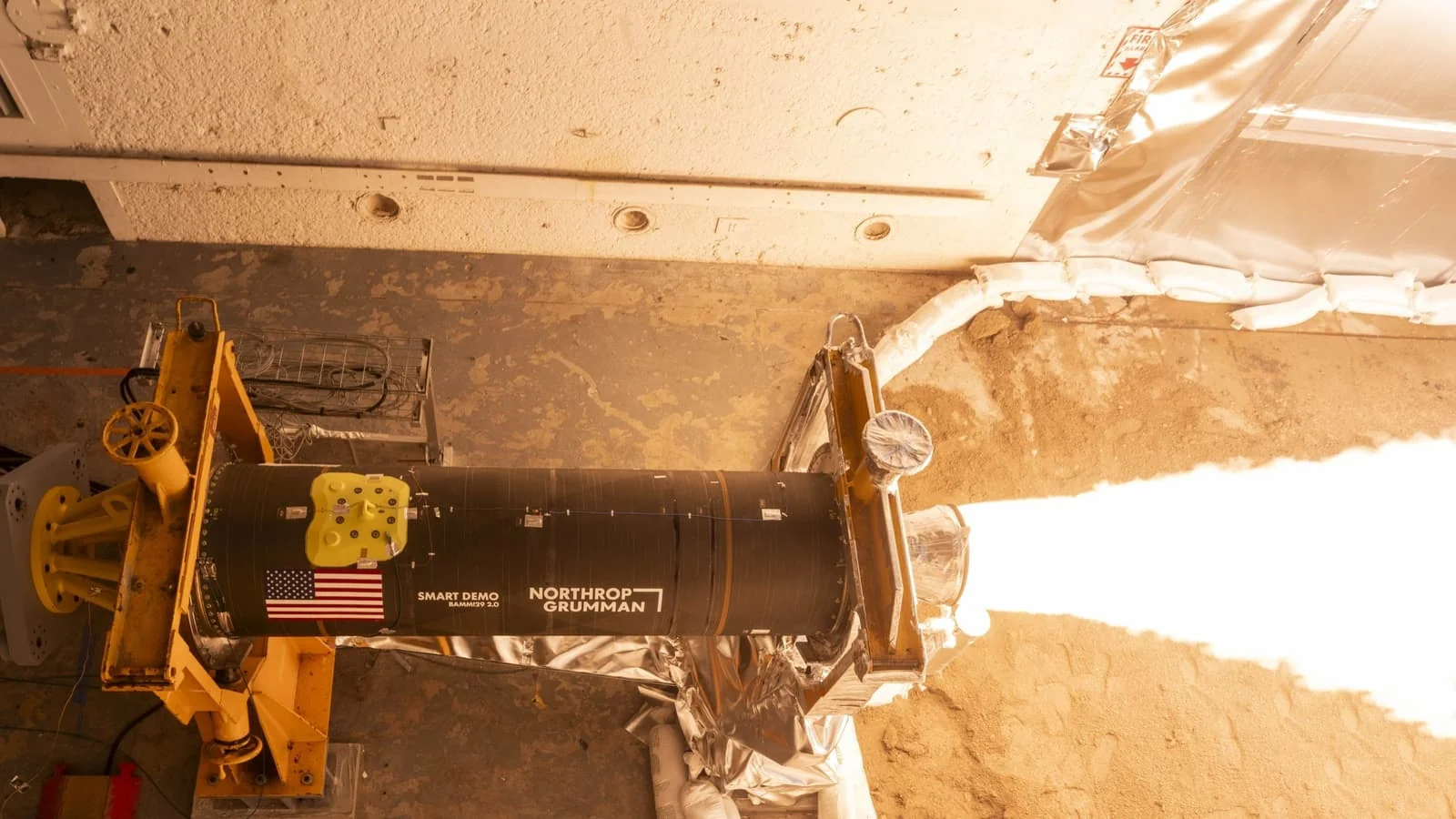
To accelerate production, the company is implementing the SMART Demo (Solid Motor Annual Rocket Technology Demonstrator) program. This project focuses on introducing new materials and technologies, which has allowed the time from the design phase to testing of new solutions to be reduced from 3 years to 12-18 months.The market for large and medium-sized solid-fuel engines in the US is effectively controlled by only two companies: Northrop Grumman and Aerojet Rocketdyne, part of L3Harris Technologies. This means that any technical problem or delay in the sector has strategic significance. For example, Northrop Grumman also supplies boosters for the Space Launch System (SLS) super-heavy rocket as part of NASA's Artemis program for lunar missions.
It is worth noting that the company's operations are affected not only by demand but also by technical safety issues. Earlier this year, the US Space Force temporarily suspended flights of the Vulcan rocket. This was caused by a malfunction related to a booster produced by Northrop Grumman. The company is currently working with United Launch Alliance to resolve these issues and restore flights.


Comments 0
…