


Germany Takes Major Step Toward "Artificial Sun": New Research Center Opened
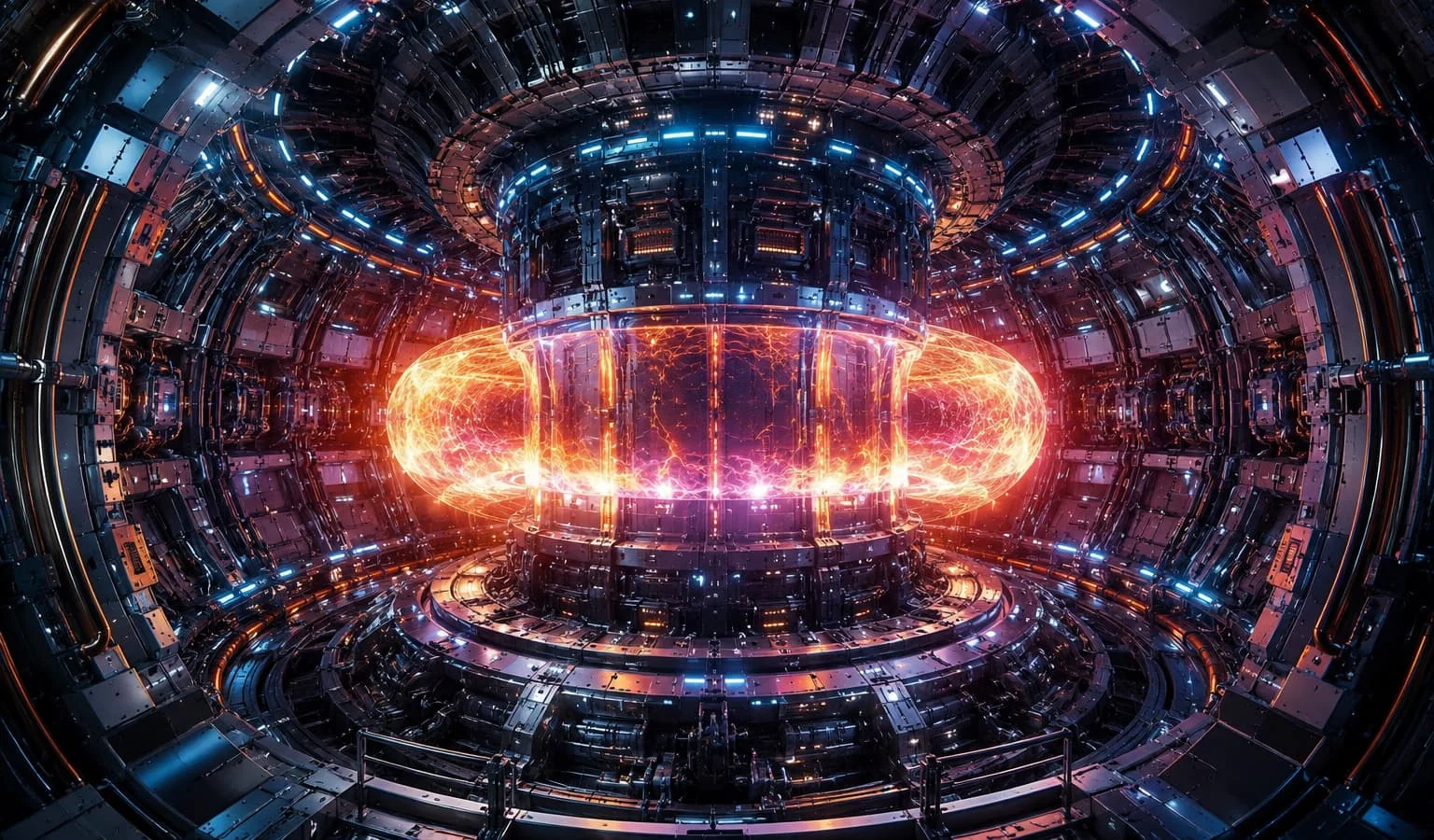
Germany has launched a major project to develop thermonuclear fusion technologies, which are expected to revolutionize the energy sector. A new research hub called the High Energy Density Initiative (HEDI), established in collaboration between the University of Rostock and the Helmholtz-Zentrum Dresden-Rossendorf (HZDR), has officially begun operations. The center focuses on studying extreme states of matter that will serve as the basis for future thermonuclear reactors. According to Ixbt.com, news reports.
The opening ceremony of the HEDI center was attended by representatives of science, industry, and government. Dorothee Bär, Germany's Federal Minister for Research, Technology and Space, emphasized that this center will become a vital link in the national thermonuclear program. It will help deepen the understanding of fuel behavior inside experimental reactors, enabling the removal of key obstacles to creating an "artificial Sun."
Thermonuclear fusion has long been considered one of the most promising energy sources for humanity. Unlike traditional nuclear power plants, it emits no carbon dioxide into the atmosphere and has the potential to produce infinite amounts of electrical energy with minimal radioactive waste. However, the processes occurring inside such devices are not yet fully understood, and HEDI research is aimed specifically at filling this gap.
Laser fusion and extreme pressure research
As part of the project, the Institute for High Energy Density Physics was established in early June. The construction of this complex, funded by the German government and the state of Saxony, is planned for completion by 2030. The region of Mecklenburg-Western Pomerania announced an investment of approximately 20 million euros into this research complex.One of the center's primary focuses is achieving thermonuclear fusion via inertial confinement. According to ixbt.com, this technology uses ultra-powerful lasers to compress a fuel capsule, heating it to extreme temperatures and pressures similar to those at the center of stars. This process allows for the study of unnatural states of matter known as "warm dense matter."
HEDI scientists will analyze the behavior of light elements under millions and billions of atmospheres of pressure. Such conditions occur not only in thermonuclear devices but also within gas giants and other extreme cosmic objects. The data obtained from these studies will serve as a foundation for designing more efficient and reliable reactors in the future.
The new center will collaborate closely with the European XFEL, the largest X-ray laser in Europe, and other scientific organizations worldwide. Additionally, HEDI has signed a cooperation agreement with the startup Marvel Fusion, which is developing commercial laser fusion devices. According to project lead Ronald Redmer, commercializing fusion energy is impossible without understanding the nature of matter in extreme states.


Comments 0
…