


Chinese Scientists Create Digital Twin for Optical Computers
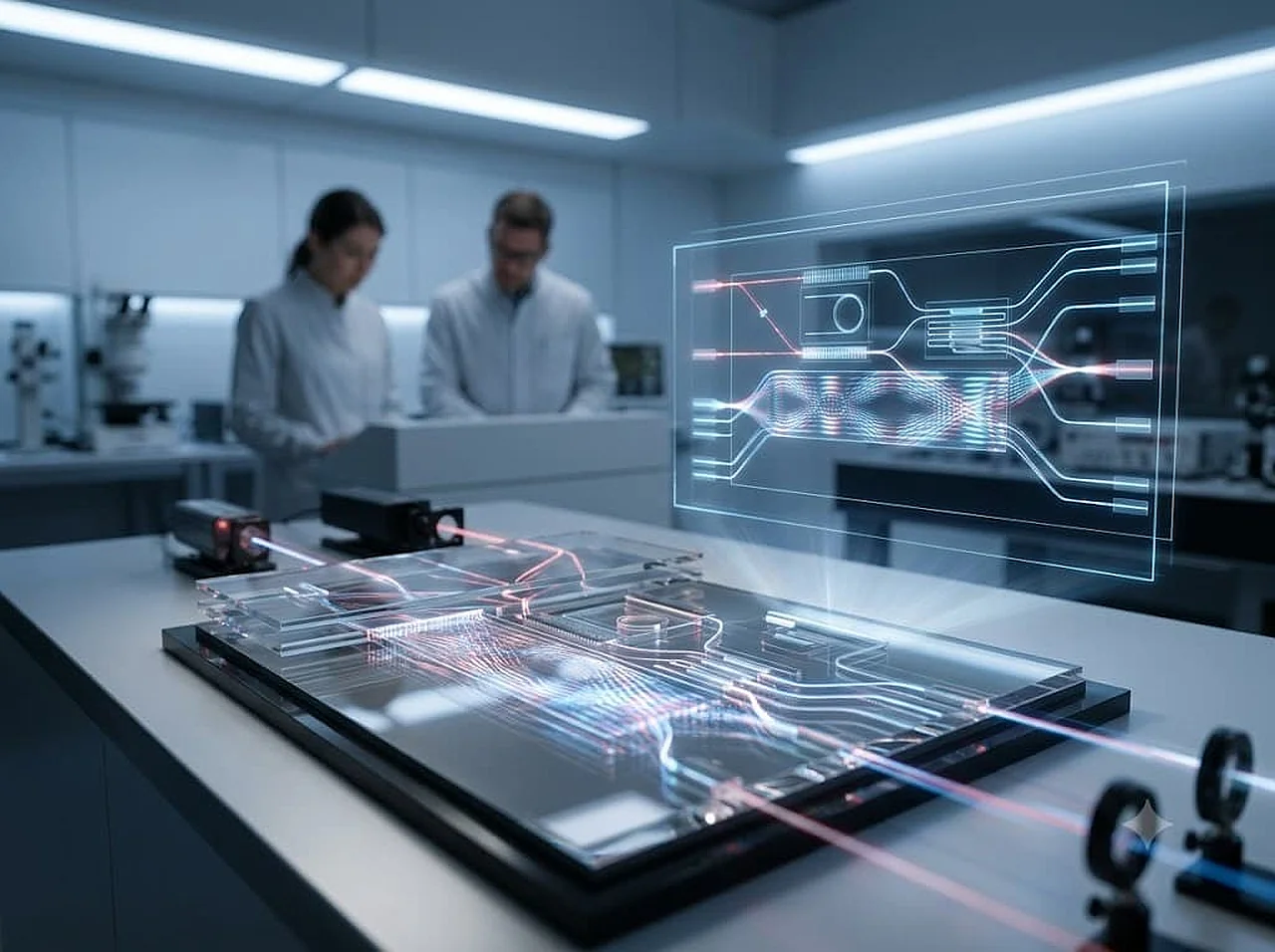
In an era of rapid AI development, the demand for computing power is increasing sharply. While optical computers, which process data using light instead of electricity, are considered one of the most promising solutions, technical complexities and high costs hinder their widespread adoption. To solve this problem, Chinese researchers have developed a full-scale "digital twin" of optical systems — the Digital Twin Optical Computing System (DT-OCS) platform. According to Ixbt.com, news reports.
According to data published in the journal Opto-Electronic Advances, the new system allows for the software simulation of behavior without being connected to real optical hardware. This means that scientists can now test their algorithms in a virtual environment without waiting for direct access to expensive photonic chips and complex devices. Previously, researchers had to wait in queues and recalibrate the equipment before every new experiment.
Operating Principle and Advantages of the DT-OCS System
The DT-OCS system acts as a high-precision simulator and operates in parallel with the physical system. During tests, scientists used a photonic chip based on silicon photonics and a high-speed optical computing complex. The system was tested on AI tasks such as image classification and sequential decision-making. The results were impressive: when parameters trained in the digital model were transferred to the real equipment without any additional adjustments, the physical system's efficiency almost exactly matched the virtual model's predictions.The main achievement of this approach is the significant saving of time and funds spent on experiments. Multiple research groups can simultaneously develop various tasks on a digital copy of a single device. This transforms optical computers from rare, specialized laboratory equipment into an open research infrastructure accessible to everyone.
The project authors have made the DT-OCS platform and its associated dataset open-source. Now, developers and engineers anywhere in the world can train and test new algorithms using this platform, even if they do not own personal optical hardware. According to ixbt.com, such openness is expected to accelerate the pace of innovation in the field several-fold.
In conclusion, modern optical computing platforms should consist not only of physical devices but also of their software equivalents. Such digital twins will accelerate the creation of optical processors that could become worthy competitors to traditional computing systems provided by giants like NVIDIA or Google.


Comments 0
…