


Scientists discover a “mega-Earth” 23 times heavier than Earth
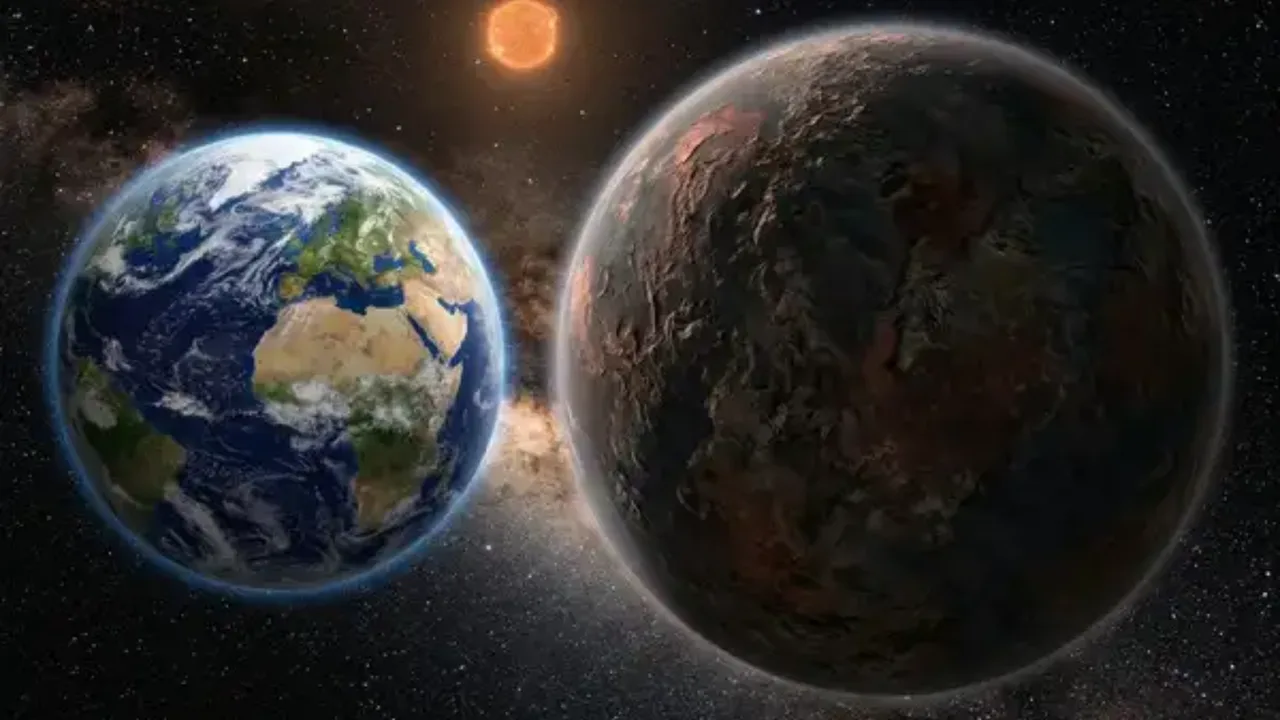
Astronomers have detected an unusually dense exoplanet that is 2.5 times larger than Earth and has nearly 23.5 times its mass. GJ 523b , has been classified as a “mega-Earth.” Its unusual characteristics are prompting scientists to reconsider existing views on how planets form. This was reported by TRT Haber .
According to the study, GJ 523b is located in a relatively young star system that formed approximately 170 million years ago . The exoplanet completes one full orbit around its star in approximately 18 days .
The planet's radius is 2.55 times that of Earth, while its density is approximately 7.8 grams per cubic centimeter. This suggests that heavy, dense materials—particularly rocky layers—make up a large proportion of its composition.
The planet that astonished scientists
The most intriguing aspect of GJ 523b is that, despite its enormous mass, it does not resemble a gas giant.
Scientists explain that a planet with such a large mass would normally accumulate significant amounts of hydrogen and helium during its formation. This could cause it to become a massive gas giant.
However, GJ 523b is extremely dense and has a predominantly rocky structure . So far, no reliable evidence has been found indicating the presence of a thick gaseous envelope around it.
For this reason, the “mega-Earth” is attracting great interest among scientists. Its current state raises important questions about the conditions under which the planet formed.
How did the planet lose its atmosphere?
Experts suggest that GJ 523b may initially have had a thick atmosphere. Later, various cosmic processes may have stripped away this gaseous layer, leaving its dense, rocky interior intact.
Another hypothesis is that a massive cosmic collision occurred during the early formation of the planetary system. This powerful impact may have scattered the planet's gaseous layers into space, leaving behind a dense core composed primarily of rock.
It is currently difficult to determine which of these hypotheses is correct. Scientists are therefore continuing additional observations to study GJ 523b in greater depth.
The study is currently under review , and researchers are working to determine how “mega-Earths” like GJ 523b formed and why they did not become ordinary gas giants.


Comments 0
…