


Giant great white shark appears in the Atlantic, an even larger one is approaching
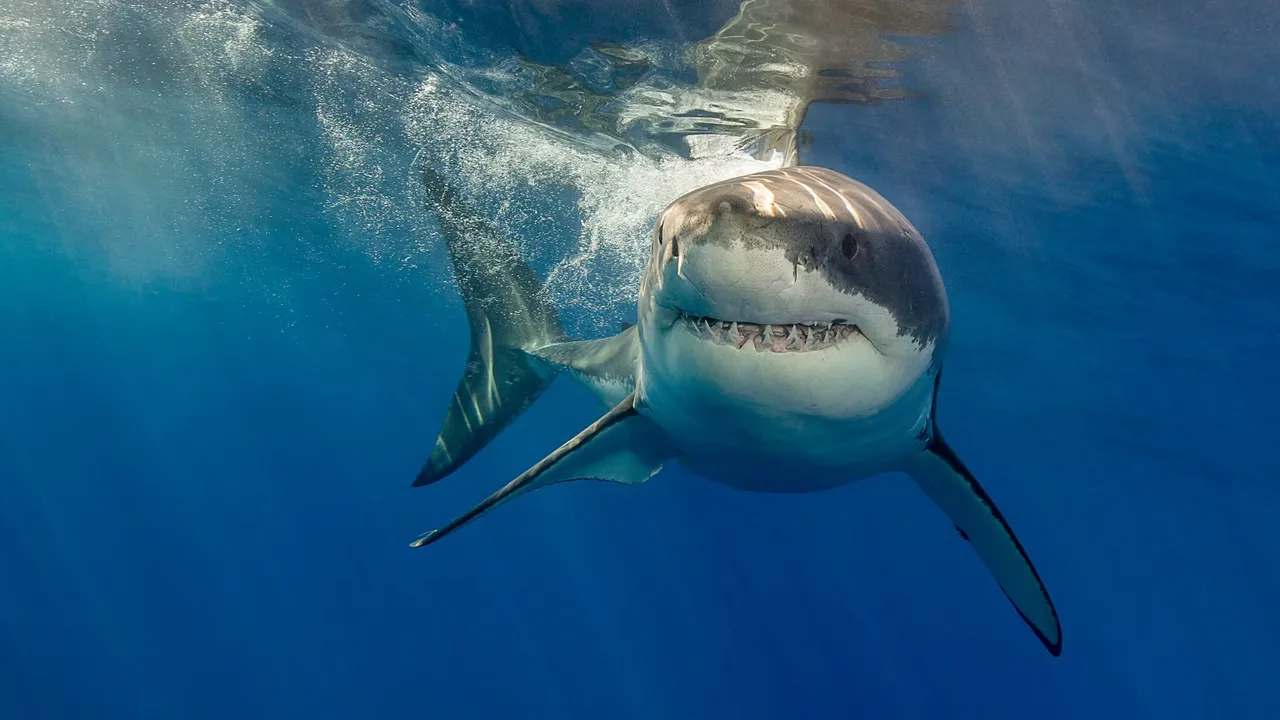
The giant great white sharks observed in the Atlantic Ocean have once again captured the attention of scientists and marine enthusiasts. Experts are tracking a large great white shark nicknamed "Ernst" via satellite, which was recorded near the eastern part of Long Island, USA. Most interestingly, experts suggest that one of the largest great white sharks ever identified in the Atlantic may also be moving along the same route.
According to reports, the female great white shark "Ernst," measuring 12 feet (approximately 3.7 meters) and weighing 1,000 pounds (nearly 454 kilograms), was first recorded by a special tracking system near the shores of Montauk, New York, on June 20. Since then, she headed toward Cape Cod and continued her journey northward.
Scientists believe that an even larger great white shark nicknamed "Contender" is swimming toward the same area. According to data from the OCEARCH shark tracking system, this giant shark measures 14 feet (approximately 4.3 meters) and weighs 1,700 pounds (over 770 kilograms). It is considered one of the largest great white sharks ever recorded in the Atlantic.
Tracking results show that "Ernst" and "Contender" are using almost the same migration route. Both great white sharks are moving north from the Florida coast and continuing to swim along the Atlantic shoreline. According to the OCEARCH tracking platform data reviewed by The Post, if they maintain their usual migration path, there is a high probability they will pass near Long Island during the summer season.
An OCEARCH representative commented to The Sun regarding the seasonal migration of great white sharks:
“Great white sharks in the Western North Atlantic typically migrate north and spend the summer and early autumn in the waters of Cape Cod or Atlantic Canada in search of prey.”
Currently, according to tracking data, "Contender" is moving near the Pamlico Sound area in North Carolina, while "Ernst" has already reached the Gulf of St. Lawrence in Canada.
These observations were released at a time when experts are reporting an increase in shark sightings and related incidents this year.
Just this month, red flags were raised on several beaches from Long Island to the Rockaways, and some beaches were temporarily closed due to reports of a school of bull sharks, which prefer warm waters, being spotted.
Furthermore, a shark bite was recorded on the leg of a person swimming near Jones Beach. The incident left the victim's bone exposed. Experts suspect that a shark may have been responsible for this attack as well.
Consequently, authorities operating along Long Island have strengthened safety measures. Special patrol boats are now regularly monitoring coastal areas, and modern drones are flying overhead to constantly track the movements of these ancient predators.
Experts emphasize that such tracking systems are crucial for studying shark migration in depth, predicting their movement patterns, and ensuring the safety of people visiting the beaches.


Comments 0
…