


Do bacteria produce gold? Scientists explain an interesting fact
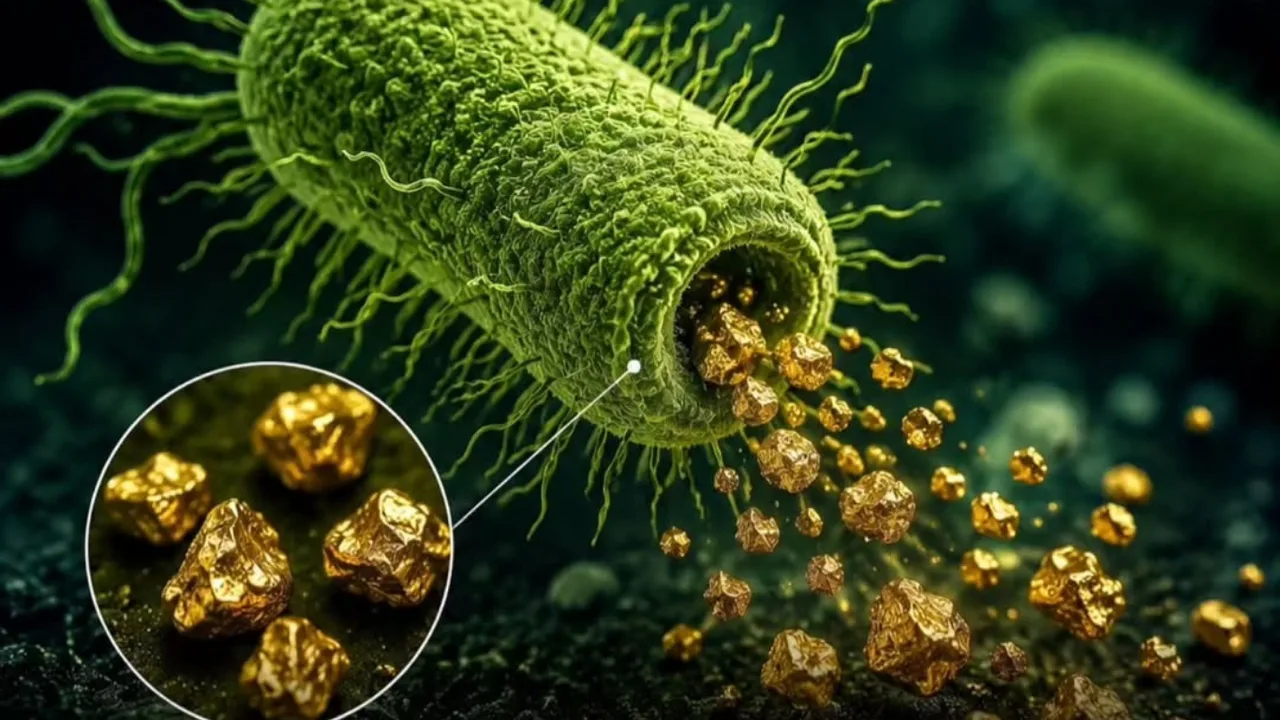
Scientists are studying a unique bacterium called Cupriavidus metallidurans. This microorganism is distinguished by its ability to survive in environments with very high concentrations of heavy metals.
It turns out that when the bacterium encounters dissolved gold compounds, it neutralizes them using special proteins and enzymes. As a result, toxic gold compounds are converted into tiny metallic gold particles. Over time, these particles combine and become part of the natural gold cycle.
Experts note that this feature could potentially allow for the extraction of gold from low-grade ores and industrial waste in an environmentally friendly way in the future. Such a method would reduce the need to use chemicals that are hazardous to the environment, such as cyanide or mercury.
However, scientists emphasize one important point: these bacteria do not create gold out of nothing. They only convert dissolved gold compounds already present in nature into metallic gold.
These invisible, tiny organisms could play an important role in making future gold mining technologies more ecological and efficient.


Comments 0
…