


The Origin of Life: Scientists Discover New Data on the Evolution of Complex Organisms
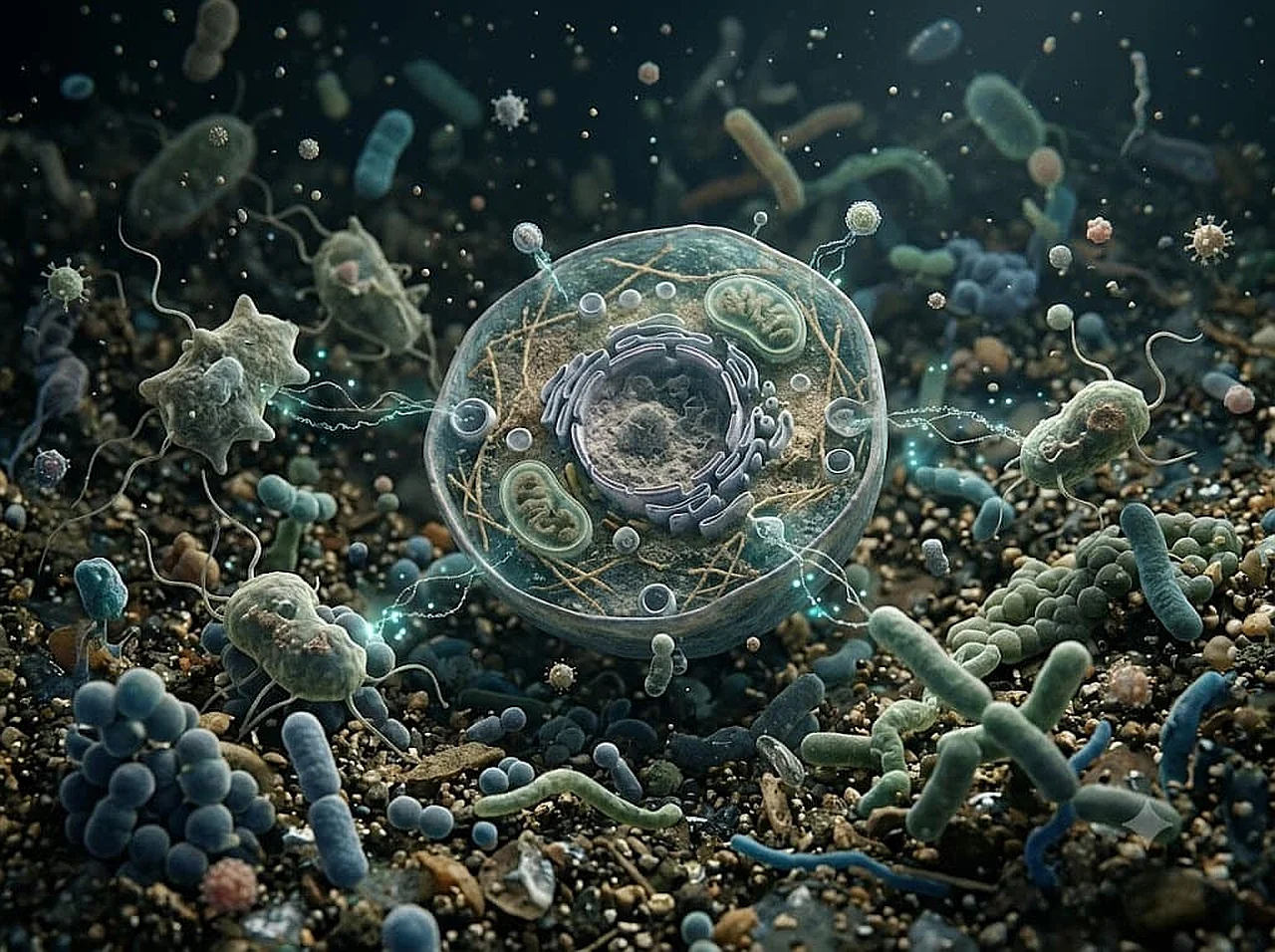
In modern biology, concepts regarding the origin of complex cellular organisms (eukaryotes) may change fundamentally. An international team of researchers concluded that the ancestors of all animals, plants, and fungi were not formed solely by the fusion of one archaeon and one bacterium. New research results published in the journal Nature show that the formation of the tree of life was a complex, multi-stage process. This is reported by Ixbt.com .
According to the model accepted in science until now, about two billion years ago, an archaeon engulfed an alphaproteobacterium, and over time, this bacterium became the mitochondrion — the energy center of the cell. This event was considered the main turning point in the emergence of eukaryotes, which are the basis for humanity and all multicellular beings. However, recent genetic analyses have proven that this chain of events is much more complex.
Multifaceted sources of genetic heritage
Scientists analyzed the genomes of various life forms to reconstruct the Last Universal Common Ancestor (LECA) of all modern eukaryotes. During the study, special attention was paid not only to animals but also to poorly studied microorganisms. As a result, it was found that the common ancestor of all complex cells had a very perfect structure for its time.It was determined that this ancient organism lived in an oxygenated environment, obtained energy by consuming other microorganisms, and possessed transport systems characteristic of modern cells. The most interesting aspect is that the genetic composition of this ancestor consisted of a collection of genes derived from several different life forms, not just two.
According to the study results, the following groups participated in the formation of the eukaryotic genome:
- Asgard archaea — a group of archaea considered the closest relatives of eukaryotes;
- Alphaproteobacteria — the direct ancestors of mitochondria;
- Planctomycetota and Myxococcota — large bacterial groups not previously expected to participate in this process;
- Giant viruses — their genetic contribution turned out to be even stronger than some bacterial lineages.
This discovery forces a revision of much of the information in biology textbooks. According to Ixbt.com, the origin of life was not a one-time accidental event, but the product of long-term genetic exchanges between various microorganisms. This once again confirms how complex and interconnected life on Earth is.


Comments 0
…