


Robots Replacing Workers at General Motors Plants: UAW Concerned
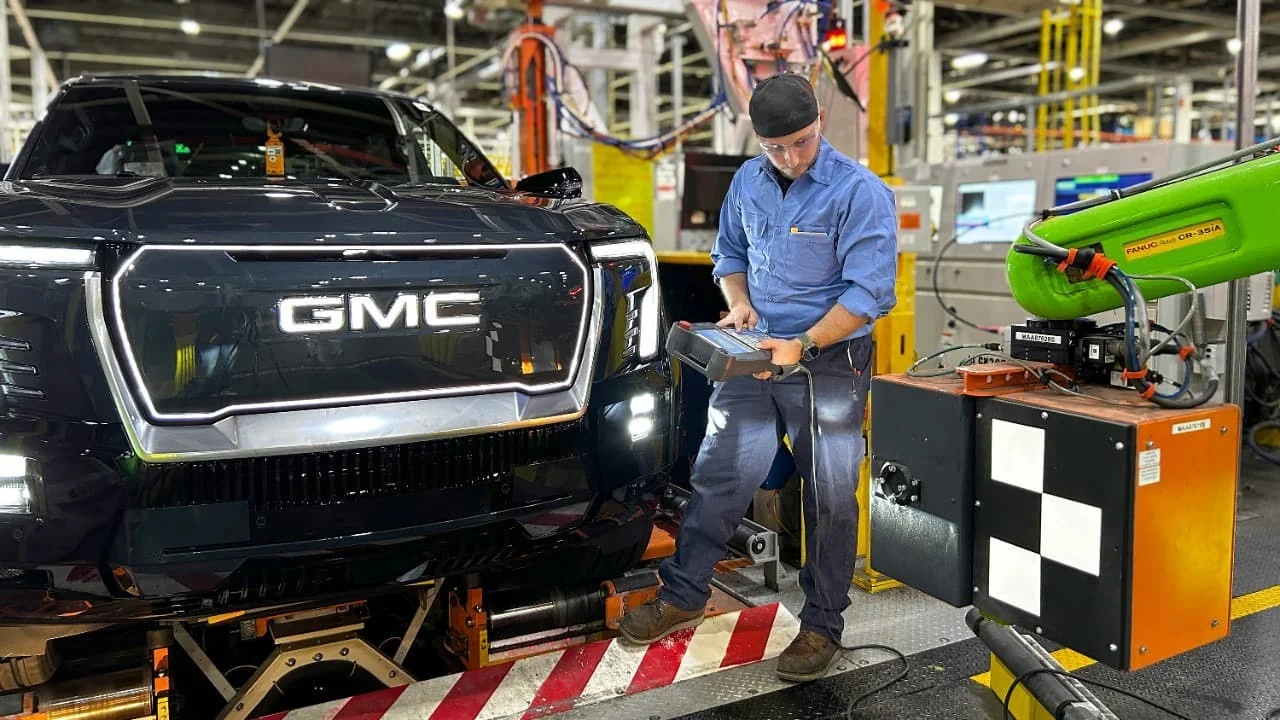
US auto giant General Motors (GM) has begun rapid automation of production at its flagship Factory Zero plant in Detroit. News that the company installed nearly 50 new robotic manipulators on conveyor lines has met with sharp resistance from the United Auto Workers (UAW) union. This process is unfolding against a backdrop of thousands of workers losing their jobs. This is reported by Ixbt.com news says.
According to Crain's Detroit Business, modern robots from FANUC have been installed at the plant to perform assembly operations. Meanwhile, more than 1,300 employees are losing their jobs due to temporary or permanent layoffs. UAW representatives emphasize that layoffs initially announced as temporary are now becoming indefinite, leading to serious social tension in the labor market.
The era of "dark factories" is approaching
The concept of "dark factories" or "lights-out manufacturing" is becoming increasingly popular in the industry. This is a production model where processes are fully automated, requiring almost no human participation, and not even needing lighting systems. Such a technological approach is currently developing extensively in Asian countries, particularly China.According to reports, companies like Jetour, Zeekr, and Xiaomi have already launched high-tech factories that operate with minimal human resources using hundreds of robots. Japan's FANUC is considered a pioneer in using systems where human intervention is zero in the production of its own robots.
In the US auto industry, this trend is not limited to GM. Ford Motor Company and Stellantis NV are also accelerating the robotization of assembly lines to reduce costs and increase productivity. Additionally, Hyundai Motor Company plans to deploy humanoid robots developed by Boston Dynamics at its US electric vehicle plants by 2028.
Conflict between progress and social protection
Labor unions are not against technological progress, but they believe this process should serve to increase worker safety and shorten the work week. In practice, it is criticized that robotization is becoming merely a tool to increase company profits and save on labor costs. UAW leaders are calling on General Motors management to reinstate laid-off employees instead of purchasing new robots.Experts warn that full automation also brings specific risks:
- Vulnerability to systemic failures and cyberattacks;
- Loss of human control over production processes;
- Mass unemployment and increased social inequality;
- Lack of flexibility of robots in solving complex problems.


Comments 0
…