


Scientists Extract Solid Carbon for Batteries from Emitted CO2
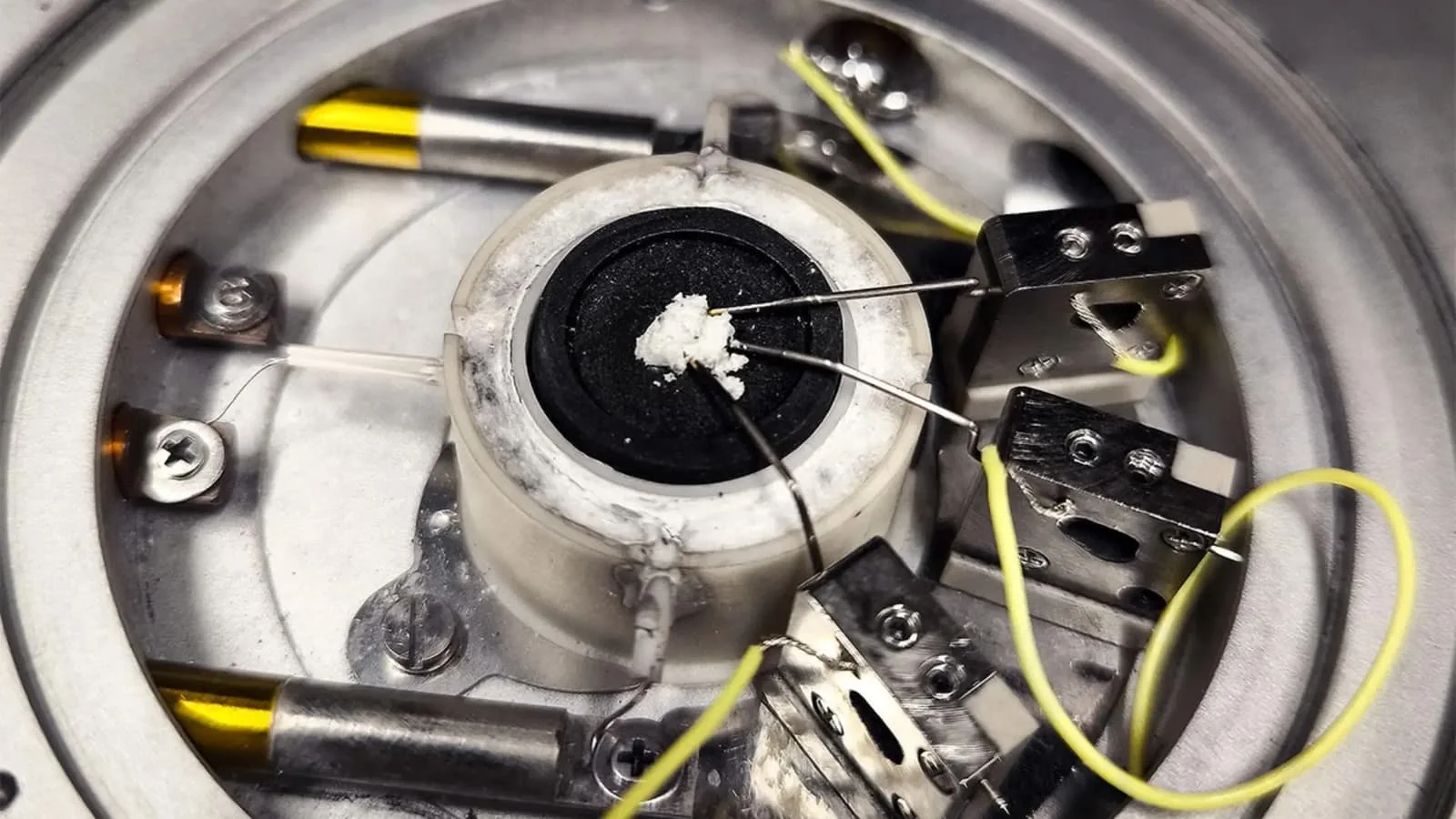
An international team of scientists has for the first time successfully observed in real-time the process of converting carbon dioxide, an industrial waste product, into solid carbon. Specialists from the University of California, Lawrence Berkeley National Laboratory, and the Estonian National Institute of Chemical Physics and Biophysics conducted this scientific research, which could significantly reduce the production cost of traction batteries for electric vehicles in the future. This is reported by Ixbt.com reports .
According to Ixbt.com, this innovative technology is based on the electrolysis process using molten salts. When electric current is passed through a heated salt mixture at a temperature of approximately 500 °C, carbon dioxide molecules lose oxygen atoms, and as a result, the remaining carbon precipitates in a solid form at the cathode.
Technical challenges and new solution
Experts note that previously scientists could only guess what was happening inside the reactor. Since molten salt at a temperature of about 500 °C quickly destroys standard optical instruments, direct observation of the process was practically impossible. To solve this problem, researchers created a special reaction chamber.Equipped with heat-resistant lenses, this device allowed for the first time in history to monitor the reaction in real-time. The experiment showed that the conversion process of CO2 occurs not all at once, but in two stages: first, an intermediate chemical compound is formed, and only then does solid carbon begin to form.
Synthetic graphite and future prospects
During the research, scientists discovered that by changing the composition of the solution and electrode materials, it is possible to control the internal structure of the resulting carbon. This opens up huge prospects in the production of synthetic graphite, which is one of the main materials for lithium-ion batteries.Having the correct crystal structure of graphite is extremely critical for such batteries, as this specific factor ensures the rapid movement of lithium ions and directly affects battery efficiency. In the future, this technology is expected to solve two important tasks at once: capturing industrial waste and converting it into valuable raw materials for EV batteries and energy storage systems.
However, experts remind that industrial implementation is still a long way off. At the current stage, the process requires a constant temperature of around 500 °C. To scale the technology, engineers will need to optimize the composition of molten salts, select more efficient electrode materials, reduce energy consumption, and ensure uniform distribution of heat and electric current in large reactors.


Comments 0
…