


New Step in Science: Light-Powered Space Flights Tested
Engineers from the University of Pennsylvania, the California Institute of Technology, and the University of California, Los Angeles (UCLA) have experimentally tested the concept of interstellar flight using lasers from theoretical physics. According to the research results published in Nature Communications, scientists have created a nanolaminated light sail prototype with high reflectivity and efficient heat dissipation properties. This achievement successfully solved the conflicting challenges between minimal mass, optical efficiency, and high thermal stability. This was reported by Ixbt.com reports .
Using current modern chemical rockets, it would take between 75,000 and 165,000 years to reach Alpha Centauri, the star system closest to Earth. However, the Breakthrough Starshot initiative proposes a completely different approach: leaving the energy source on Earth and using a laser array with a power of 100 GW to propel a microprobe weighing approximately 1 g. This photon stream can accelerate the craft to one-fifth of the speed of light (nearly 60,000 km/s) in just 7 minutes, reducing travel time to 20 years.
Solution to difficult physical limitations
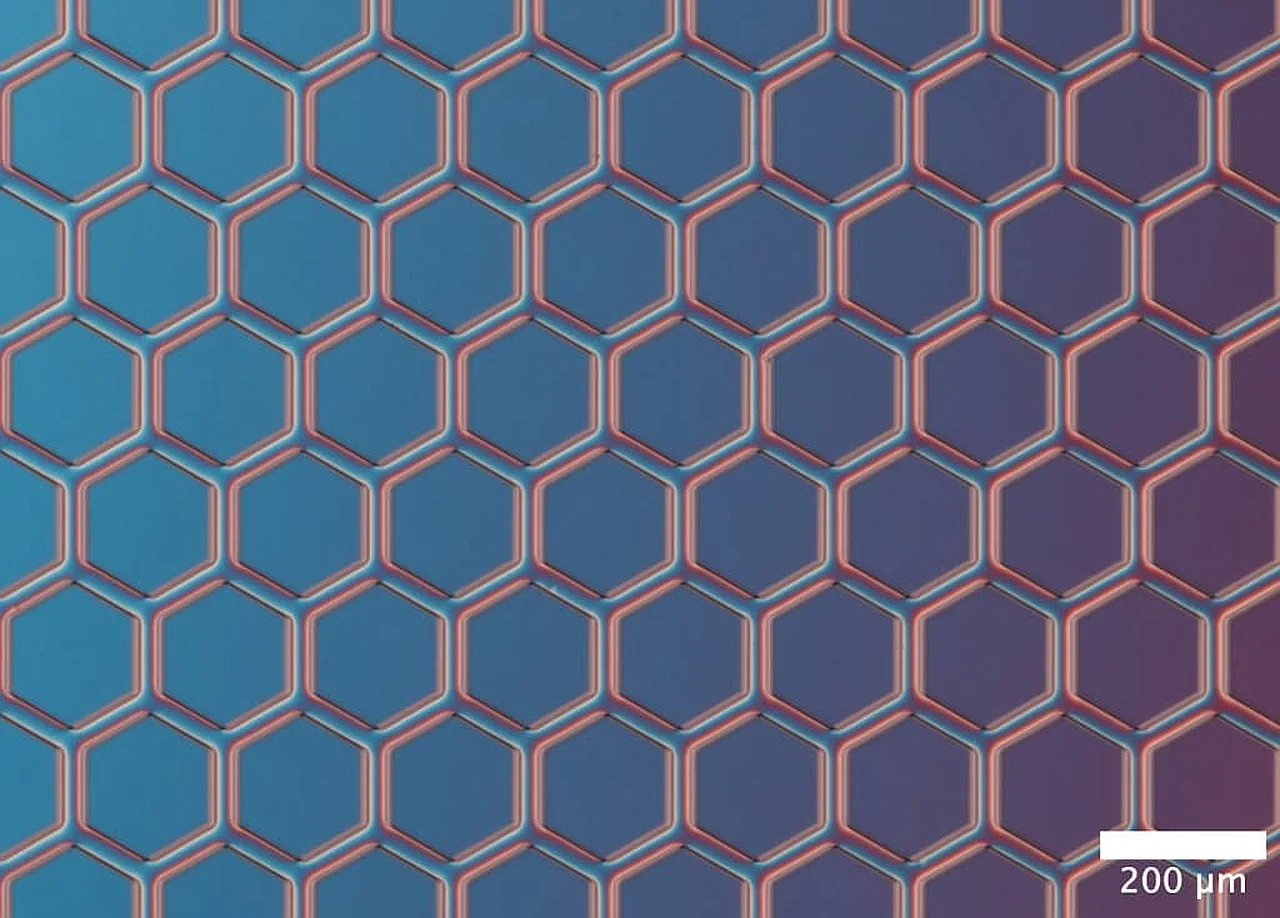
According to ixbt.com, previously no material existed that could withstand gigawatt-class laser power. Even when a very thin film absorbed a small fraction of the laser beam, it would instantly melt or tear under strong pressure. To bypass this physical limitation, engineers developed a three-layer structure where each layer performs a specific function. The base of the sail consists of molybdenum disulfide (MoS2), which efficiently reflects infrared rays and is sandwiched between two layers of aluminum oxide (Al2O3).The new design not only protects the inner layer but also prevents overheating by radiating excess heat into space like a radiator. Furthermore, to ensure mechanical strength, scientists applied a hexagonal corrugation method. Cocoon-like microscopic patterns increased the material's bending strength manifold without adding weight and prevented the propagation of potential micro-cracks.
Practical results and prospects
Laboratory test results show that the created prototypes weigh less than 1 g per square meter, which means they are about 100 times lighter than regular paper. This light sail reflects more than 50% of the incident laser radiation and absorbs less than 4%, efficiently converting light into kinetic energy. Currently, this prototype is the only material in terms of dimensions capable of achieving ultra-high-speed goals.In the future, experts plan to work on further increasing thermal stability, scaling up production, and solving mechanical stability issues. Specifically, plans include converting amorphous aluminum oxide into crystalline sapphire, improving heat dissipation through surface microstructures, and applying roll-to-roll nanolithography methods. This will make it possible in the future not only to conduct interstellar research but also to launch probes to Jupiter in just 4 days.


Comments 0
…