


China Mobilizes Fengyun Satellites to Track Typhoon “Dolphin”
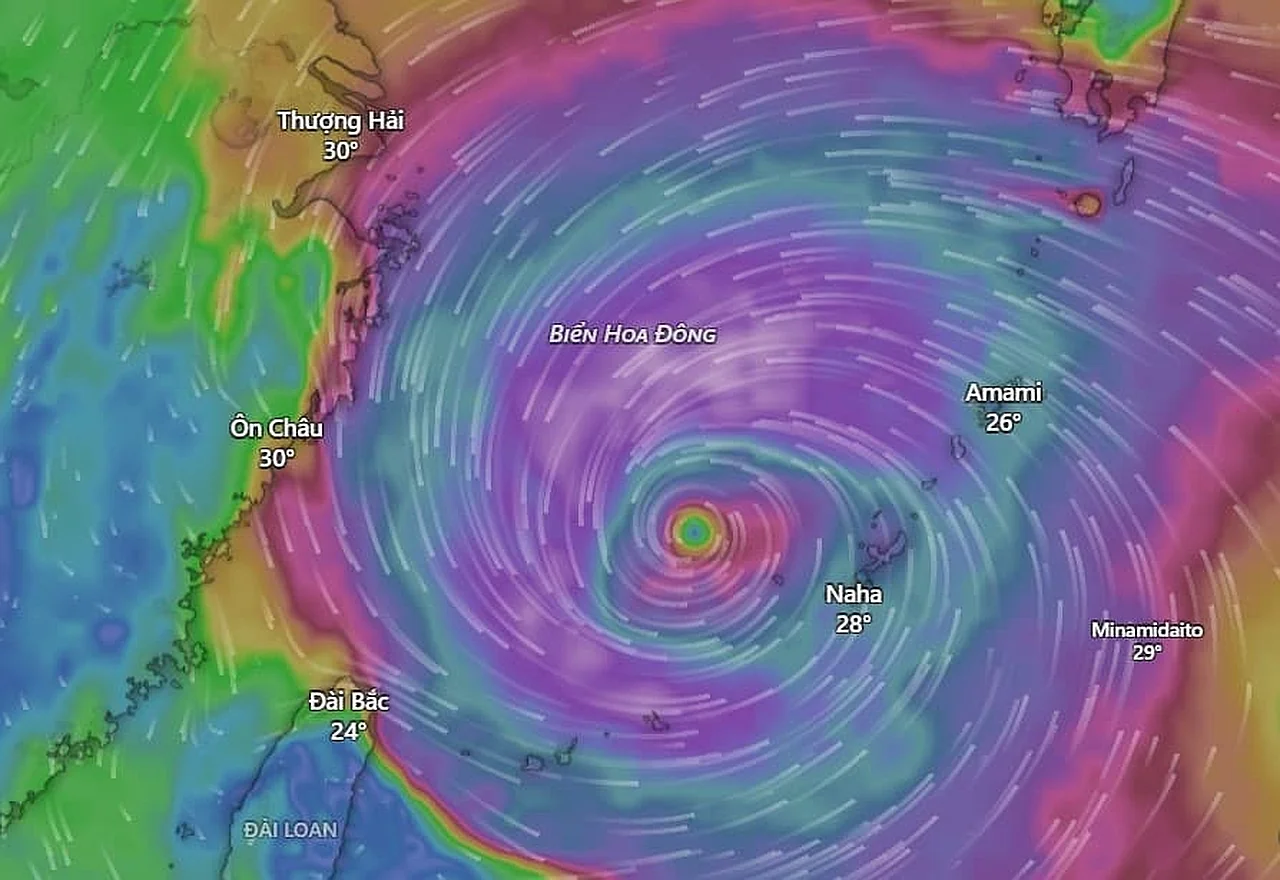
China has deployed its Fengyun meteorological satellite constellation to continuously monitor Typhoon “Dolphin,” which formed over the ocean and is approaching the country’s coast. According to ixbt.com, the advanced spacecraft transmit critical data to meteorological services every minute to assess the cyclone’s movement and condition. ixbt.com reports.
The Fengyun-4C and Fengyun-4B satellites are working together in this effort. According to the Shanghai Academy of Spaceflight Technology (SAST), Fengyun-4C, positioned in geostationary orbit at 133° east longitude, is currently the world’s most powerful single geostationary satellite for comprehensive atmospheric sounding.
Real-Time Observation from Space
The spacecraft’s equipment, including a multichannel scanning radiometer and a lightning mapping camera, enables real-time monitoring of cloud structures and powerful airflows. It also accurately detects changes in lightning activity and signs of the typhoon’s rapid intensification.As “Dolphin” approached the coast, Fengyun-4B, positioned at 105° east longitude, joined the effort. Thanks to its more favorable viewing angle, it is focusing on coastal waters and delivering images of the typhoon and associated atmospheric systems every minute, with a resolution of up to 250 meters.
Additional Capabilities in Low Orbits
Such high-frequency imagery makes it possible to closely monitor not only the main typhoon but also smaller weather structures around it. China has also mobilized Fengyun-3 meteorological satellites operating in low Earth orbit.These low-orbit spacecraft are observing the typhoon from different directions and at different times. Their microwave radiometers, temperature and humidity sensors, and precipitation radars can collect data through cloud and rain layers.
This comprehensive approach provides a detailed assessment of the typhoon’s internal structure, temperature and humidity distribution, and precipitation dynamics, from its outer spiral bands to its central region.


Comments 0
…