


The threat in Hormuz seriously shook the world oil market
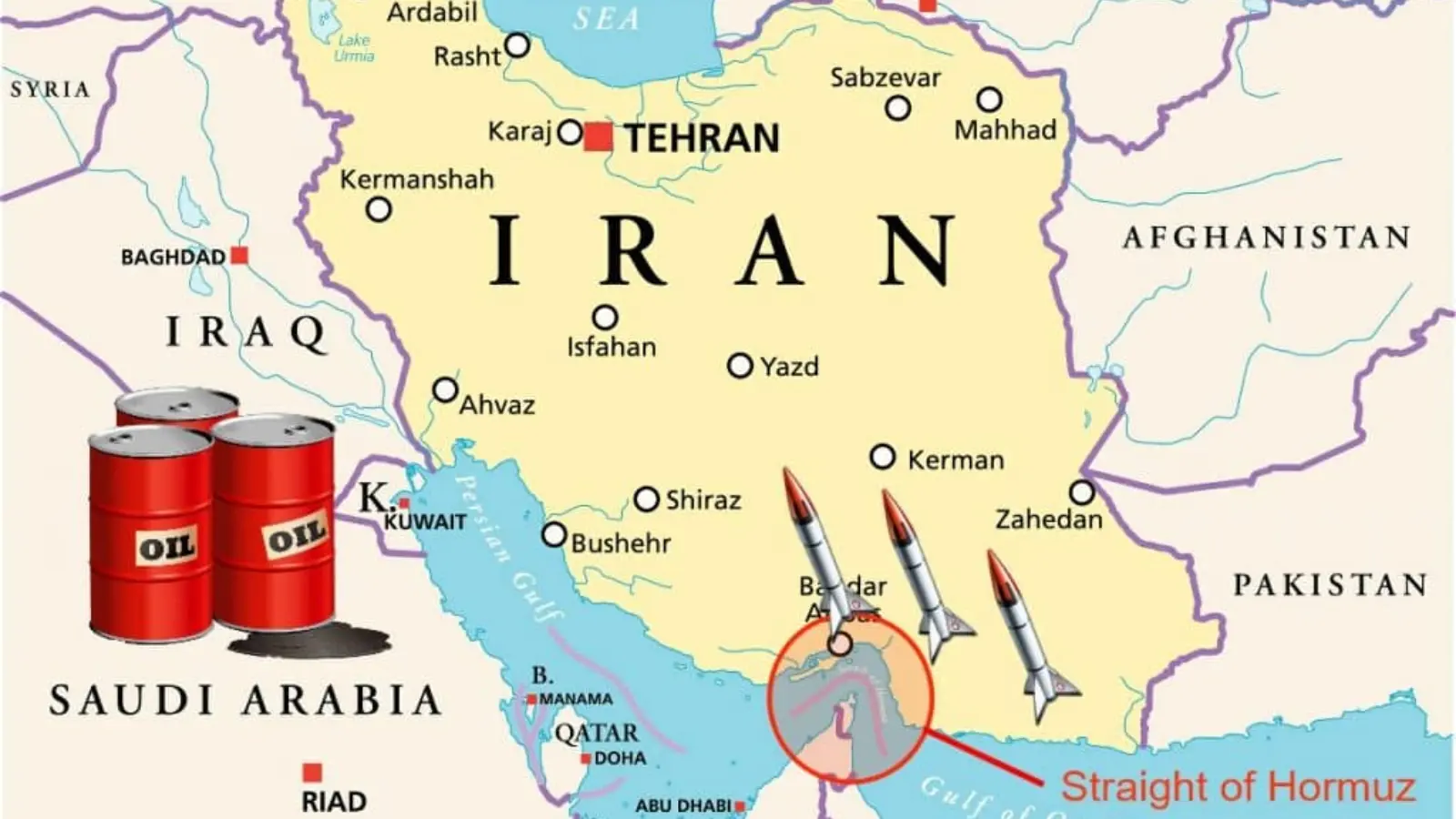
The tension in the Middle East is no longer limited to the military front - it has reached one of the most vulnerable points of the global economy. According to Reuters, the Navy of the Islamic Revolutionary Guard Corps is sending radio signals to ships that they cannot cross the Strait of Hormuz. This was announced by a representative of the European Union's "Aspides" naval mission. However, Iran has not yet officially confirmed this directive.
This aspect is very important: that is, for now, we are not talking about an official closure, but about a dangerous situation that seriously puts pressure on ship traffic in practice. Tehran has repeatedly warned of the possibility of blocking the Strait of Hormuz in the event of attacks against it or strong pressure. Today's situation shows that these threats are becoming more realistic.
The Strait of Hormuz is not just a simple sea route. This is one of the most important arteries of the world's oil and gas supply. According to Reuters, approximately 20% of the world's oil is transported through this corridor. A significant portion of Qatar's liquefied gas also passes through this area. Major exporters such as Saudi Arabia, Iran, Iraq, and the UAE mainly supply their oil to the foreign market through this route. Therefore, any obstacle here will affect the entire world market.
Earlier, Bloomberg also wrote that although the strait was officially left open, tankers slowed down or stopped passing through it altogether. Reuters further reinforced this situation: a number of oil and gas companies, tanker owners, and traders temporarily suspended cargo transportation through Hormuz. Some LNG tankers, approaching the strait, slowed down, retreated, or stopped. So, the risk is not yet theoretical - it has begun to affect logistics in practice.
There are reports that Japan's major shipping company Nippon Yusen KK instructed its ships not to pass through this area. Greece, however, called on ships under its flag to be cautious of high-risk routes in the Persian Gulf, the Strait of Hormuz, and the surrounding areas. This means that the risk is now taken very seriously not only by analysts, but also directly by market participants.
According to the Fars agency cited in the text, the international tanker tracking system shows that the speed of some tankers around Hormuz has dropped almost to zero. Although this claim was not independently confirmed by Reuters, Reuters itself reported that ships are accumulating in the area and queues are forming near major ports. In short, it's clear that the movement at sea isn't normal.
The biggest concern is related to the energy market. Oil prices rose on the eve of the strikes against Iran, reaching around $73 per barrel. Analysts do not rule out the possibility of oil prices rising to $100 if the situation in Hormuz worsens or the strait actually closes. This can lead to a chain of consequences affecting fuel prices, logistics, inflation, and even everyday life in different countries.
In short, the current situation around the Strait of Hormuz is not another military episode in the Middle East. This is a strategic crisis point, which the entire world economy is closely monitoring. If the pressure in this corridor increases even further, its echo can be felt very quickly on oil exchanges, tanker routes, and world markets.



Comments 0
…