


Arrests of Prominent Islamic Scholars in Russia Cause Stir
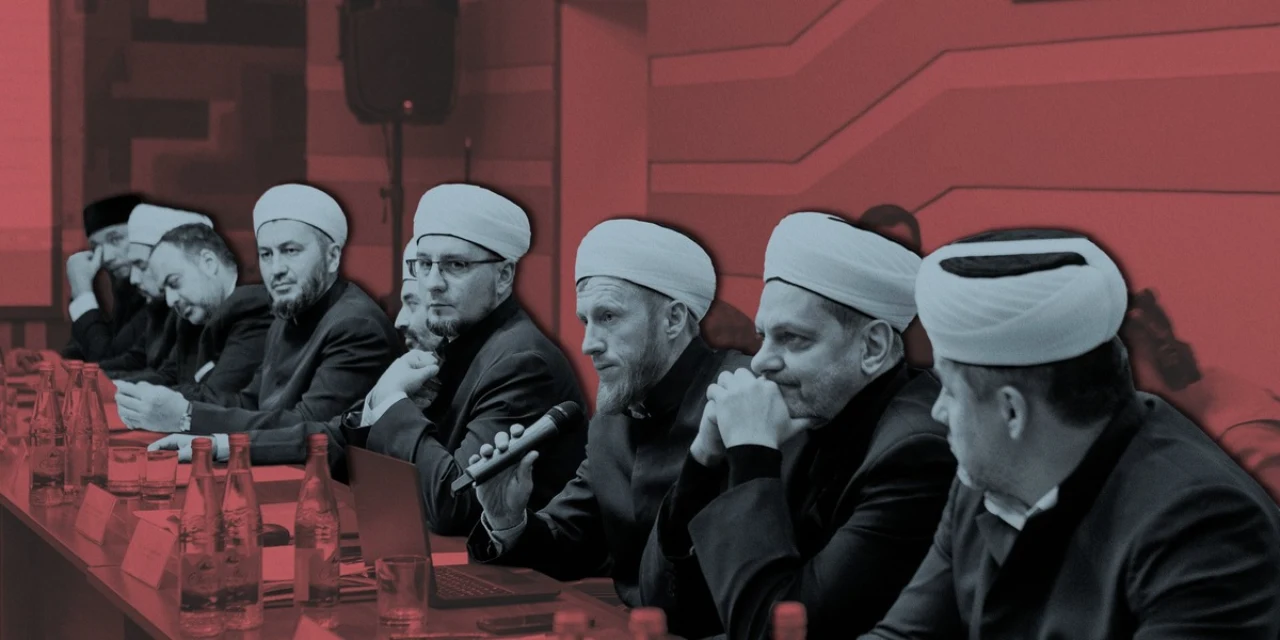
Recently, chilling reports of the consecutive arrests of representatives of the Muslim world, prominent religious figures, and public activists in various regions of the Russian Federation have come to the attention of the international community and the media. It is said that serious political goals and conflicts are hidden behind this wave of arrests, which has intensified since mid-May.
According to independent political scientists, religious experts, and even local Z-bloggers, this system of persecution is actually aimed at limiting the influence of the Religious Board of Muslims of Russia and its influential leader, Mufti Ravil Gainutdin. The world-famous publication Meduza has studied the true details of this mysterious and complex reality.
Arrests in the regions: Well-known preachers among the targets
There seems to be a grand plan behind these arrests, which at first glance seem completely unrelated but occurred at the same time. In recent weeks, the following three major events have shocked the public:
The Mordovia incident: In the city of Saransk, Mordovian Mufti Rail Asainov was arrested on suspicion of bribery. According to investigative authorities, he offered funds to the head of a local university program to facilitate students' exams. Although the mufti was quickly released, the fate of the five activists arrested with him remains unknown.
The Moscow incident: Visam Ali Bardvil, the imam of a mosque in the Southern Butovo district of the capital and former mufti of the Republic of Karelia, was sentenced to 15 days in jail at Sheremetyevo Airport for disobeying police officers.
Terrorism charges: According to the Kommersant newspaper, Muhammad Khenni, former head of the North-Western Muslim Community, Nidal al-Khikh (a Palestinian), deputy mufti of the Saratov region, and Ingush theologian Ahmad Tangiev were arrested on charges of involvement with the banned 'Muslim Brotherhood' organization.
Expert conclusion: Political scientist Rinat Mukhametov notes that those arrested are not ordinary people, but educated individuals who are highly respected among Muslim youth and preach in modern language. For example, Ahmad Tangiev was an active participant in educational anti-extremism events in his homeland.
The real reason for the struggle: A blow to Ravil Gainutdin's structure?
Analysts and experts confidently state that these arrests are a systematic political campaign organized by the Federal Security Service (FSB) against the Religious Board of Muslims of Russia.
Although the Muftiate has officially shown loyalty to the Russian leadership and supported military actions and mobilization in Ukraine, Mufti Ravil Gainutdin has maintained his independent opinion on a number of important issues. For many years, he provided great assistance to the official Kremlin in strengthening Russia's relations with Turkey and the Arab world.
Mufti Ravil Gainutdin's positions that displeased the Kremlin:
Protection of migrants: He has consistently defended the rights of labor migrants coming to work in Russia and openly criticized the pressure from law enforcement agencies. Even after the horrific terrorist attack at Crocus City Hall, he continued to defend migrants.
Fate of mosques: He strongly opposed the demolition of mosques and demanded the construction of new houses of worship.
Opposition to the bill: Recently, he personally appealed to President Vladimir Putin, asking him to reject a new bill that would ban Muslims from performing religious ceremonies outside of mosques.
How well-founded is the 'Muslim Brotherhood' accusation?
Experts are very skeptical about claims that the imams are linked to terrorist organizations. According to political scientist Ruslan Aysin, one would have to be out of their mind to establish contact with a banned organization in Russia today.
Since most of those arrested are of Palestinian or Arab descent, security forces are trying to use the political situation in the Middle East (the link between Hamas and the Muslim Brotherhood) to cut them off from international support systems.
Peace and silence: What is expected in the next stage?
Interestingly, the Council of Muftis of Russia and other organizations led by Gainutdin are currently remaining silent regarding the arrest of their colleagues. However, political observers predict that these processes will also affect other religious boards in the Volga region.
Furthermore, other major organizations that are in constant competition with the Religious Board of Muslims of Russia (such as the Central Religious Board led by Talgat Tadzhuddin) may take advantage of this situation to strengthen their position.
Stay tuned to stay informed about the most important religious and political news in the world and the region, dear readers. Don't go far from our page!



Comments 0
…