


Giant planet “construction zone” discovered beyond Jupiter
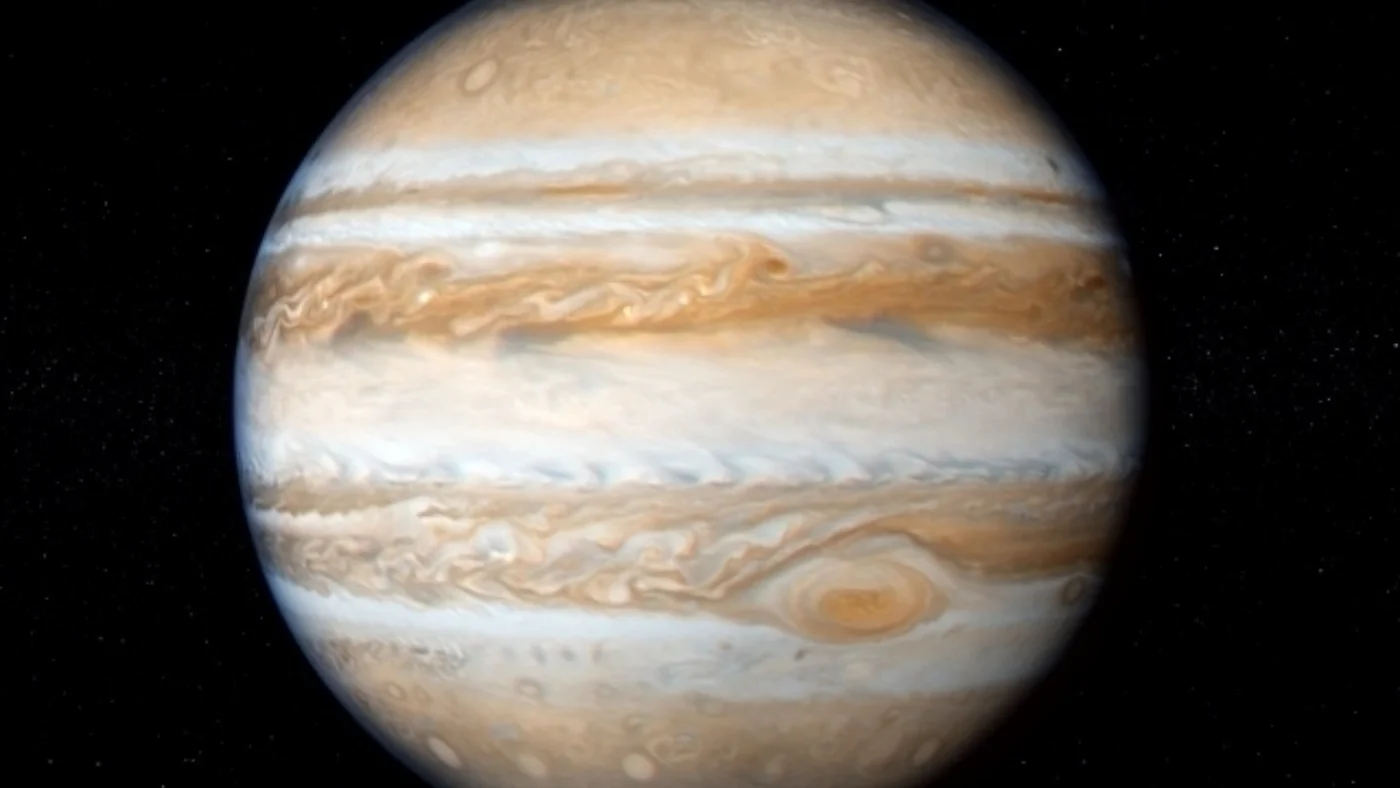
Scientists at the Max Planck Institute for Solar System Research have discovered that the region beyond Jupiter's orbit was one of the most important “factories” for the formation of planetesimals, the primary “building blocks” of planets and asteroids. The results of this study were published in The Astrophysical Journal.
Scientists note that about 4.6 billion years ago, the young Sun was surrounded by a massive disk of gas and dust. Over time, dust particles clumped together to form planetesimals, which later became planets and asteroids.
Researchers modeled the processes occurring 2–4 million years after the formation of the Solar System. By this time, Jupiter had already formed and created a large gap in the gas-dust disk around its orbit. Behind it, a region of high gas pressure emerged, where dust particles and cosmic “pebbles” began to accumulate.
According to experts' calculations, this specific region turned out to be the most favorable space for the birth of planetesimals.
The modeling results also matched data obtained from ancient meteorites—carbonaceous chondrites. It is said that these meteorites contain materials that have remained almost unchanged since the beginning of the Solar System's formation.
Scientists also found that the ratio of two types of material in the “dust trap” behind Jupiter changed over time. One consisted of fine, fragile materials, while the other comprised denser fragments formed at high temperatures. Later, this process gave rise to several generations of planetesimals with different compositions.
The study authors believe that not only the ancestors of carbonaceous chondrites but also even more ancient types of meteorites may have formed beyond Jupiter.


Comments 0
…