


Unprecedented Rescue Carried Out in −43°C Antarctic Cold
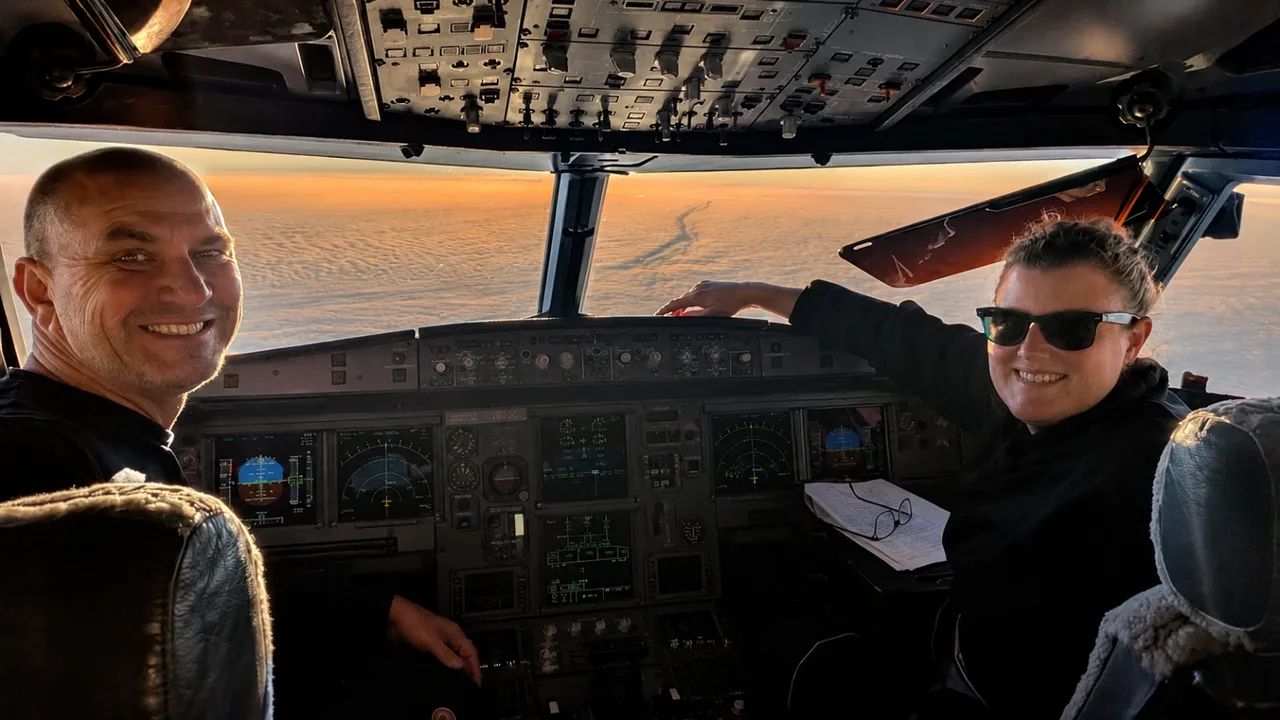
Australian aviation specialists carried out an extremely complex operation to rescue a member of a US expedition in the freezing Antarctic winter. The rescue mission was conducted in complete darkness and temperatures as low as −43°C.
Skytraders said the extraordinary operation began last Friday after an urgent request for medical evacuation assistance was received from the US McMurdo Station.
The flight was initially delayed due to weather conditions. Nevertheless, the crew later managed to land an Airbus A319 in extremely difficult conditions. The air temperature was around −43°C (−45.4°F) at the time.
The patient was safely taken aboard Snowbird 1 the aircraft known by that name, and flown from there to Christchurch, New Zealand. The patient received the necessary medical care there. The patient is now reportedly in good condition and recovering.
The operation was carried out for the first time in July
Captain Louise Robertson, one of the four pilots involved in the flight, told the BBC that the mission was one of the most challenging operations in Skytraders' history.
According to her, it was the first flight carried out in July and in complete darkness of its kind.
"We completed the operation on July 31. The first light resembling sunlight was not expected to appear until August 1, and even then only in very small amounts," Robertson said.
Interestingly, her husband of 18 years, Rod Robertson, also took part in the mission and personally landed the aircraft at the US research station on Ross Island.
"He was in the left seat, and I was in the right seat," Louise Robertson said.
She said that during her seven years at Skytraders and 25 years as a pilot overall, this was the first time she had taken part in such a complex operation.
Preparing the aircraft took 24 hours
The evacuation request reached Skytraders on Wednesday. It was submitted by the US Antarctic Program through the Australian Antarctic Division.
The aircraft had to be specially equipped for the operation. A team of engineers and designers installed a special stretcher in the rear of the aircraft to transport the patient.
Bringing the aircraft into the required configuration took 24 hours After that, the crew had to wait another 12 hours for the weather to become suitable for the flight.
"The window for flying to Antarctica was extremely narrow. On our first scheduled day, a snowstorm began and halted the operation," Robertson said.
The severe storm also prevented station personnel from reaching the snow-packed runway. Simply leveling and preparing the runway for the aircraft took six hours to complete.
Finally, the aircraft left Hobart on Friday morning.
Runway prepared in −45°C cold
According to Robertson, ground personnel did an outstanding job preparing a 3-kilometer-long runway for the aircraft despite the extremely difficult conditions.
The air temperature was around −45°C at the time, and strong winds were also blowing.
The aircraft crew spent just one hour at Phoenix Airfield. After taking the patient aboard, the crew took off again and headed for Christchurch.
Captain Al Wallack, another pilot involved in the mission, emphasized that its success was based on extensive professional experience and thorough preparation. He said every member of the team—from the flight crew, meteorologists, and operations planners to runway personnel and medical specialists—performed their duties precisely.
"Every mission in Antarctica requires absolute precision. In winter, the complexity increases even further. The conditions we faced came close to the limits of even the most specialized aircraft," he said.
Emma Campbell, head of the Australian Antarctic Division, also noted that the operation clearly demonstrated the expertise and cooperation capabilities supporting international programs in Antarctica.
For reference, Skytraders also carried out a similar operation in March 2020. At that time, assistance was also requested to evacuate a member of the US Antarctic Program from McMurdo Station. However, the air temperature during that mission was relatively warmer at −30°C bo‘lgan.


Comments 0
…