


Successful launch from Baikonur: "Soyuz-2.1b" rocket takes off with over 2.4 tons of cargo
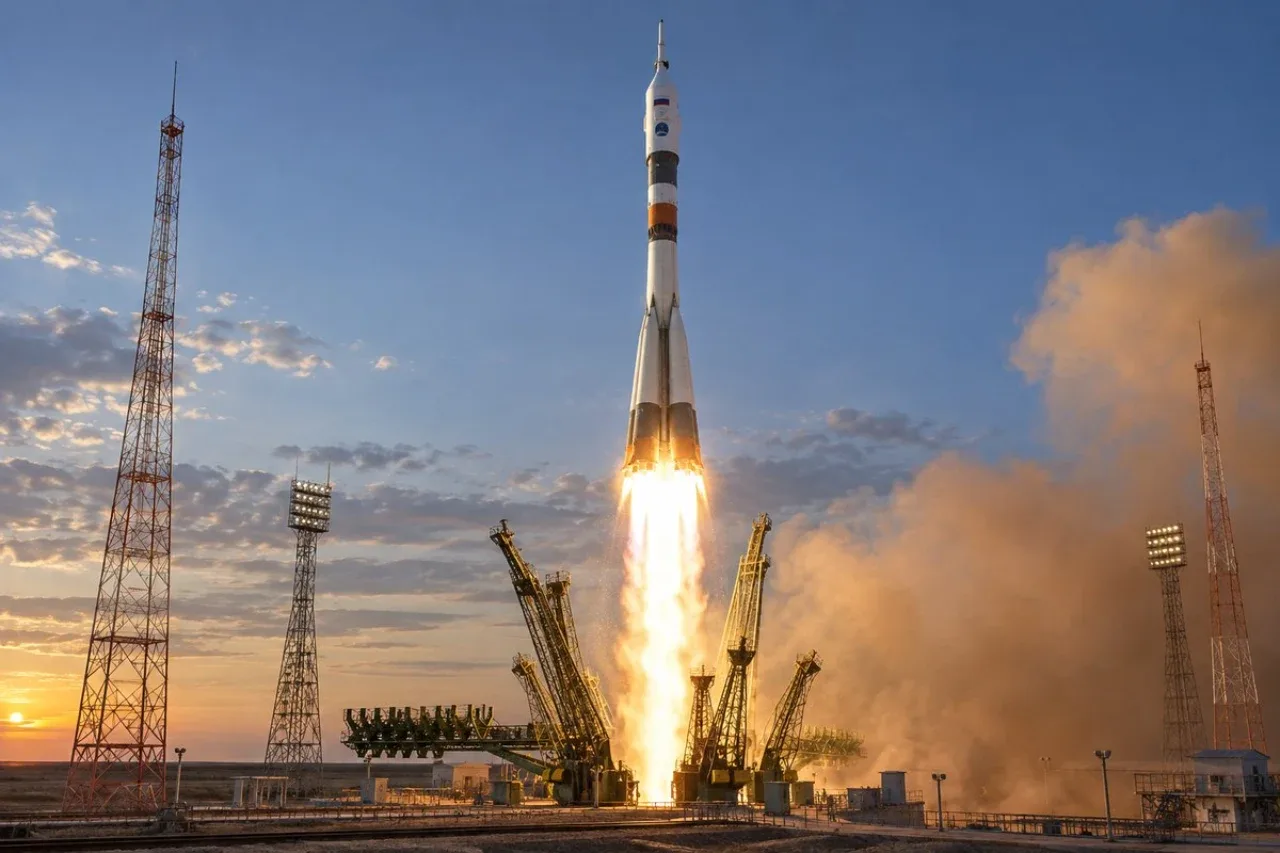
Another important and successful launch took place at the Baikonur Cosmodrome, planet Earth's main space gateway. Today, on September 16, the "Soyuz-2.1b" carrier rocket successfully launched the "Progress MS-35" cargo spacecraft into orbit. Flying along the designated trajectory, the space freighter headed toward the International Space Station (ISS). "Progress MS-35" will deliver over 2.4 tons of vital cargo for the international crew serving on board the station: among them are fuel to replenish the station, clean drinking water, oxygen to enrich the atmosphere, fresh food, medicines, and anti-weightlessness aids.
However, the most notable aspect of this mission was the delivery of the "Teledroid" experimental system designed to control android robots in open space, as well as unique scientific laboratory equipment such as "Vampir", "Virtual", and "Biopolymer" for studying the secrets of the universe. At present, 7 astronauts from the Russian, US, and European space agencies are eagerly awaiting the arrival of the new cargo caravan at the station.
So, how will the "Teledroid" robot be able to replace humans in space, what is hidden behind the "Vampir" research, and how is international cooperation in space continuing?
"2.4 tons of the breath of life to space": What does the onboard cargo consist of?
The main supplies being delivered to the station via the "Progress MS-35" spacecraft:
Fuel and air resources: Systems for maintaining the ISS orbit and refueling the station, as well as additional oxygen reserves necessary for the station's atmosphere;
Water and fresh supplies: Specially prepared drinking water for cosmonauts, canned goods, and fresh foods rich in vitamins;
Sanitation and medical supplies: Personal hygiene equipment, emergency medical aid preparations, and special physical aids protecting the human body from the effects of weightlessness;
Sinking of the old spacecraft in the ocean: For reference, the previous "Progress MS-33" spacecraft undocked from the ISS on September 7 and was routinely sunk in a safe, unnavigated part of the Pacific Ocean, while "Progress MS-34" is currently continuing service at the station.
"The robot in open space and the secret of 'Vampir'": New scientific laboratory on board
Advanced scientific experiments to be carried out within the framework of the expedition:
"Teledroid" experimental workstation: A special technological complex allowing cosmonauts to directly control android robots outside from inside the station without going out into open space;
"Vampir" and "Biopolymer" programs: Special testing devices aimed at synthesizing unique crystals and new types of biomaterials in weightlessness conditions;
Large-scale research: The spacecraft is also delivering high-precision sensors and devices intended for the scientific programs "Gazoanalizator-FS", "Virtual", "Uragan", and "Separatsiya".
7 heroes on the ISS: Who is waiting on board?
The international crew currently serving 400 km above the Earth:
Russian cosmonauts: Pyotr Dubrov, Anna Kikina, and Andrey Fedyayev;
American (NASA) astronauts: Jessica Meir, Jack Hathaway, and Anil Menon;
Representative of the European Space Agency (ESA): French female astronaut Sophie Adenot;
Solidarity despite conflicts on Earth: Despite geopolitical conflicts, the international crew in the expanses of space operates as a single family for the sake of science and the future of humanity.
The successful launch of the "Soyuz-2.1b" rocket from the expanses of Baikonur once again demonstrated that humanity's scientific march toward conquering space will not stop under any circumstances.
In your opinion, is it a correct decision in the future to fully entrust heavy and dangerous tasks outside the International Space Station to robots like "Teledroid", restricting cosmonauts from spacewalks? How do you assess such international friendship and cooperation on the ISS at a time when political tensions on Earth are intensifying? Leave your thoughts in the comments and share the analysis of this next historic flight to space with all science and space enthusiasts!



Comments 0
…