


Laws of physics hinder Elon Musk's lunar city plan
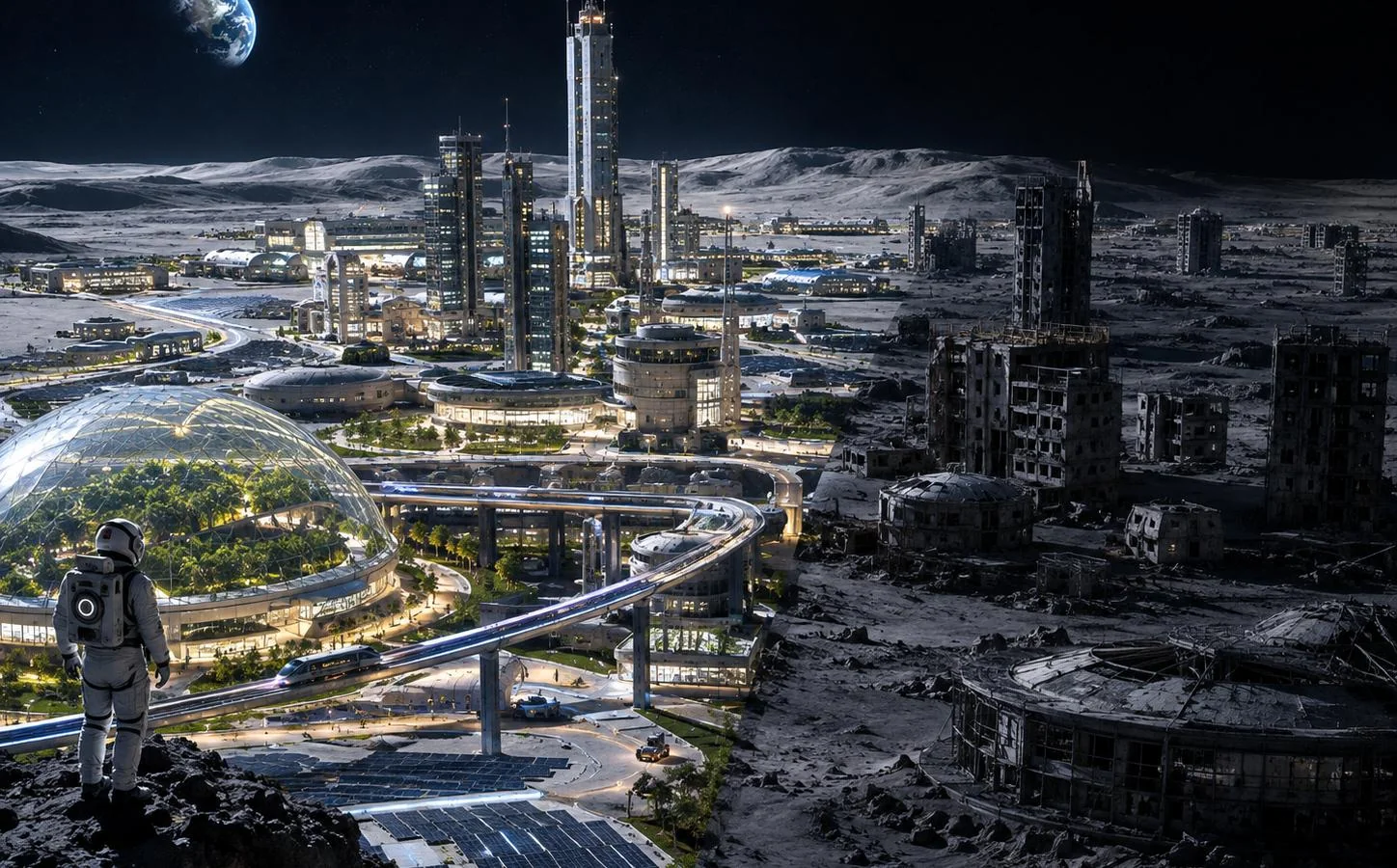
According to Ixbt.com, while billionaire Elon Musk plans to build a "self-sustaining city" on the Moon within a decade, scientists have calculated that this idea faces severe physical limitations. Researchers at the Smithsonian Astrophysical Observatory sought a scientific answer to whether lunar resources can support a population of one million people. This is reported by Ixbt.com reports .
Currently, the most reliable estimates suggest that eight large crater structures located in permanent shadow at the poles contain approximately 34 million tons of water ice. The most optimistic estimates, based on 2013 radar data, value this reserve between several hundred million and one billion tons. Scientists deliberately used the most generous figure — one billion tons of water — as a basis.
Limited water resources and consumption volume
The study showed that even a one-billion-ton reserve would not last long for a city of one million people. According to American standards, one person consumes approximately 125 tons of water per year for personal needs, drinking, and hygiene. Considering that growing food in closed hydroponic farm conditions requires about 580 tons of water per person, the total volume increases sharply.Assuming any recycling technology is abandoned, one million inhabitants would consume half a billion tons of water per year, and the existing reserve would run out in just 2.4 years. Even with the highest level of recycling at 98 percent, similar to the International Space Station, the city could survive for just over a century. However, experts note that there is currently no ready-made engineering solution to maintain such a high rate on a city-wide scale for decades.
Energy and available alternatives
Interestingly, converting water into rocket fuel is not the main problem. One billion tons of water is enough to fuel nearly one million Starship vessels. The main sticking point is not space logistics, but life support systems. When it comes to energy, solar farm complexes installed on the peaks of eternal light at the poles and nuclear reactors can fully power a city of one million people and its industry.- Water consumption can be reduced through a vegetarian diet and vertical farms, but this is only a temporary solution.
- Importing water from asteroids is technically feasible, but it would require 27 cargo landings per day.
- Increasing recycling efficiency tenfold is theoretically possible, but maintaining this in practice for decades is nearly impossible.


Comments 0
…