


“I Spoke About This Before”: What Problem Did Cannavaro Identify in Uzbekistan?
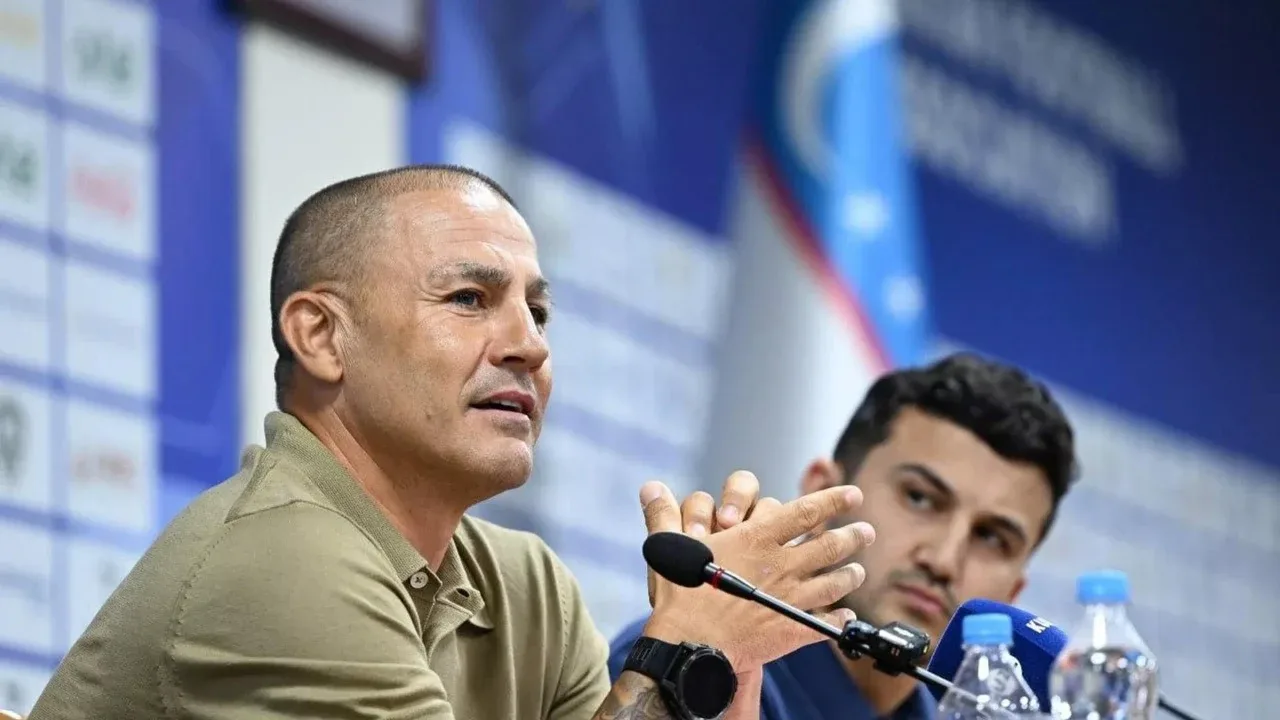
Uzbekistan’s historic first World Cup ended far more painfully than expected. Three games, three defeats and 11 goals conceded — Fabio Cannavaro viewed these results not as a coincidence, but as the consequence of a problem that had been identified in advance.
According to the Italian coach, the tournament clearly exposed the main gap facing Uzbekistan’s footballers: at the highest level, technique and tactics alone are not enough — teams must play at high speed throughout the entire match.
Historic debut ends with difficult numbers
Uzbekistan faced Colombia, Portugal and the Democratic Republic of the Congo in Group K of the 2026 World Cup.
Our team’s group-stage results:
— Uzbekistan — Colombia — 1:3;
— Portugal — Uzbekistan — 5:0;
— DR Congo — Uzbekistan — 3:1.
Thus, the national team scored two goals in three matches, conceded 11 and failed to earn a single point. Against Colombia, Abbosbek Fayzullaev scored Uzbekistan’s first-ever World Cup goal, while Eldor Shomurodov opened the scoring against DR Congo. However, in both matches, the opponents eventually took control.
In particular, the 0:5 defeat by Portugal clearly highlighted the difference between the teams in tempo, speed of decision-making and individual skill.
Cannavaro: “I Spoke About This Before”
In his post-tournament comments, Fabio Cannavaro stressed that the existing problems were not new to him.
“If we go back eight or nine months, I had already spoken about the problems within the team and the level of our players. The focus of our conversations was always match intensity — we repeatedly emphasized that the players had to operate at a high tempo.”
The coach expected World Cup matches to be played at an even higher speed than ordinary international fixtures. In his view, some people believed Uzbekistan would not face such serious difficulties at the tournament, but the coaching staff had identified the danger in advance.
“I knew very well that the tempo at the World Cup would be extremely high. Perhaps many people thought we would not face such difficulties at the tournament. But I had warned about this beforehand.”
Even before the tournament began, Cannavaro had paid particular attention to the players’ physical condition and their ability to operate at high intensity. At a May press conference, he said improving the team’s physical preparation was one of the main tasks.
After the friendly against Canada, the coach also openly stressed that intensity was one of the key differences between international football and Asian football.
The Problem Is Not Only Physical Preparation
High intensity does not simply mean that players run more. It means performing several tasks at the same time:
— starting the press immediately after losing the ball;
— transitioning quickly from defence to attack;
— making decisions within seconds under pressure from the opponent;
— covering large distances without losing positional discipline;
— maintaining the match tempo for 90 minutes.
At the World Cup, Uzbekistan’s players were able to compete on equal terms with their opponents in some phases. However, when the pace increased, the number of errors rose, the distances between the lines grew and the opponents exploited the open spaces effectively.
After the defeat by Portugal, Cannavaro did not place the responsibility on the players. Instead, he linked the 0:5 scoreline to his own coaching decisions and said the team needed to learn from the experience.
What Should These Defeats Change?
Uzbekistan’sfirst World Cup was unsuccessful in terms of results. The three defeats and last place in the group say it all. However, the tournament also revealed which aspects of the national game still do not meet international standards.
The main conclusion from Cannavaro’s statement is clear: the problem cannot be solved only during national-team camps. Players must also regularly compete for their clubs at a high tempo, against strong opposition and under intense pressure.
This requires the following in the next stage:
— increasing the tempo of domestic league matches;
— strengthening the players’ physical preparation system;
— developing quick decision-making skills in youth football;
— increasing the number of players competing in strong leagues.
Uzbekistan fulfilled its dream of qualifying for the World Cup, but the tournament itself showed a new reality: reaching the tournament and being competitive in it are two different stages.
The main question now is not who should be blamed for the defeats. What matters is whether systemic changes will begin in the areas Cannavaro warned about, or whether these lessons will once again be forgotten before the next major tournament.
Leave your opinion in the comments and share the article with your friends on Telegram or other social networks.



Comments 0
…