


OLED Screen Revolution: Scientists Find Way to Bring Color Purity to Laser Levels
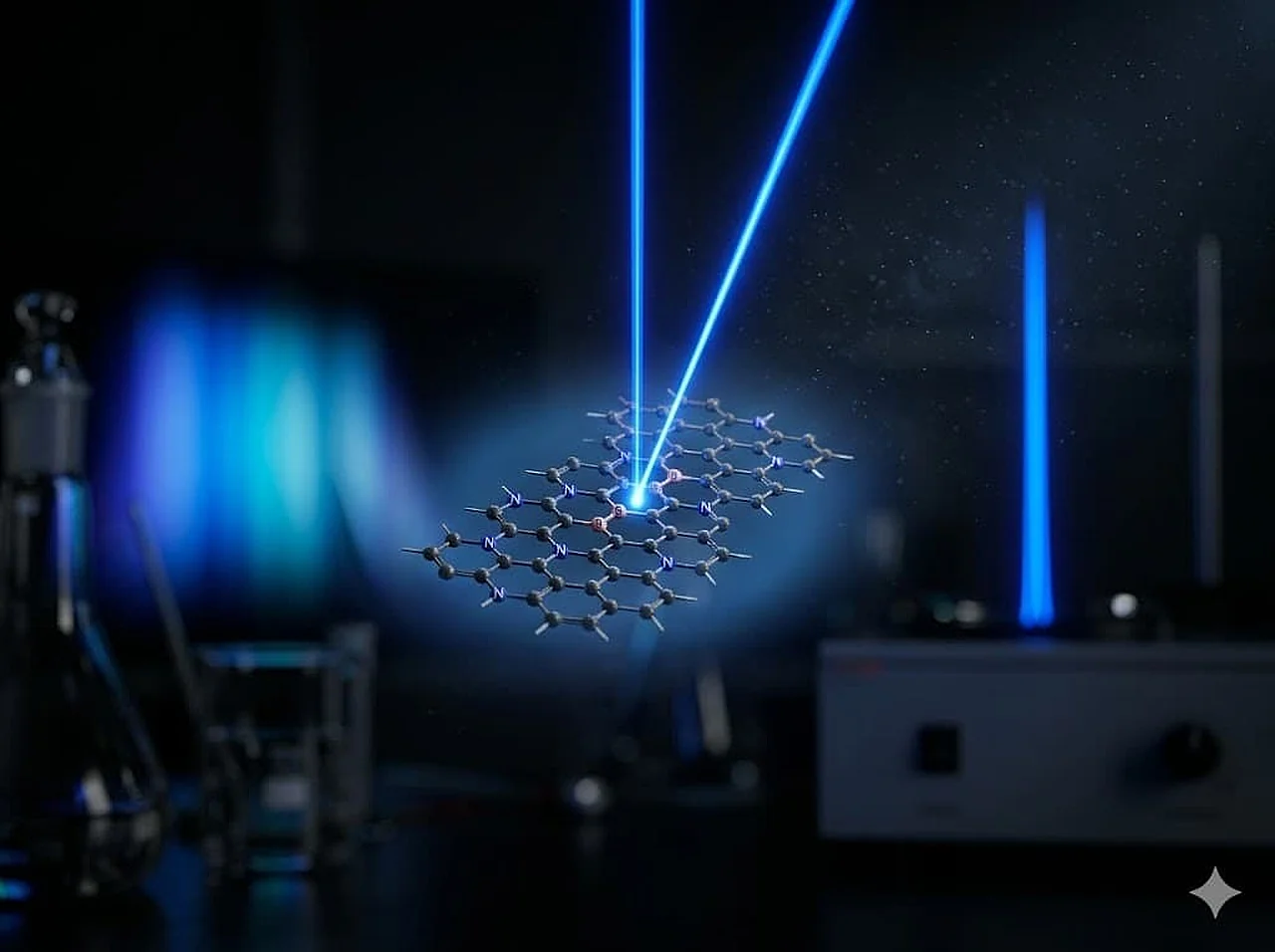
A real turning point is expected in the world of modern display technologies. Scientists from Kyoto University have succeeded in creating a new type of organic molecule that maximizes color purity for OLED panels. According to research results published in the journal Science, this discovery will take the image quality of smartphone and TV screens to a completely new level. This is reported by Ixbt.com news provides.
Currently used LED and OLED diodes are based on broadband emission by nature. This means that each color produced by the screen consists of a spectrum of several waves rather than a single precise wavelength. Therefore, even in the most expensive flagship devices, color saturation is not perfect. The scientists' main goal was to narrow this spectrum and make the color as precise as a laser beam.
New Molecular Structure and the Discovery of m-CzB10-Mes
A research group led by Takuji Hatakeyama worked on "multiple resonance" emitters. By spatially expanding the molecular structure, they managed to reduce the dispersion of emission energy. As a result, a complex "ladder-like" structure called m-CzB10-Mes was created. This structure is a unique nanocarbon framework in which boron atoms are embedded.Synthesizing such compounds is considered an extremely complex process in science. However, according to ixbt.com, the team succeeded in introducing 10 boron atoms into the molecule simultaneously using the "one-shot borylation" method. This is considered a huge technological achievement, as it significantly simplifies the production process.
Laser-Level Purity and Future Prospects
Laboratory tests showed that the emission spectrum produced by the new molecule is so narrow that it approaches laser beams in its purity. Additionally, it possesses thermally activated delayed fluorescence (TADF) properties. This serves to increase not only the color purity of OLED devices but also their energy efficiency.It is worth noting that there are still specific challenges in integrating the new technology into real devices. When molecules interact with each other in a solid state, a slight broadening of the emission spectrum was observed. Scientists are currently working on controlling this intermolecular interaction.
This discovery could set new standards for displays produced by Apple, Samsung, and other tech giants in the future. If researchers can fully ensure the stability of the molecules, we will witness displays in the coming years with colors brighter and more natural than in real life.


Comments 0
…