


A 4.7 billion-soum theft behind cashback: a hidden scheme exposed in Tashkent
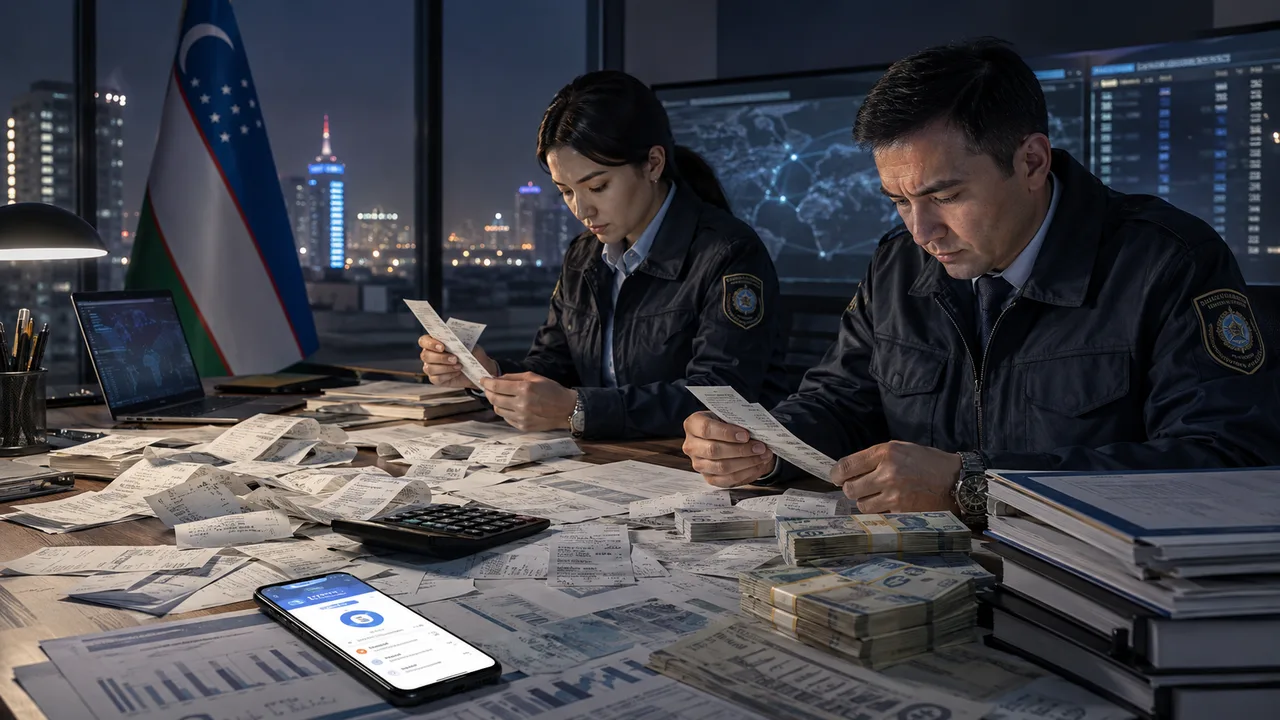
Nearly 4.7 billion soums is said to have been obtained from the budget in Tashkent by selling fake purchase receipts. An investigation conducted jointly by the Department under the Prosecutor General’s Office and the Tax Committee uncovered fake sales transactions worth a total of 86.2 billion soums.
According to preliminary information, purchases that did not actually take place were processed through cash registers, and the receipts issued were sold via Telegram. The scheme exploited the high-value cashback intended for citizens included in the social protection registry.
Purchases worth 76.2 billion soums created on paper
A pre-investigation inquiry conducted by the Tashkent city department of the Department found that officials of an LLC had falsified information stating that products worth 76.2 billion soums had been purchased.
The purported sales were recorded through online cash registers, and fiscal receipts were issued for them. However, according to the official agency, the receipts were not backed by any actual exchange of goods or real purchases.
The fake receipts were subsequently sold through Telegram channels and groups to people included in the social protection registry, for between 70,000 and 150,000 soums.
Participants in the scheme received a relatively small amount for the receipt, while the person who registered it obtained a much larger cashback payment from the budget. The main loss was covered with state funds.
7.5 billion soums calculated, 4.1 billion paid
As a result of registering these receipts in the Soliq Mobile app, 7.5 billion soums in cashback was calculated.
Of this amount, 4.1 billion soums was paid to citizens and is said to have subsequently been embezzled. No detailed information has yet been provided on whether the remaining funds were released for payment or stopped by the system.
Citizens included in the social protection registry can receive 12 percent social cashback instead of the usual 1 percent when purchasing certain socially important goods and services. The mechanism was introduced to support vulnerable groups of the population.
It was precisely this high rate of cashback that may have made the system an attractive target for sellers of fake receipts.
Another case worth 640.8 million soums in Chilanzar
A similar second scheme was uncovered by the Chilanzar district department of the Department.
In this case, the suspects allegedly processed fake purchases worth 10 billion soums through the cash register system and sold the receipts issued for 100,000–150,000 soums each.
Based on them:
1 billion soums in cashback was calculated;
640.8 million soums was paid;
the funds are suspected of having been embezzled from the budget.
Combined, the two cases involved fake purchases totaling 86.2 billion soums, while the calculated cashback amounted to 8.5 billion soums. The amount actually paid was 4 billion 740.8 million soums.
Why is buying a receipt dangerous too?
The Tax Committee has previously warned citizens not to register receipts purchased from social media or other individuals in the Soliq app.
According to the official explanation, only a receipt issued for a purchase made by the citizen themselves or for a service they actually used should be registered. Using a fake receipt purchased from another person constitutes a violation and may result in liability.
The system also allows suspicious users to be placed on a separate register. In such cases, the legitimate holder of the receipt may be required to provide documents confirming that they personally made the purchase.
For this reason, the offer to “buy a cheap receipt and make easy money” poses financial and legal risks to the citizen themselves as well.
This is not an isolated case
Schemes to obtain fake cashback through Soliq Mobile have also been identified in other regions.
In June, the Department reported that 35.1 billion soums in budget funds had been embezzled in Andijan through fake transactions. In another case in Fergana, cashback totaling 28.5 billion soums was calculated for more than 211,000 citizens, of which 3.2 billion soums was paid.
These figures show that the problem is not limited to a few fake receipts. Fake companies, online cash registers, the sale of receipts through Telegram, and the use of third parties’ Soliq accounts are being combined into a single chain.
Pre-investigation inquiry procedures are still underway in connection with the two cases in Tashkent. The guilt of the participants and each person’s role in the scheme will be determined by a court verdict that has entered into legal force.
Cashback was created to return part of people’s purchase costs to them. However, the 86 billion soums in fictitious sales on paper is suspected of having turned it into a means for certain individuals to siphon money from the budget.
Leave your opinion in the comments and share the article with your acquaintances on Telegram or other social networks!



Comments 0
…