


Geomagnetic Storms Found to Sharply Change Surface Temperatures
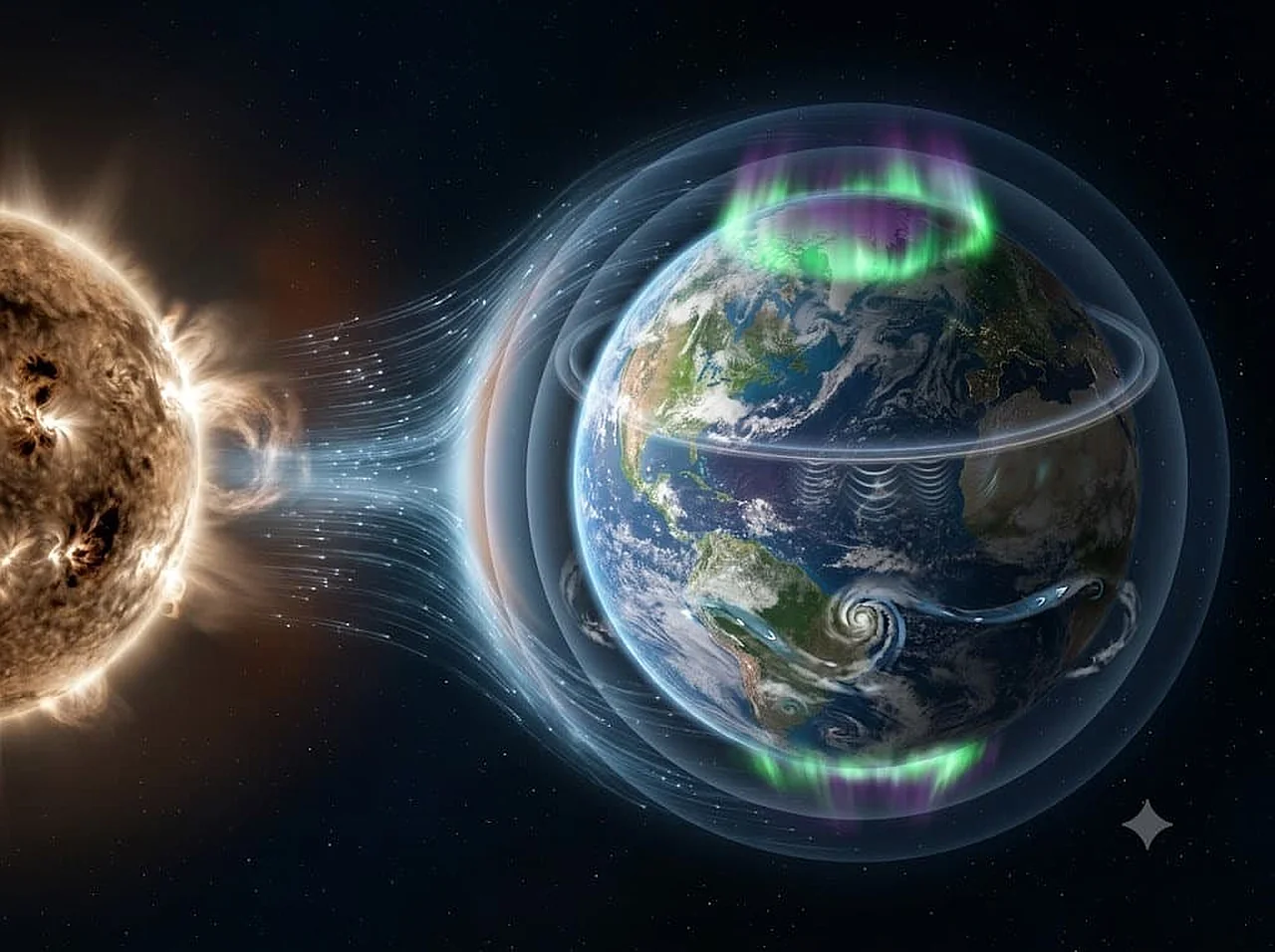
It has become known that the impact of solar activity and geomagnetic storms on the Earth's atmosphere is much stronger than previously assumed. According to new scientific research, powerful magnetic storms are capable of changing weather conditions in some regions of our planet by dozens of degrees within a single day. This discovery fundamentally changes perceptions of the link between space weather and surface climate. This is reported by Ixbt.com news reports.
The study published in the journal Geophysical Research Letters is based on the analysis of 67 years of meteorological data. Using the ERA5 atmospheric reanalysis database, scientists examined all major geomagnetic fluctuations observed since the 1950s. The results showed that when plasma flows and collisions from the Sun hit the Earth's magnetosphere, it directly affects not only communication systems but also temperature and pressure in the lower atmospheric layers.
Weather can change anomalously
The authors of the study emphasize that during magnetic storms, distinct deviations in temperature, precipitation amounts, and radiation balance are observed. This effect is particularly high in the North American region, especially during the winter season. In some cases, temperature changes of dozens of degrees were recorded, which is several times stronger than the ordinary fluctuations observed during the Sun's 11-year cycle (one-tenth of a degree).The mechanism of this process is explained by the principle of "downward" energy transfer. The energy of solar storms first affects the ionosphere and upper layers of the atmosphere. Then, this energy is transferred downward through polar vortices in the stratosphere and jet streams, reshaping the weather map in the troposphere where we live.
Forecast accuracy will increase
Current meteorological and climate models do not account for such rapid effects of geomagnetic storms on the weather. This can lead to the unpredictability of unexpected extreme weather events. According to scientists, integrating space weather parameters into forecasting systems will significantly increase the accuracy of weather data.During the study, the following main patterns were identified:
- The impact of magnetic storms is more pronounced in winter months than in other seasons;
- The stronger the storm, the more linearly the atmospheric deviations increase;
- A sharp decrease in precipitation is observed in some regions following the storms;
- The effects are not global but regional, being most noticeable in high latitudes.


Comments 0
…