


Bacteria Purify Toxic Uranium in Water by 96 Percent
Experts from the Helmholtz-Zentrum Dresden-Rossendorf (HZDR) in Germany, the University of Granada, and Wismut GmbH have successfully converted dissolved toxic uranium into a stable chemical compound. According to ixbt.com, microorganisms were used in this process, making it possible to clean water from the heavy metal by 96 percent. This is reported by Ixbt.com reports .
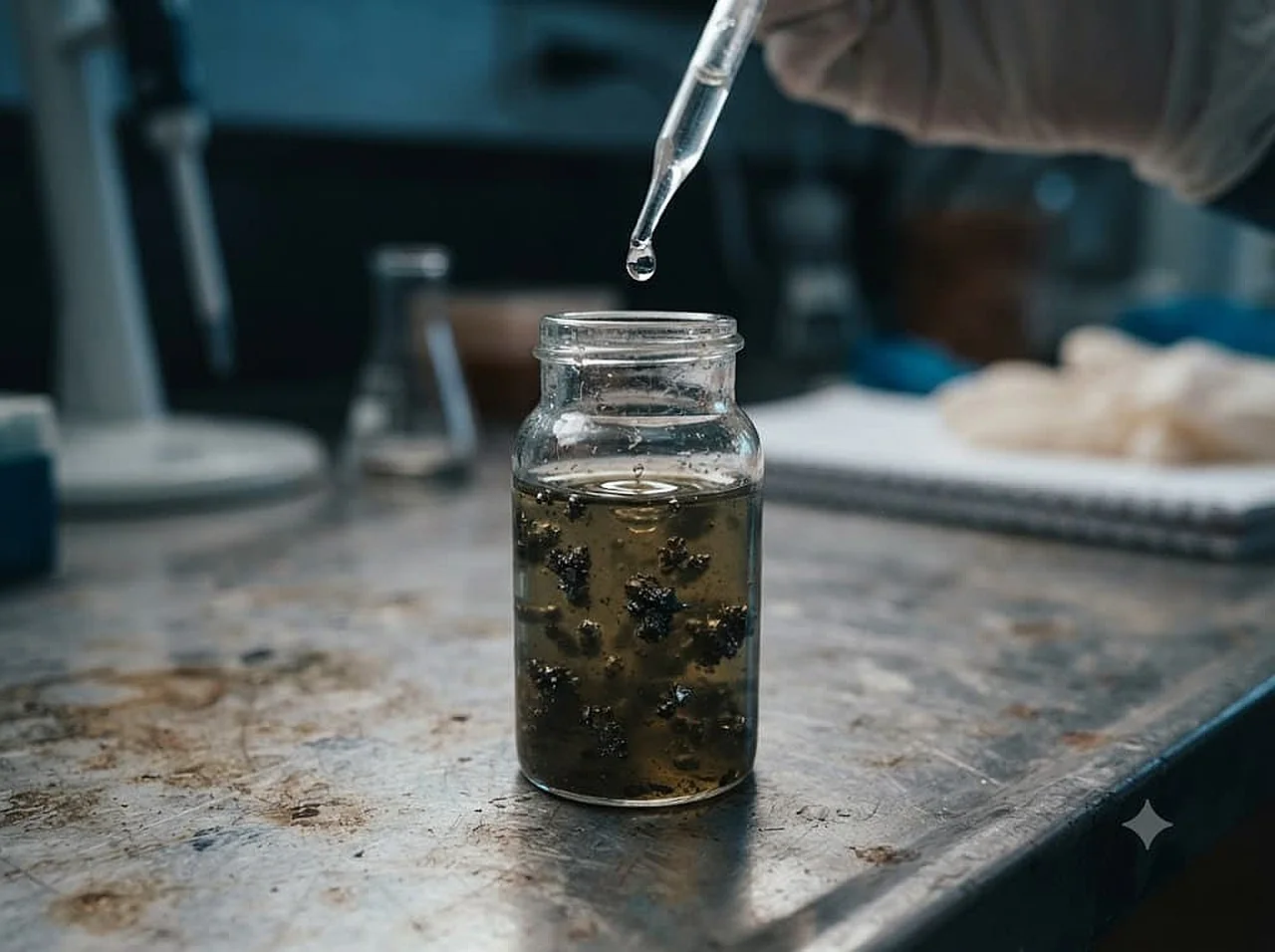
It turned out that the experiments were conducted using water samples taken from the uranium deposit in the flooded Schlema-Alberoda in the Ore Mountains of Germany. In laboratory conditions in an oxygen-free environment, glycerin, a joint product of the decomposition of plant and animal fats, was added to the samples.
Experimental results and scientific discovery
Glycerin served as a food source for the microorganisms. As a result, after 130 days, the concentration of dissolved uranium dropped from 1 mg/l to 0.04 mg/l. The bacteria not only absorbed the metal but also firmly fixed it to their cell walls.Using high-precision spectroscopy and microscopy at the ESRF synchrotron in France, the chemical form of the bound uranium was studied. According to the analysis, the metal transitioned into a pentavalent state, forming a compound consisting of uranium, iron, and oxygen.
Changes in the geochemical cycle
In the history of science, pentavalent uranium was considered only as an extremely unstable intermediate stage. However, it was found that under new conditions, it maintained its stability for more than 130 days in an oxygen-free environment, and up to four weeks when exposed to atmospheric air.This finding completely changed classical ideas about the geochemical cycle of uranium. Previously, it was assumed that hexavalent uranium transitioned directly into a tetravalent state and subsequently formed the mineral uraninite.
The newly discovered compound has high thermodynamic stability and acts as a reliable buffer, preventing the radioactive element from re-dissolving and spreading even when redox potential fluctuates.
Published in Nature Communications, the study results lay the foundation for developing cost-effective strategies for industrial wastewater treatment. Stimulating the activity of local bacteria using glycerin makes it possible to fix radionuclides directly in water bodies.


Comments 0
…