


SpaceX Tests Starship Catch Mechanism in Florida
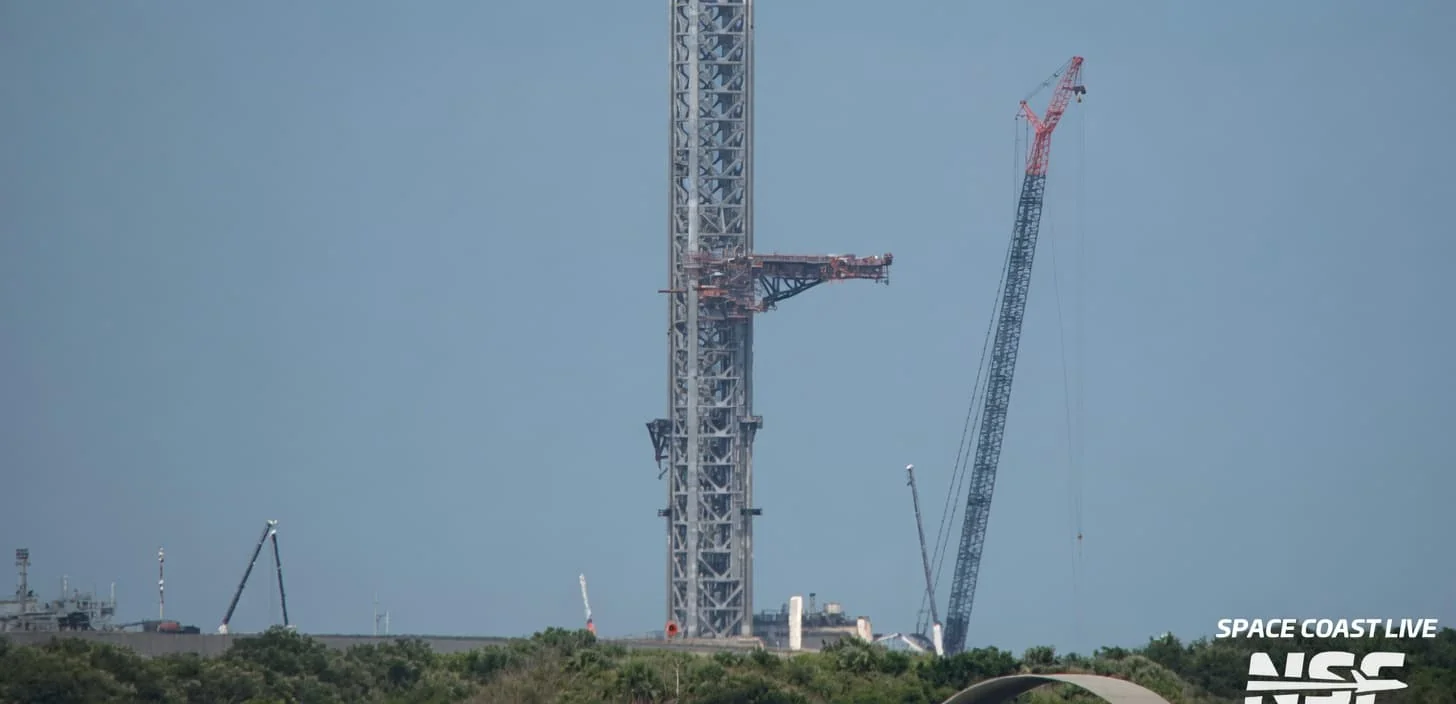
At the historic LC-39A launch complex in Florida, SpaceX specialists have successfully completed the lifting of the giant mechanical «chopsticks» mounted on the Starship service tower. According to ixbt.com, published footage clearly shows the massive clamps being raised to their full operational height over several hours. This is reported by Ixbt.com reports .
These structures are considered one of the most critical elements designed to catch the returning Super Heavy booster after flight. As an integral part of the reusable Starship system, this technology allows the booster to return to the launch site after separation, where the tower catches it directly in mid-air.
New Infrastructure and Tests
This method has already been successfully tested at Starbase in Texas. Now, similar infrastructure is being prepared on the U.S. East Coast. The activity at LC-39A, which previously hosted Apollo and Space Shuttle missions, indicates that SpaceX is earnestly preparing for Starship launches from Florida.According to preliminary estimates, if the company obtains all necessary permits and completes infrastructure testing, the first attempts to catch the Super Heavy booster at this pad could take place by late 2026. Notably, the Federal Aviation Administration (FAA) is proposing changes to streamline rocket launch licensing processes for the commercial space industry.
Elon Musk and Future Plans
Earlier, Elon Musk commented on the results of Starship's 13th test flight on July 24, 2026. According to him, the upper stage achieved such a precise controlled splashdown in the Indian Ocean that if the task had been assigned during the test, it could have been caught by the launch tower using mechanical «arms» instead of splashing down.Space industry experts believe that the full deployment of this technology will significantly speed up the refurbishment process for rocket components. In turn, this will dramatically increase the economic efficiency of next-generation spaceflights and pave the way for long-duration missions.


Comments 0
…