


Agreement on the Strait of Hormuz Near: What Conditions Is Iran Setting?
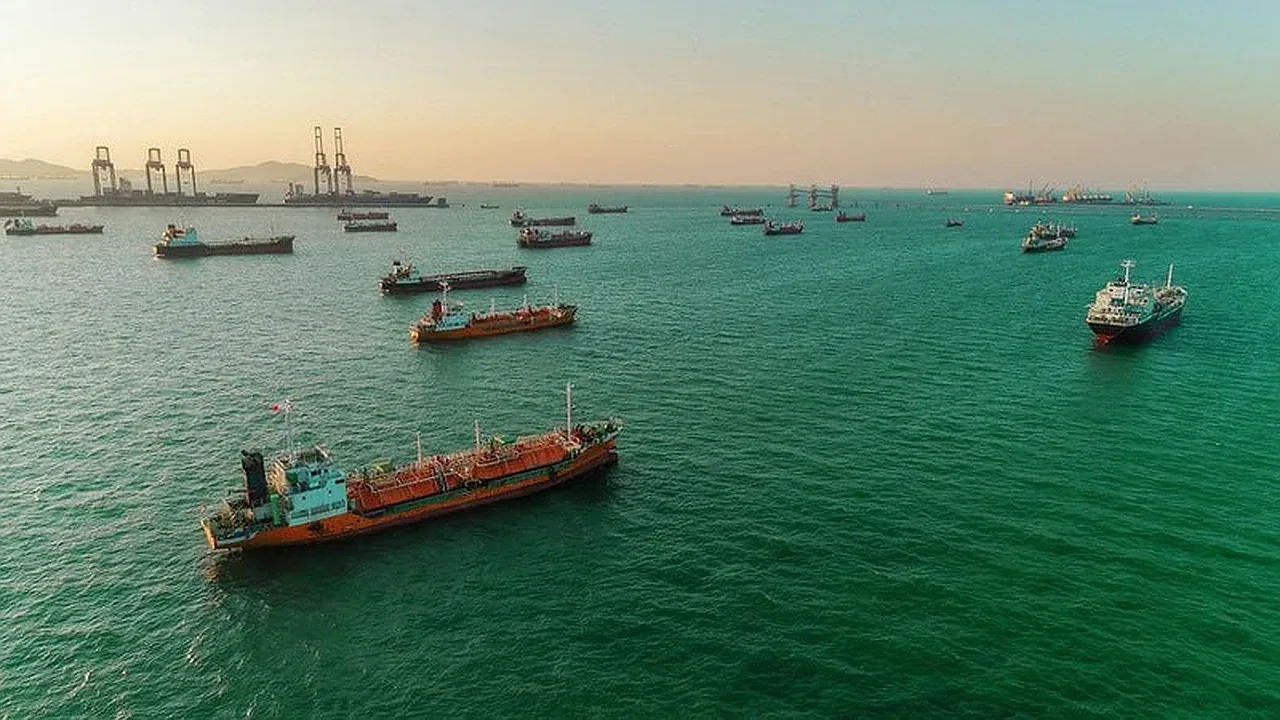
Serious progress is being reported in talks over the Strait of Hormuz, a waterway of critical importance to global energy markets. Iranian Foreign Minister Abbas Araghchi says Tehran and Muscat are «very close» to an agreement on a new route for vessel traffic.
However, this does not mean the strait will be fully reopened. Iran is also setting separate conditions for the United States to restore shipping under normal conditions, and these demands could become the most difficult part of the negotiations.
What are Iran and Oman negotiating?
Araghchi said Iran no longer considers the system for separating vessel traffic previously used in the Strait of Hormuz acceptable.
For this reason, Tehran and Muscat are currently working on a new route that is not permanent but temporary maritime corridor A permanent arrangement could take more time because of technical and legal issues.
According to Reuters, one option under discussion would give Iran a degree of control over vessels entering the Persian Gulf. The parties have discussed schemes under which ships could use Iranian territorial waters in one direction and Omani waters in the other.
Oman's Foreign Ministry described the talks as «positive and constructive».
But an agreement would not automatically reopen the strait
Araghchi placed particular emphasis on this point.
According to him, reaching an agreement with Oman on a maritime route is only a technical step. To fully and freely restore transit through Hormuz, Tehran's political demands on the United States must also be met.
Iran is demanding that Washington pay compensation for previous agreements that Tehran believes were violated by the United States. Representatives of Iran's Supreme National Security Council also listed the end of US threats, the lifting of sanctions and the blockade, and the release of frozen Iranian assets among the demands.
Iran's Islamic Revolutionary Guard Corps also said that the agreement with Oman should not be equated with the full reopening of the strait.
According to its position, shipping can be fully restored only after Washington accepts Tehran's conditions.
Washington is sending a different signal
The US side is taking a considerably more optimistic view of the talks.
A US official who spoke to Reuters on August 7 said there had been progress between Iran and Oman and that an agreement could be announced «soon».
According to the official, if the deal restores unimpeded movement for commercial vessels, the United States is ready to lift the blockade it imposed on Iranian ports. However, Washington stressed that it would tie its own steps to how Tehran implements the terms of the agreement in practice.
Thus, there are two different interpretations of the same negotiations:
— The United States views them as an agreement that will lead to the reopening of shipping;
— Iran considers its deal with Oman only an agreement on a temporary maritime route.
This discrepancy is one of the main issues that must be resolved in the next round of talks.
Why is the Strait of Hormuz important to the entire world?
Hormuz is not merely a regional sea route. It connects the Persian Gulf with the Gulf of Oman and the Arabian Sea and is one of the most important points in global energy trade.
According to the US Energy Information Administration, in the first half of 2025, an average of 20.9 million barrels of oil and petroleum products passed through the strait each day. This amounted to approximately one-fifth of global oil consumption during that period. More than 20% of global liquefied natural gas trade also passed through this route.
In the first quarter of 2026, oil flows through Hormuz fell to 14.6 million barrels. This shows how quickly regional tensions and restrictions on vessel traffic can affect global supply chains.
That is why any news about the strait can affect oil prices, insurance costs, maritime shipping and, ultimately, inflation in various countries.
The decisive point now lies between the United States and Iran
Iran and Oman may be very close to a technical agreement. However, the main political obstacle has not yet been removed.
On one side, Tehran is demanding compensation, sanctions relief and security guarantees. On the other, Washington is prioritizing the restoration of unimpeded vessel traffic.
Therefore, the Iran–Oman agreement that could be announced in the coming days would mark an important turning point, but it would not be the end of the Hormuz crisis.
The biggest question now is this: Will a temporary maritime corridor become a bridge to a broader peace agreement, or will Hormuz remain closed because of the political conditions?
Share your opinion in the comments and send the article to your contacts via Telegram or other social networks.



Comments 0
…