


“Dolphin” typhoon strikes China: More than 1 million people evacuated
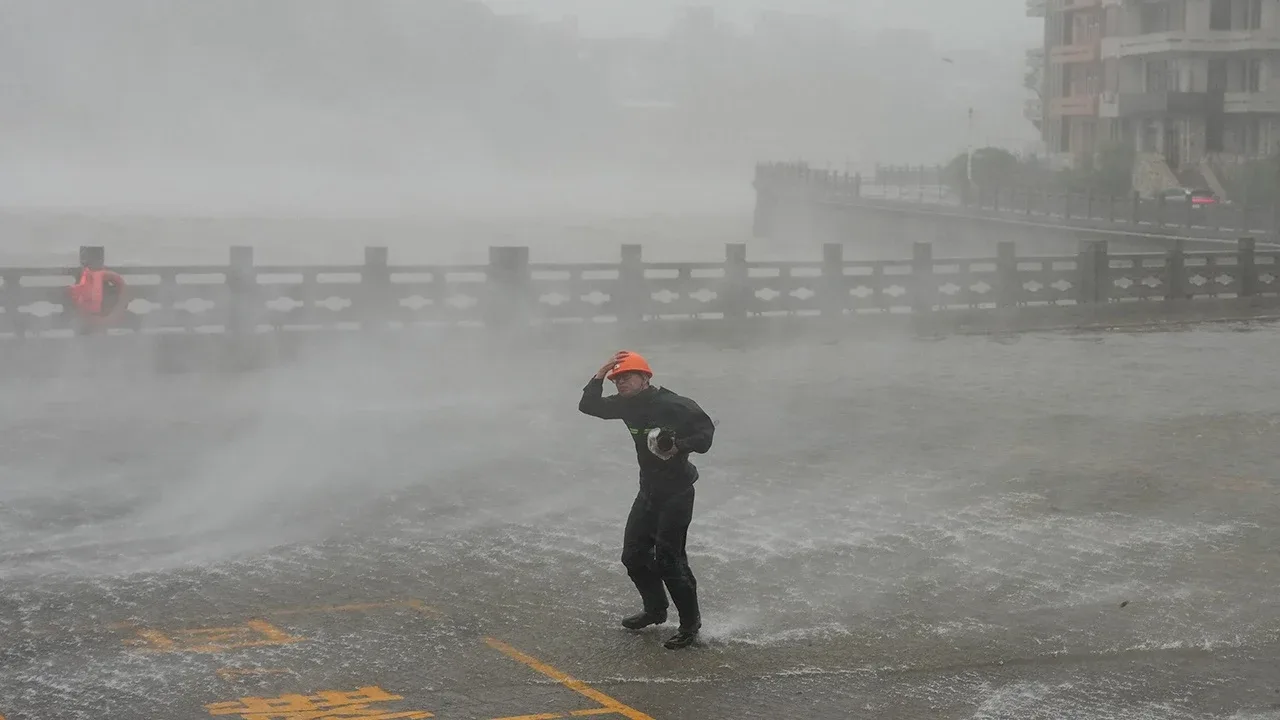
The “Dolphin” typhoon, the strongest tropical storm to hit China in 2026, has reached the country’s eastern coast. The typhoon made landfall near the city of Yuyxuan in Zhejiang Province, bringing strong winds and torrential rains, while more than 1 million people were moved to safe areas.
The natural disaster also seriously disrupted the transport system: nearly 1,500 flights were canceled at airports in Shanghai. However, the main danger has not yet passed — meteorologists warn that the risk of flooding and landslides remains as the typhoon moves inland.
Yuyxuan coast bore the brunt of the impact
According to Reuters, “Dolphin” made landfall on 9 August near the city of Yuyxuan in China’s Zhejiang Province.
Wind speeds at the center of the storm reached 151 kilometers per hour, or nearly 42 meters per second. Heavy rain fell along the coast, sharply increasing the risk of flooding in a number of areas and landslides in mountainous regions.
Chinese authorities had already stepped up emergency measures, temporarily suspending operations at ports, construction sites and some offshore facilities in dangerous areas. Fishing vessels were also ordered back to shore.
More than 1 million people left their homes
Large-scale evacuations were carried out in settlements along the typhoon’s path.
According to Reuters estimates, more than 1 million people were moved to safety from areas of China affected by the typhoon. Safety measures were particularly strengthened in Zhejiang and Fujian provinces.
Some residents were placed in designated temporary shelters. Government services are focusing primarily on areas where rivers could rise due to heavy rainfall and where landslides could occur in mountainous regions.
Air traffic disrupted in Shanghai
The typhoon also seriously affected Shanghai, one of China’s largest megacities.
Reuters reported that nearly 1,500 flights were canceled. According to AP, at least 1,300 flights were suspended at the city’s Pudong and Hongqiao airports — accounting for a large share of scheduled daily flights.
Maritime transport was also restricted: some ferry and cruise services were temporarily suspended. Safety measures at port infrastructure were tightened as the typhoon approached.
“Dolphin” had previously struck Japan
Before reaching China, the typhoon affected Japan’s Okinawa and southwestern islands.
According to Reuters, six people were injured in Okinawa, while more than 50,000 buildings in Okinawa and Kagoshima were left without electricity. Some airlines were forced to cancel hundreds of flights.
As it approached Japan, the typhoon had sustained winds of 162 kilometers per hour, while some gusts reached 216 kilometers per hour.
Heavy rain now poses the greatest danger
Although “Dolphin” is expected to gradually weaken after making landfall, this does not mean the danger has completely passed.
Citing meteorologists, Reuters wrote that the typhoon could move westward into China and bring heavy rains throughout 10 August. The risk of flooding and landslides remains high, particularly in mountainous areas and near rivers.
Rainfall of up to 200–400 millimeters has also been forecast in some areas. If such volumes fall in a short period, they could place significant pressure on local rivers and drainage systems.
“Dolphin” became a serious test for China
The evacuation of more than 1 million people, the cancellation of thousands of flights in Shanghai and the introduction of emergency measures along the coast demonstrate the scale of “Dolphin.” Reuters has described it as the strongest tropical storm to reach China in 2026.
Attention is now focused less on the wind than on the heavy rainfall following the typhoon. Even if “Dolphin” weakens, its effects may continue to be felt for several more days in eastern and inland parts of China.
Leave your thoughts in the comments and share the article with your acquaintances via Telegram or other social networks.



Comments 0
…