


Scientists reconstruct the facial appearance of a Homo sapiens who lived 315,000 years ago
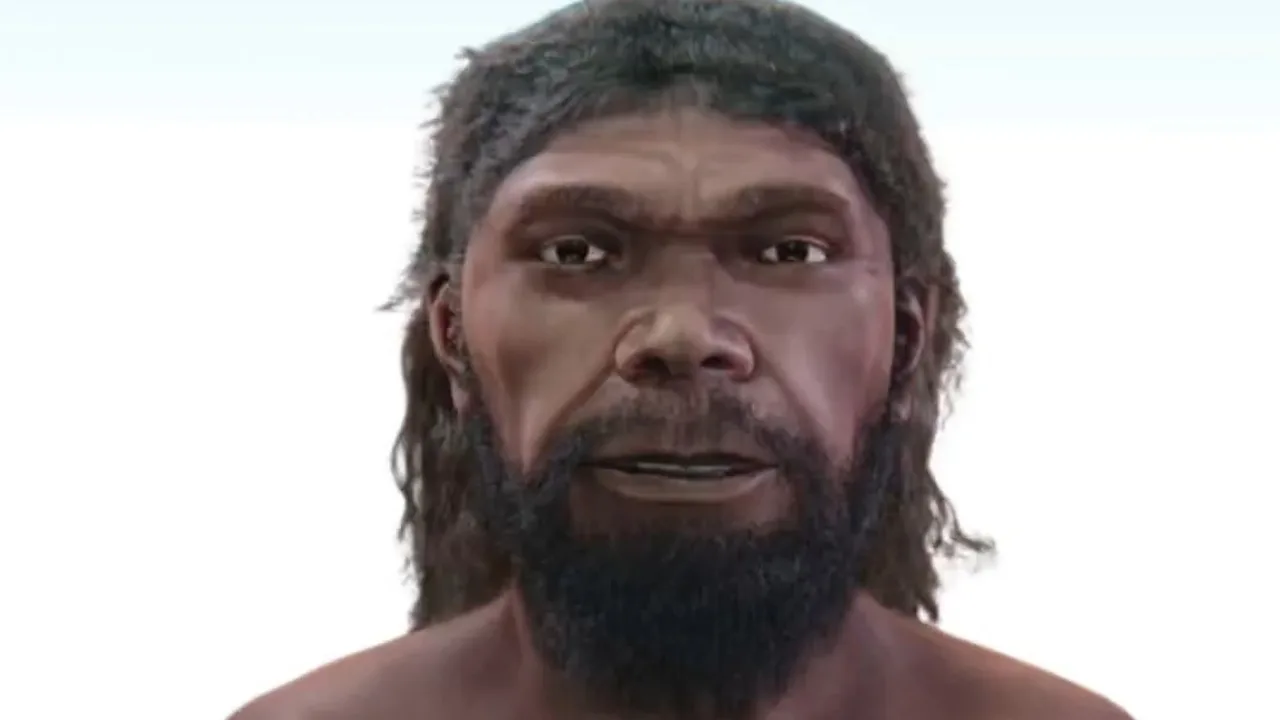
Scientists have digitally reconstructed the facial appearance of a Homo sapiens representative who lived approximately 315,000 years ago, discovered in the Jebel Irhoud area of Morocco.
The research results were published in the journal Heritage in September 2026. Specialists used skull, jaw, and tooth remains found in Jebel Irhoud during the reconstruction process.
Scientists combined the preserved bone fragments into a 3D model and reconstructed the facial structure based on an anatomical model of a modern human. Muscles, soft tissues, and skin layers were also taken into account.
As part of the study, two different versions of the facial appearance were prepared. One of them was created in a gray image without hair and a beard to better show the anatomical features. In the second version, artistic elements such as skin color, hair, and a beard were added.
Experts emphasize that this image should not be taken as the exact likeness of a human who lived 315,000 years ago. This is because there is insufficient evidence in the fossil remains to determine hair, beard, skin color, and certain external characteristics.
The remains found in Jebel Irhoud belong to the oldest known representatives of the Homo sapiens species. Their age was estimated at approximately 315,000 years as a result of studies conducted in 2017.
The new reconstruction allows scientists to better imagine what the early representatives of Homo sapiens looked like.


Comments 0
…