


“They hide it from doctors,” they say: We fact-checked 7 pieces of advice...
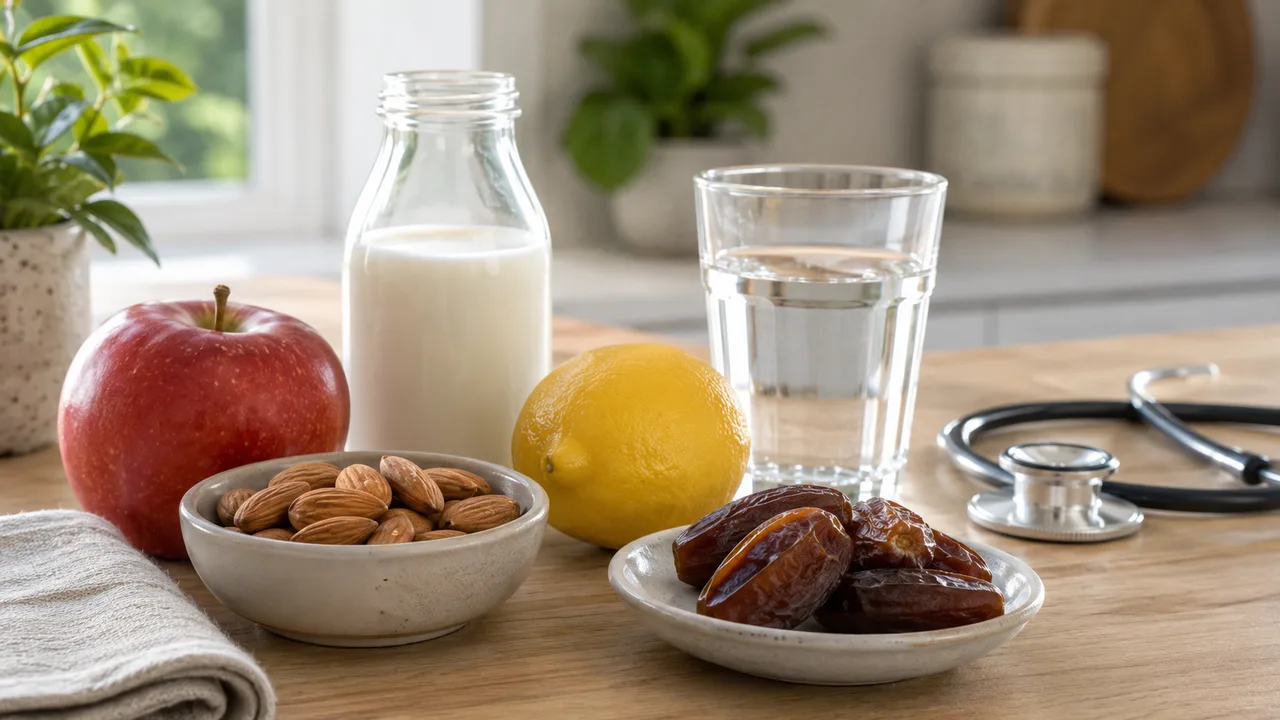
Advice such as “eat one apple every day and you won’t need a doctor,” “four almonds protect against cancer,” or “one lemon gets rid of excess fat” frequently circulates on social media. Their appeal is understandable: they promise a very simple solution to a complex health issue.
But the truth is somewhat different. Most of the foods on the list are genuinely beneficial, but the “guarantees” attributed to them are far removed from scientific evidence. Below, we examine seven popular claims one by one.
Does one apple a day really keep the doctor away?
Apples are a good food containing fiber, vitamins, and various plant compounds. Eating them as part of a diet rich in fruits and vegetables is beneficial.
But the familiar saying “an apple a day keeps the doctor away” is not literally true.
In a study involving more than 8,000 adults, those who ate apples every day initially appeared to visit doctors less often. However, after age, lifestyle, and other factors were taken into account, no significant difference remained.
Conclusion: an apple is a good habit, but it does not replace preventive checkups and treatment.
Do four almonds protect against cancer?
Almonds and other nuts are rich in protein, healthy fats, fiber, and minerals. They can easily be included in a healthy diet.
However, the claim that “eating four almonds a day means you will never get cancer” is false.
According to the U.S. National Cancer Institute, studies in humans have not proven that any single food can fully protect against cancer. Cancer risk depends on many factors, including genetics, smoking, alcohol, weight, physical activity, the environment, and overall dietary patterns.
The American Institute for Cancer Research also emphasizes that no single food can protect against cancer on its own; what matters most is an overall diet rich in a variety of plant foods.
Does lemon “melt” excess fat?
This is one of the most popular myths on the internet.
Lemon is a source of vitamin C and can make water more pleasant to drink when added to it. However, lemons contain no substance that specifically “burns” fat in the body.
Experts at Cleveland Clinic also note that lemon juice has no special fat-burning properties. If you drink lemon water instead of a sugary beverage, your total calorie intake may decrease — and that is where the benefit mainly comes from.
Weight loss, meanwhile, depends in the long term on the balance between energy consumed and expended, eating habits, physical activity, and other factors.
Does a glass of milk strengthen the bones?
There is some truth to this claim, but once again, the “one food — one solution” formula does not work.
Milk is one of the best sources of calcium. Calcium and vitamin D are important for maintaining bone health. The U.S. National Institutes of Health indicates that adults need approximately 1,000–1,200 mg of calcium per day, depending on age and sex.
But milk alone is not enough for healthy bones. Vitamin D, protein, physical exercise, and overall nutrition also matter.
People who do not consume milk can also get calcium from yogurt, cheese, certain fish, tofu, leafy greens, or calcium-fortified products.
Is it really necessary to drink exactly eight glasses of water?
Dehydration is not good for the body — there is no dispute about that. Fluids are essential for the kidneys, blood circulation, temperature regulation, and many other processes.
However, there is no universal rule that everyone must drink exactly eight glasses of water a day.
According to Cleveland Clinic, needs vary depending on age, physical activity, climate, metabolism, and chronic diseases. Although around 8–12 glasses of fluids is sometimes mentioned as a general guideline, there is no “one-size-fits-all number.”
The formula “eight glasses of water = perfect skin” is also highly oversimplified. Skin condition is influenced by genetics, age, sun exposure, sleep, nutrition, and skincare as well.
Do four dates always keep you energetic?
Because dates are rich in natural sugars, they can be a quick source of energy. They also contain fiber, potassium, magnesium, and other micronutrients.
According to Cleveland Clinic, a 100-gram serving consisting of approximately four dates provides significant amounts of potassium, magnesium, and fiber.
However, there is no guarantee that “eating four dates will keep you energetic all day.” Energy levels also depend on sleep, overall diet, physical condition, stress, and illnesses.
Moreover, dates are a sweet food, so portion size also matters.
Eight hours of sleep is not a formula for a happy life
Sleep is one of the points on the list with the strongest scientific basis.
According to the CDC, adults aged 18–60 are generally advised to get at least 7 hours of sleep, those aged 61–64 should get 7–9 hours, and people aged 65 and older should get 7–8 hours.
Long-term insufficient sleep is associated with an increased risk of obesity, diabetes, high blood pressure, heart disease, stroke, anxiety, and depression.
However, exactly eight hours is not required for everyone. The quality and regularity of sleep are just as important as its duration.
The main secret is incredibly boring — but it works
Looking for a miracle food for good health is appealing. However, scientific data once again point to the same “boring” formula: a varied and balanced diet, sufficient physical activity, quality sleep, avoiding smoking, limiting alcohol, controlling weight, and undergoing necessary medical checkups.
Apples, almonds, lemons, milk, water, and dates can all be good parts of this system. But none of them, on their own, provides guaranteed protection against cancer, excess weight, or other diseases.
So there is no secret behind the sensational phrase “doctors don’t want you to know this.” On the contrary, the recommendation of modern medicine is quite simple: eat healthy foods, but do not treat them as medicine or miracles.
Leave your opinion in the comments and share the article with your acquaintances via Telegram or other social networks.



Comments 0
…